GM Sold the Same Deadly SUV Twice. The Yukon and Tahoe Have Killed 3,706 People.
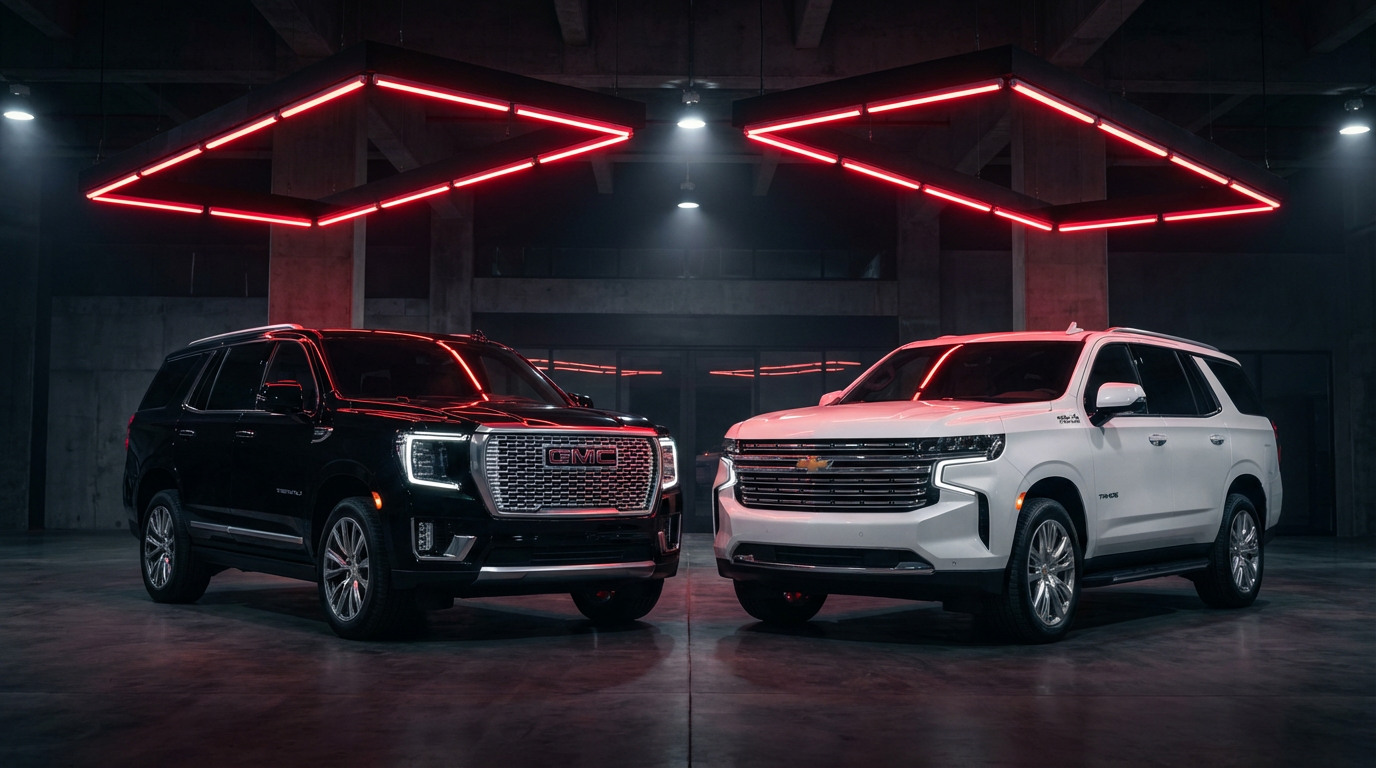
The numbers don't lie, but they do occasionally smirk. General Motors has been selling the same full-size SUV under two different names for three decades. The GMC Yukon and the Chevrolet Tahoe share the same GMT platform, the same Arlington, Texas assembly plant, the same engine options, the same wheelbase, and the same fundamental relationship with gravity. They also share a combined body count of 3,706 fatalities in FARS-recorded crashes from 2014 to 2023.
The Yukon kills at 2.55 deaths per 100 million VMT. The Tahoe kills at 2.49. That's a 2.4% difference between vehicles that are mechanically identical down to the lug nuts. The Yukon is technically the deadlier twin—perhaps because its GMC "Professional Grade" branding attracts buyers who treat it more like a truck than a family hauler, or perhaps because the sample sizes at 350,000 versus 831,250 fleet vehicles create just enough statistical noise to produce a gap that means absolutely nothing.
What means something is the comparison to vehicles that aren't built on a body-on-frame truck chassis. The Toyota Sequoia—same segment, same size class, same "massive SUV for massive American families" energy—does the job at 0.83 deaths per 100M VMT. That's more than 3× safer per mile than either GM twin. If every Yukon and Tahoe on American roads had the Sequoia's fatality rate, roughly 2,500 of those 3,706 people would still be alive.
The model year data for the Yukon reads like an obituary written in annual installments. Model year 2004 leads the carnage at 136 deaths. The 2002: 117. The 2003: 115. The 2001: 105. These were the GMT800 generation—big, heavy, rear-drive-biased, pre-mandatory ESC. They had the aerodynamics of a storage unit and the rollover resistance to match. The 2007 redesign (GMT900) brought some improvement, but model year 2007 still produced 91 deaths before the platform was even broken in.
Add the Suburban—a stretched Tahoe on the same platform—and GM's full-size SUV family has generated 4,299 deaths across three badges. That's one vehicle architecture, three nameplates, and more fatalities than the entire Honda passenger car lineup combined.
The impairment numbers are nearly identical between the twins. 21.4% of Yukon drivers in fatal crashes tested positive for alcohol or drugs. 20.6% for the Tahoe. Both are average for the full-size SUV class—not drunk-driver magnets, not paragons of sober motoring. The same kind of driver, making the same kind of mistakes, in the same kind of vehicle with a different grille.
Meanwhile, Ford's Expedition—the direct competitor—runs a 2.31 rate. Still bad, but 10% better than either GM twin. The Expedition at least had the decency to only exist under one name.
The real question GM has never answered: if you're going to sell the same vehicle twice, why not at least make it a safe one? The Sequoia proved the segment doesn't have to be this deadly. Toyota just chose a different engineering philosophy—one that valued keeping its occupants alive over keeping its truck platform profitable across as many badges as possible.
GM chose volume. They got 3,706 body bags and two lines on the same death chart.