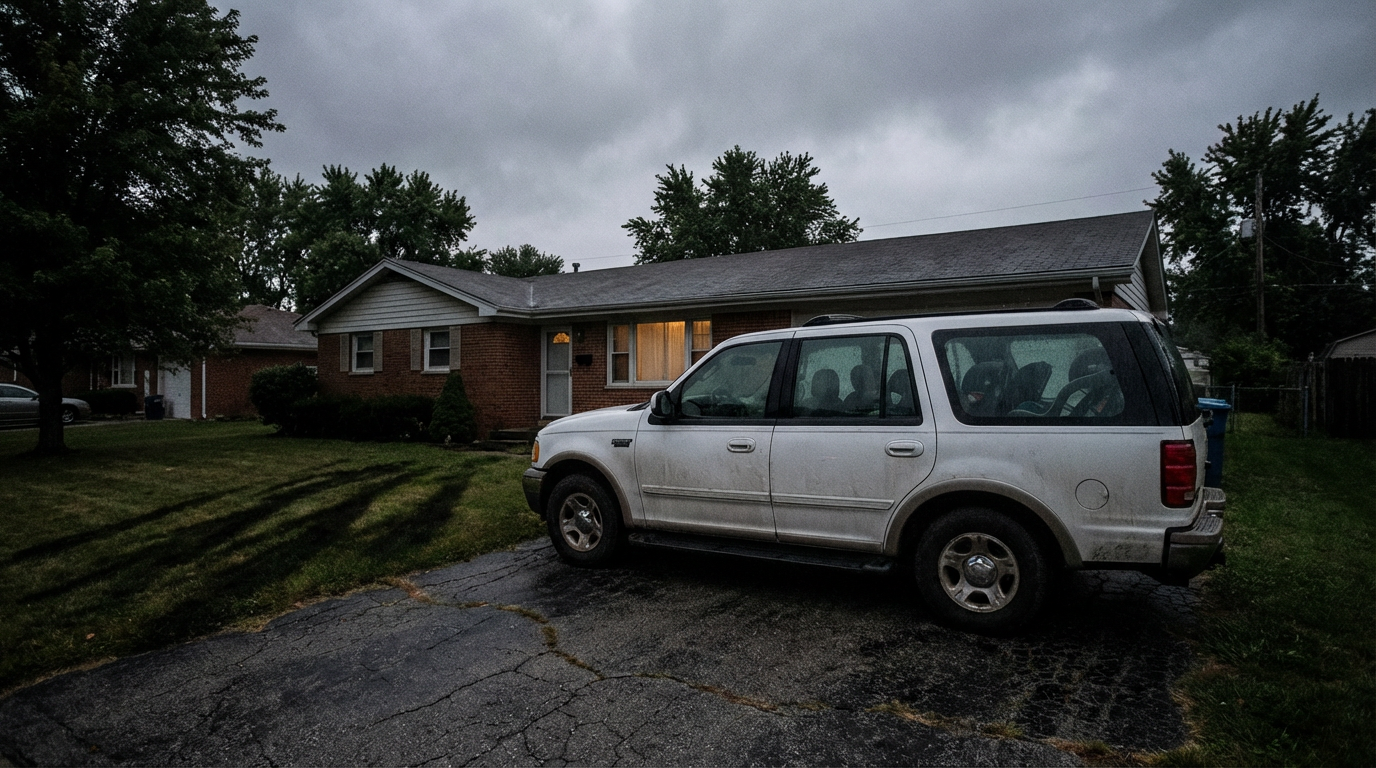
The Ford Expedition: America’s Most Trusted Family Coffin
According to the toxicology reports — and there are a lot of them — the Ford Expedition has a perfectly average impairment rate. 20.0% of fatal-crash drivers tested positive for alcohol or drugs. That’s not remarkable. What’s remarkable is everything else.
The Expedition exists for one reason: families who looked at the Explorer and said “not big enough.” Ford has sold this thing since 1997 as the ultimate suburban safety cocoon — three rows of seats, a body-on-frame chassis borrowed from the F-150, and a curb weight that starts arguments with parking garages. Parents bought it because they believed size equals safety. FARS data from 2014–2023 says 1,515 people died in Expeditions from a fleet of just 525,000 vehicles.
Let that ratio sink in. The Explorer, Ford’s smaller SUV, manages a 1.54 death rate from a fleet nearly four times larger. The Chevrolet Suburban — which is bigger than the Expedition — posts a 1.36 rate. The Toyota Sequoia, the Japanese answer to the same full-size question, sits at a surreal 0.83. The Expedition isn’t just worse than its competitors. It’s worse than its own little brother.
The model year data tells the rest of the story. The 2003 and 2004 Expeditions account for 377 fatalities combined — nearly a quarter of the entire decade-long body count from just two model years. These were the second-generation trucks with the 5.4L Triton V8, a suspension geometry that prioritized towing over stability, and an electronic stability control system that arrived fashionably late in 2007. By the time Ford fixed the engineering, the damage was already baked into the fleet.
The impairment numbers are almost boring by comparison. Of 2,512 drivers tested in fatal Expedition crashes, 15.0% had alcohol and 8.8% had drugs — both within a percentage point of the national average for full-size SUVs. This is not a party vehicle. It’s not a reckless-driver magnet. It’s a sober family hauler that kills at a rate most sports cars would find embarrassing.
The Tahoe, at 2.49, is the only full-size SUV in FARS that posts a worse per-mile rate — and even that comparison flatters the Expedition, because the Tahoe has a fleet 58% larger absorbing more statistical noise. Meanwhile the Suburban proves that “bigger is safer” can actually work when the engineering is competent. Same GM platform, longer wheelbase, 1.36 rate versus the Expedition’s 2.31.
People are still buying Expeditions. Ford sold over 60,000 last year. Every one of them came with a third row, available massage seats, and a death rate that the marketing brochure somehow forgot to mention.