The Chevy Tahoe Weighs 5,600 Pounds. It Didn't Help.
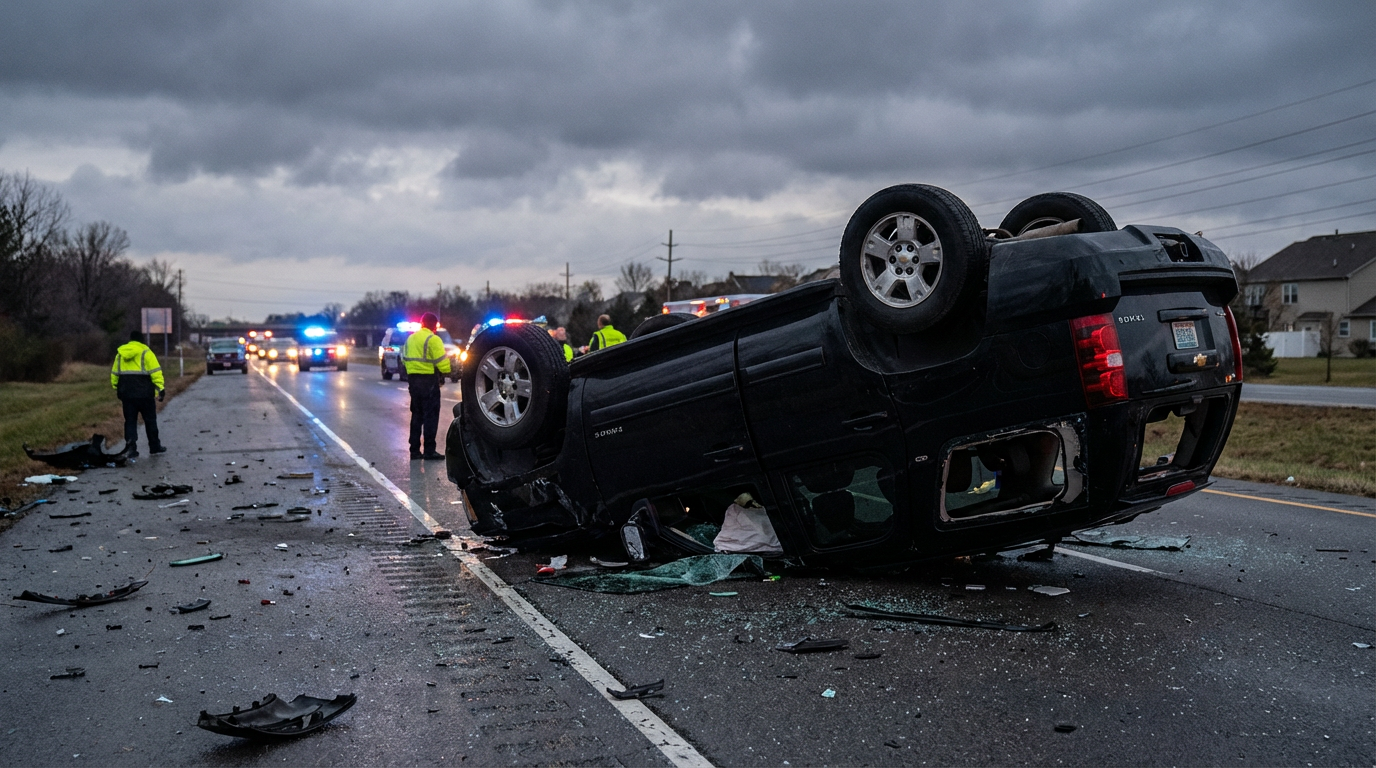
Here's a fun fact that will ruin your morning commute. The Chevrolet Tahoe—a vehicle that weighs more than a Ford Mustang and a Honda Civic combined—has killed 2,592 people in FARS-recorded fatal crashes from 2014 to 2023. Its fatality rate is 2.49 deaths per 100 million vehicle miles traveled. That makes it deadlier per mile than the Honda Civic.
Let that settle for a moment. The Civic weighs 2,900 pounds, has a 2.0-liter four-cylinder engine, and kills people at a rate of 2.25 per 100 million miles. The Tahoe weighs nearly twice as much, sits on a body-on-frame truck chassis shared with the Silverado, and somehow manages to be 11% deadlier. The physics of safety are supposed to reward mass. The Tahoe didn't get the memo.
The model year data tells the story of a generational failure. The 2001 model year alone accounts for 278 fatalities. The 2003: 311. The 2004: 301. These early-2000s Tahoes were rolling off lots during the body-on-frame SUV boom, before electronic stability control was mandatory. They were tall, heavy, rear-wheel-drive-biased, and had the rollover characteristics of a cafeteria tray on a wet floor.
What makes this genuinely absurd is the comparison within GM's own lineup. The Silverado—same platform, same engine options, same body-on-frame architecture—kills at a rate of 1.25 per 100M VMT. The Tahoe is literally a Silverado with a roof over the bed, and it's twice as deadly per mile. The enclosed body adds weight higher up, raising the center of gravity just enough to turn what would be a recoverable slide into a fatal rollover.
The impairment angle adds another layer: 20.6% of Tahoe drivers in fatal crashes tested positive for alcohol or drugs. That's average for the class—not a party truck, not a particularly sober family hauler. Just 831,250 of them on the road, grinding out 2,592 deaths through the grinding mathematics of mass, height, and physics that don't care how much you paid at the dealer.
The cosmic joke is that people buy Tahoes specifically because they feel safe. They're buying size. They're buying steel. They're buying the illusion that the laws of physics are on their side. The data says the laws of physics were listening, and they're not impressed.