Uber Sold Its Self-Driving Division, Then Outsourced the Crashes
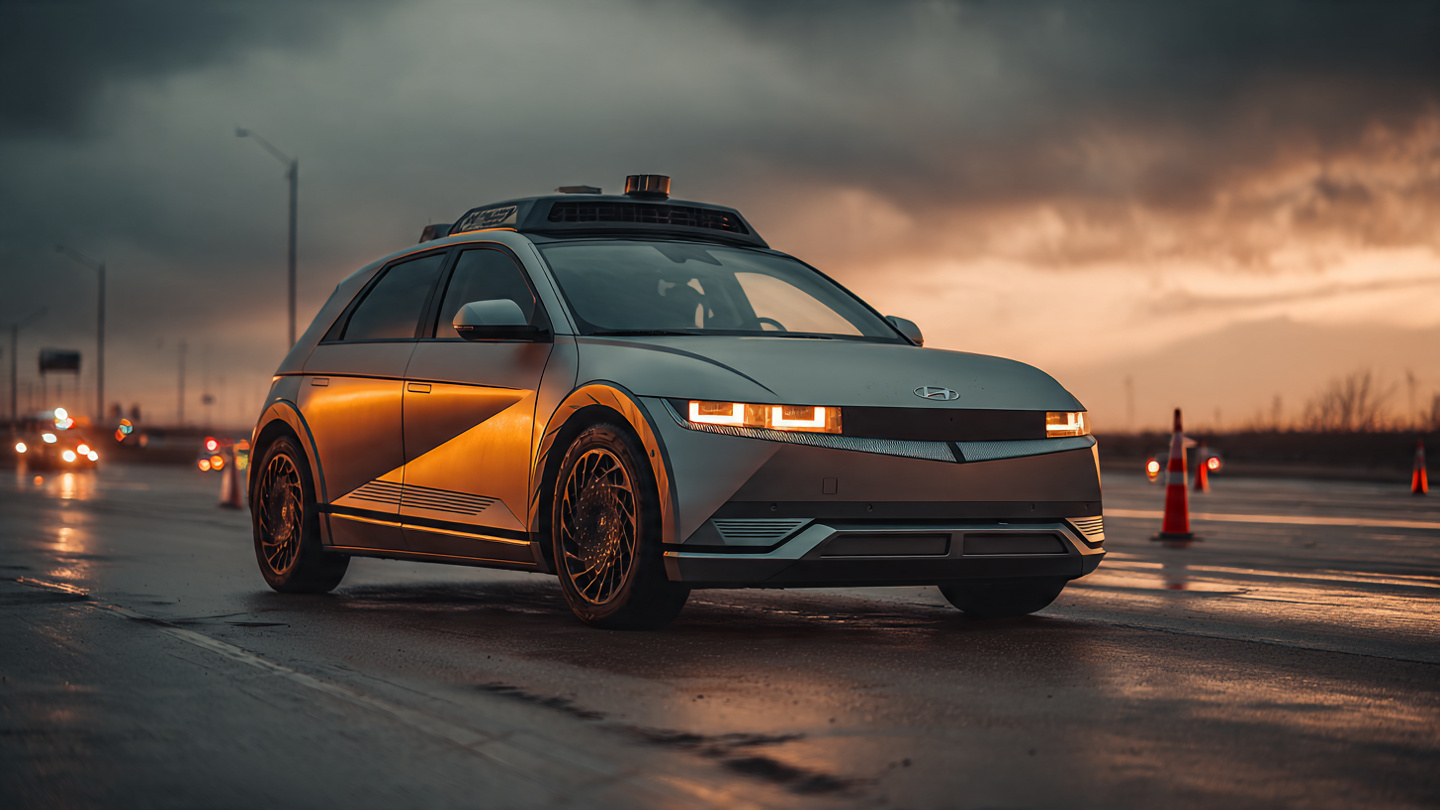
Between December 2025 and March 2026, robotaxis operated by Avride, an autonomous vehicle startup partnered with Uber, were involved in 16 crashes across Dallas and Austin, Texas. Every single vehicle had a human safety monitor in the driver's seat. Across all sixteen incidents, that monitor intervened exactly once.[1]
NHTSA's Office of Defects Investigation opened a probe in May 2026 after reviewing video from each crash. The agency's summary reads like a robotics failure catalog: vehicles changing lanes directly into adjacent cars, failing to stop for slow-moving or stopped vehicles ahead, failing to avoid vehicles entering their lane, and striking stationary objects partially blocking the road.[2] One December crash in Dallas injured a bystander when an Avride-equipped Hyundai Ioniq 5 clipped the open door of a parked pickup truck. Another involved a robotaxi swerving to avoid a parked truck, only to slam into a van traveling alongside it. At least one crash involved a vehicle running into a dumpster, which is less "edge case" than "object permanence failure."
Avride declined to explain why its safety monitors sat through nearly every collision without touching the wheel. The company offered a statement noting that it reported all incidents per NHTSA's Standing General Order and that it had "implemented targeted technical and operational mitigations."[1] Uber did not respond to press inquiries at all.
That silence from Uber is structurally important, because the Avride partnership represents Uber's second attempt at autonomous vehicles after a catastrophic first try. In 2018, an Uber ATG test vehicle operating in autonomous mode struck and killed Elaine Herzberg in Tempe, Arizona, the first pedestrian fatality caused by an autonomous vehicle on public roads.[3] Uber's in-house AV program limped along until December 2020, when the company sold its Advanced Technologies Group to Aurora Innovation in a deal valued at roughly $4 billion.[4] Twelve hundred engineers walked out the door. Uber pocketed a 26% stake in Aurora and washed its hands of building autonomous systems.
Four years later, Uber came back to the robotaxi business through a different door. Avride, a subsidiary of Nebius (formerly Yandex NV before the Dutch company sold off its Russian operations in 2024), had spent years developing self-driving cars and sidewalk delivery robots.[1] In 2024, Uber and Nebius committed up to $375 million in investments to Avride. By December 2025, Avride robotaxis were carrying paying Uber passengers through Dallas. By March 2026, sixteen of those trips had ended in collisions.
The regulatory question nobody has answered: when Uber dispatches a customer to an Avride robotaxi through its own app, collects the fare, and the vehicle crashes, who owns the safety outcome? Uber says it's a platform connecting riders to partners. Avride says it's implementing mitigations and improving. NHTSA is investigating the vehicle's automated driving system, not the business arrangement that put an undertested system on public roads with paying passengers inside.
Broader autonomous vehicle crash data provides context but no comfort. In 2024, ADS-equipped vehicles were involved in 544 reported crashes nationally, nearly double the 288 logged in 2023.[5] Waymo leads all operators with 907 total reported ADS crashes; the now-defunct Cruise logged 155 before General Motors shut it down.[5] Research compiled by the National Law Review finds self-driving vehicles crash at 9.1 incidents per million miles driven, compared to 4.1 per million for human-operated vehicles, though self-driving crashes tend to produce fewer injuries and fatalities.[5]
Avride's fleet is tiny compared to Waymo's, which makes 16 crashes in four months a proportionally alarming figure. The company hasn't disclosed total autonomous miles driven during the period, so calculating a per-mile rate is impossible with available data. What we can say with certainty: the human safety monitor, the regulatory fig leaf that makes AV testing on public roads legally defensible, failed its one job 93.75% of the time across these incidents. If your fire alarm only went off for one in sixteen actual fires, you'd call it defective. When a safety monitor does the same thing, the industry calls it "a human factors challenge" and files a form with NHTSA.
Limitations
Avride has not disclosed fleet size or total autonomous miles, making per-mile crash rate calculations impossible. NHTSA's Standing General Order captures only reported incidents; unreported near-misses and minor events are invisible. The 16-crash count covers December 2025 through March 2026 and may not reflect subsequent changes to Avride's software. Safety monitor intervention patterns may look different in incidents that were successfully avoided and therefore never reported.
Strongest counterargument
Avride could reasonably argue that 16 low-speed crashes with one minor injury and zero fatalities is, statistically, better than the human baseline. American drivers killed 40,990 people in 2023.[6] If robotaxis are crashing more frequently but killing nobody, a utilitarian calculation favors the robots. The counterargument holds some weight, and it's essentially Waymo's defense for its 907 reported crashes: volume and severity matter more than raw count. The problem is that Avride's fleet is too small and too new for that defense to carry statistical significance, and the safety monitors whose entire function was preventing these crashes chose not to.
What to do
If you're booking rides through Uber in Dallas or Austin, be aware that some vehicles may be Avride-operated robotaxis. Uber's app should indicate whether a vehicle is autonomous before you confirm the ride. You can decline. If you've been involved in a crash with an autonomous vehicle, file a complaint with NHTSA at nhtsa.gov/report-a-safety-problem. The investigation is ongoing, and the agency is actively collecting reports.
Sources & References
- Sean O’Kane, “Uber partner Avride is under investigation for self-driving crashes,” TechCrunch, May 8, 2026. techcrunch.com
- NHTSA Office of Defects Investigation, Avride ADS crash investigation preliminary findings, May 2026. nhtsa.gov
- NTSB, “Collision Between Vehicle Controlled by Developmental Automated Driving System and Pedestrian, Tempe, Arizona, March 18, 2018,” Highway Accident Report NTSB/HAR-19/03. ntsb.gov
- Uber Investor Relations, “Aurora is acquiring Uber’s self-driving unit, Advanced Technologies Group,” December 2020. investor.uber.com
- FinanceBuzz, “Self-Driving Car Statistics 2026,” compiled from NHTSA Standing General Order on Crash Reporting. financebuzz.com
- NHTSA, Traffic Safety Facts: 2023 Overview. nhtsa.gov