Chrysler Renamed the Town & Country. The Death Rate Dropped 85%.
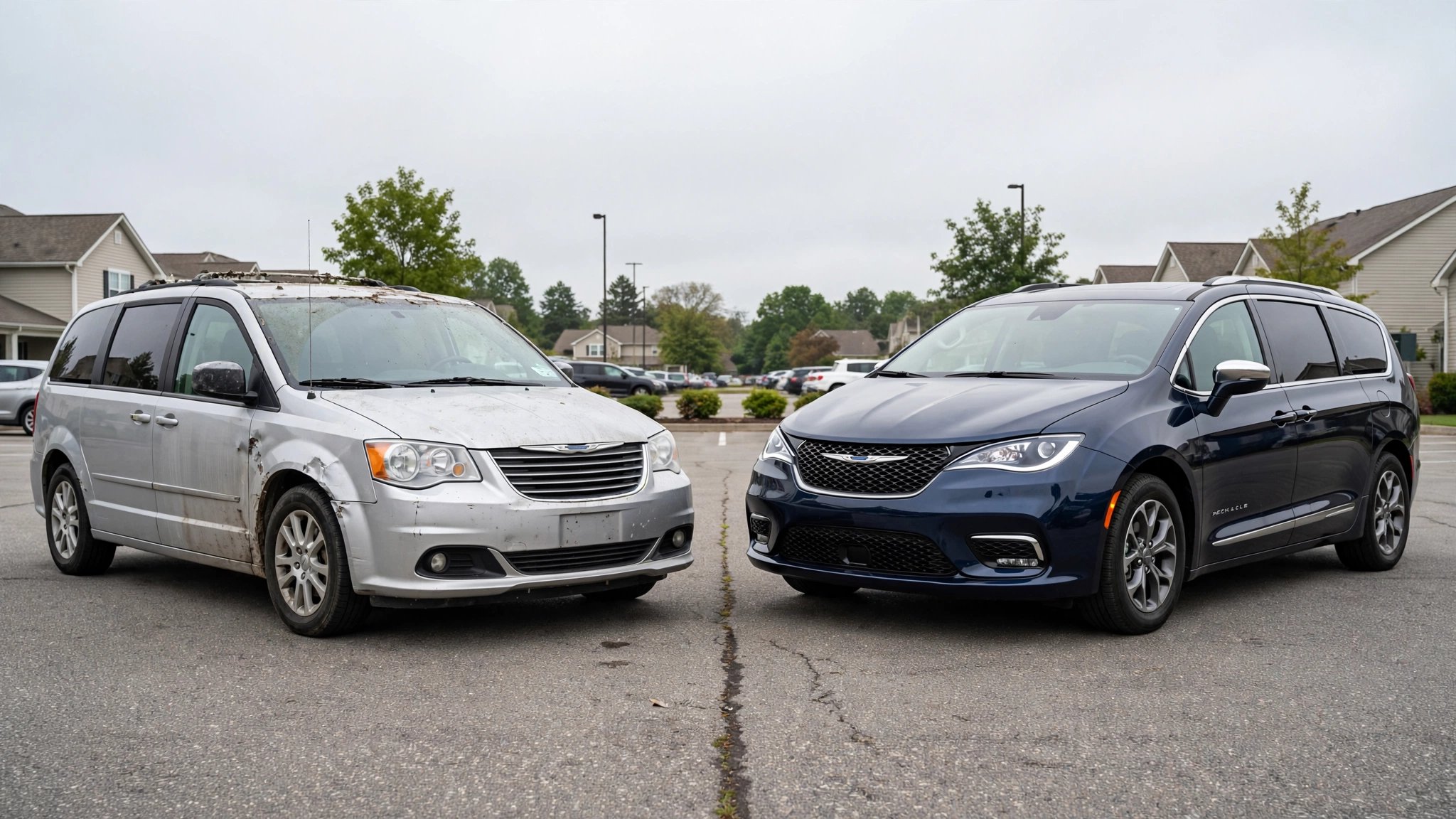
In 2016, Chrysler killed off the Town & Country and replaced it with the Pacifica. New name. New platform. New structure. Roughly 875,000 Town & Countries remain on American roads, and FARS records 1,303 deaths across the model's final decade at a fatality rate of 1.26 per 100 million vehicle miles traveled. Its replacement posts a rate of 0.19.[1]
Both vehicles carry virtually identical impairment profiles, 20.1% for the Town & Country versus 20.0% for the Pacifica, meaning the same drunk-driving exposure and the same type of buyer loading the same strollers through the same sliding doors on the same suburban streets. What changed is an entirely new platform with high-strength steel occupant cells replacing the architecture that dated back to 2008, a suspension geometry that actually manages weight transfer instead of surrendering to it, and crash energy paths that were engineered with IIHS's updated side and small overlap tests in mind rather than grandfathered in from a generation that never had to pass them.[2]
Put the Town & Country in context against its rivals and the gap widens into something grotesque. Toyota's Sienna runs a 0.49 rate, and Honda's Odyssey, a minivan famous for nothing except reliably boring competence, manages 0.93. The Dodge Grand Caravan, the Town & Country's platform twin wearing cheaper clothes, posts 1.33 and kills 178 people a year. Between them, those two Chrysler-platform minivans account for over 300 annual deaths in a segment that families choose specifically because they believe it will protect their children.[1]
Compare model years directly and the engineering verdict is even more damning. During the Town & Country's final six production years (2011–2016), FARS recorded 314 deaths across those vintages. During the Pacifica's first six production years (2017–2022), the count is 109. That is a 65% reduction in same-brand generational deaths, controlled for production window length, in a segment where the buyer demographic and use case barely changed between one model and the next.[1] Chrysler didn't attract safer drivers; they built a safer car.
FARS limitations temper these numbers, as they always should. Fatal crashes are a fraction of all crashes, so the Pacifica could still carry elevated injury rates that this data cannot see. VMT estimates introduce ±15% uncertainty, and the Town & Country fleet's older age means more cumulative exposure, which inflates its numbers somewhat. But even if you grant the Town & Country every favorable adjustment, you cannot close a 6.6x gap. If you're still driving one with a car seat in the second row, a used 2017 Pacifica starts at roughly $15,000 and represents the single largest per-dollar safety improvement available to any minivan family in America, so check your VIN at nhtsa.gov/recalls and then check your budget.