Only 12% of Recalled Tires Get Fixed. NHTSA Cannot Find the Other 88%.
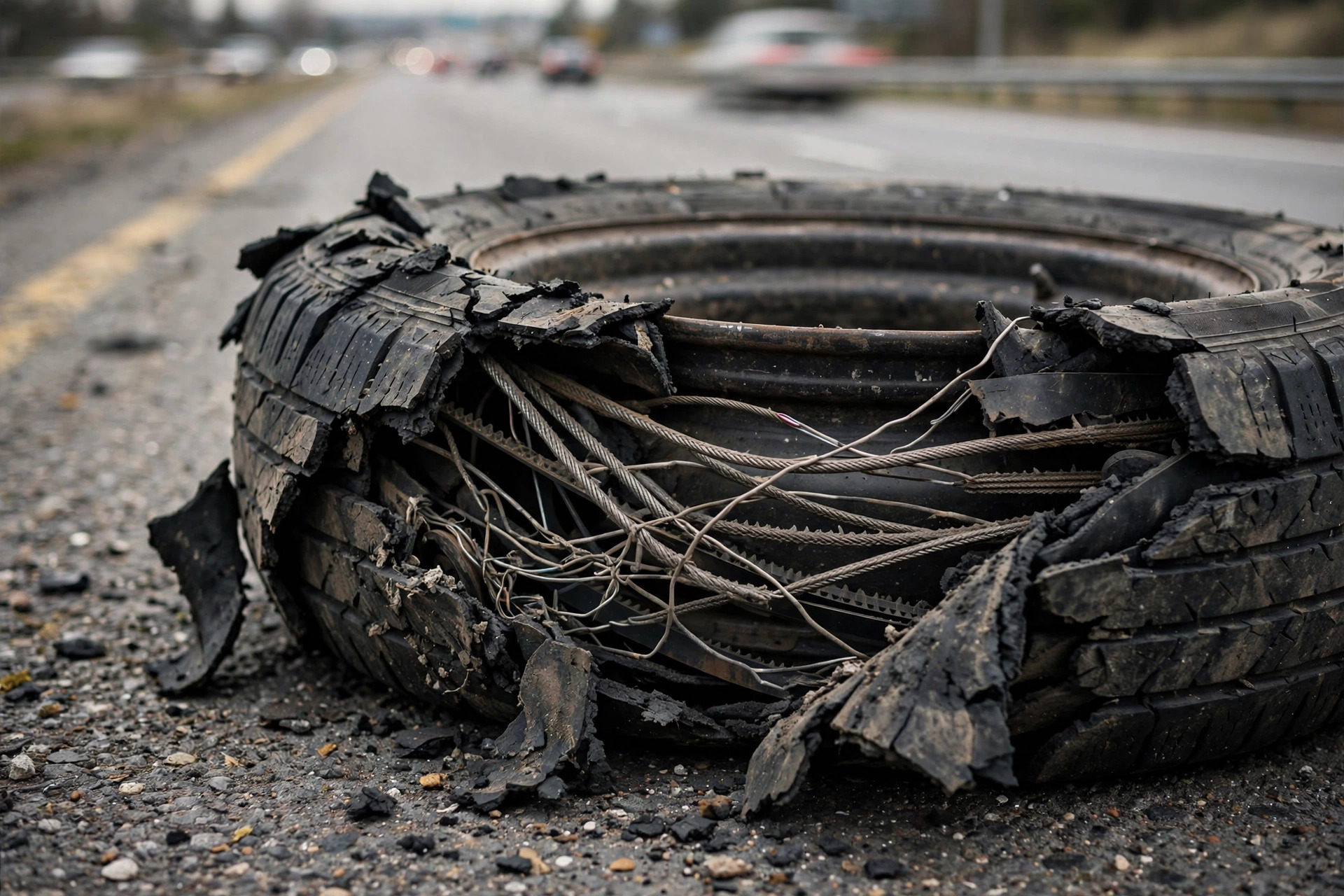
When NHTSA recalls a car, the agency cross-references the Vehicle Identification Number against state DMV registrations, identifies the current owner, and mails a letter explaining what went wrong and where to get it fixed for free, a system that achieves a 73.4% completion rate across all vehicle recalls.[1] When NHTSA recalls a tire, it checks a voluntary registration database that almost nobody fills out, posts the recall on its website, and hopes someone with a defective tire happens to check before the tread separates at highway speed. That system achieves a 12.3% completion rate.[1]
NHTSA's own 2025 Annual Recalls Report makes the disparity plain: vehicle recalls complete between 61.5% and 73.4% depending on year, reflecting a functional notification pipeline tied to DMV registration records across all fifty states. Child seat completion improved from a dismal 7.9% in 2021 to 57.3% in 2024 after the agency invested in targeted outreach using retailer purchase records and social media campaigns aimed at new parents. Tires got nothing, bouncing from 8.6% in 2021 down to 5.3% in 2022, then climbing to 12.3% and stalling there for two consecutive years while eighty-eight percent of recalled tires remain bolted to vehicles whose drivers have no idea their rubber carries a manufacturer-acknowledged defect.[1]
Congress tried to solve this in November 2000, passing the TREAD Act after Firestone tread separations on Ford Explorers killed 271 people and injured more than 800.[2] Section 7 required tire manufacturers to notify purchasers of recalls and established a tire identification and registration system linking each Tire Identification Number to the buyer's name and address the same way a dealer registers a vehicle with the state DMV. Dealers were supposed to register tires at point of sale, and consumers were supposed to register independently if the dealer missed it. Neither happened at scale, and NHTSA has acknowledged that tire registration rates remain low because "it is easier to obtain accurate owner information for motor vehicles compared to other vehicle equipment," a bureaucratic confession that nobody built the database Congress mandated twenty-six years ago.[3]
A tread separation at highway speed kicks the rear of the vehicle sideways as the belt peels away from the carcass, and in SUVs and trucks with a high center of gravity, the loss of directional control at sixty-five miles per hour almost always ends in a rollover. NHTSA estimates tire failures contribute to roughly 11,000 crashes per year; in 2023, 646 people died in tire-related crashes, a toll that would shrink measurably if the agency could simply tell people their tires have a known defect before the blowout does the talking.[4]
What to do: Find the DOT code on your tire sidewall, the raised string starting with "DOT" followed by a series of numbers and letters, and enter it at NHTSA.gov/recalls to see whether your tires are under an active recall. If they are, get them replaced immediately at no cost through the manufacturer. Then do what fewer than one in five buyers ever does: register your tires, because nobody else in this system is going to find you.
Sources & References
- NHTSA, 2025 Recalls Annual Report, March 2026. nhtsa.gov
- Transportation Recall Enhancement, Accountability, and Documentation (TREAD) Act, Public Law 106-414, November 1, 2000. congress.gov
- NHTSA, Recall Completion Rates Report Update, January 2025. nhtsa.gov
- NHTSA, Tire Safety Ratings and Awareness (TireWise), 2023 fatality data and tire crash statistics. nhtsa.gov
Data sourced from NHTSA recall completion reports, federal legislation, and NHTSA crash statistics. The Crash Report is an independent publication and is not affiliated with any government agency or tire manufacturer.