Tesla Recalled the Same Suspension Part Twice. Now NHTSA Is Investigating 1.2 Million Cars.
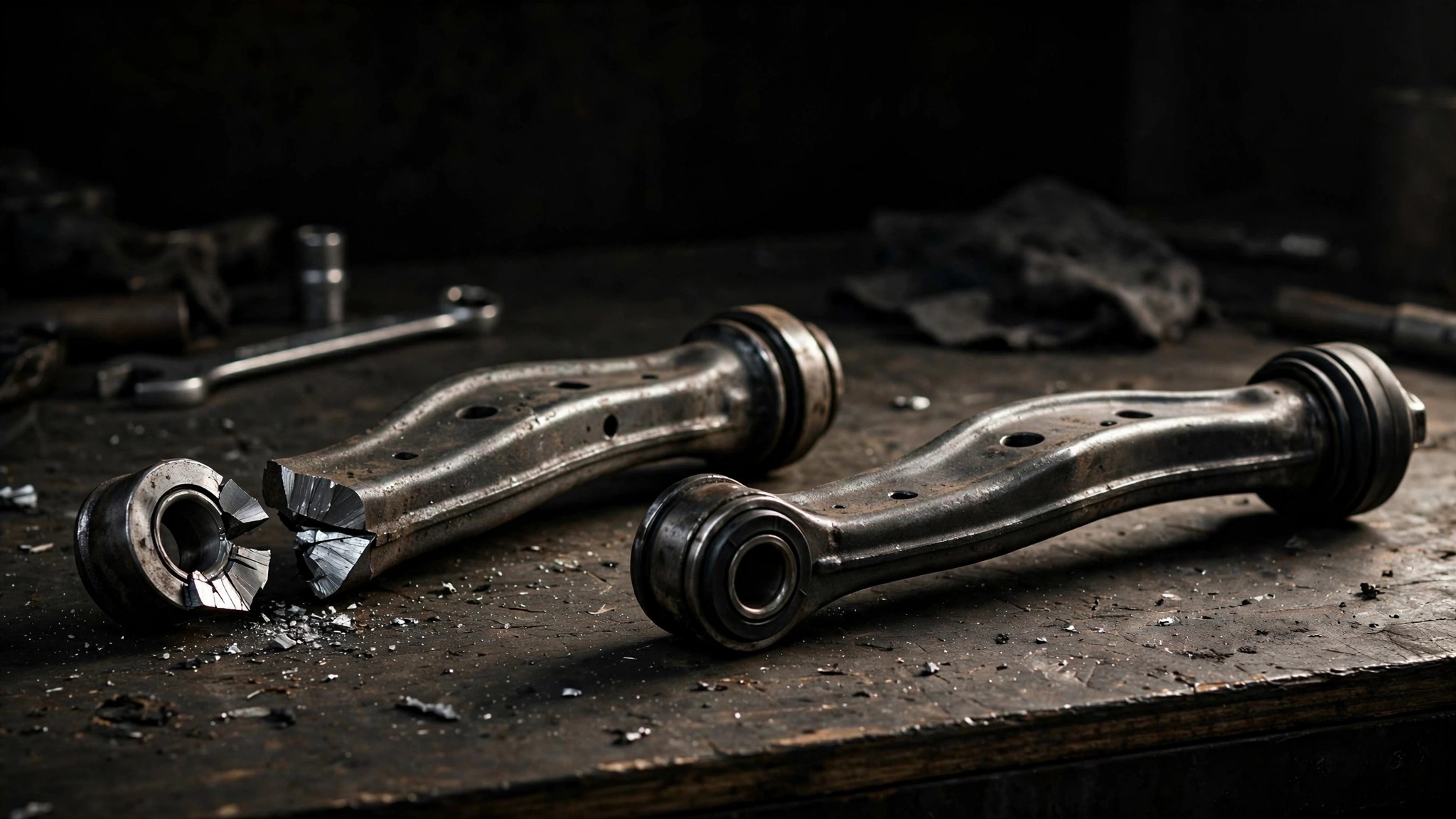
October 2021, Tesla tells NHTSA that a factory worker got confused with a torque wrench and left fasteners loose on the front lower lateral link during assembly, an easy fix requiring nothing more than tightening some bolts on 2,791 recalled vehicles.[1]
In 2023, another recall for the same part covered four hundred twenty-two more Model 3s, this time with no press conference and no explanation of why vehicles outside the original batch were failing the same way.
Then on July 31, 2026, NHTSA's Office of Defects Investigation opened PE26006, a preliminary evaluation covering approximately 1.2 million 2018-2020 Model 3 and 2021-2023 Model Y vehicles.[2] A hundred and fifty-six owners had filed complaints saying their front lower lateral link detached while driving, most of them reporting zero advance warning, no dashboard alert, no check-engine light, just a car that steered normally one moment and didn't the next.
NHTSA's investigation summary contains a sentence worth reading twice: the reported failures "extend beyond the scope of those recalls and do not appear to be related to the production issue that prompted them."[2] Whatever Tesla fixed in 2021 was not the actual problem.
Blame the worker, blame the driver
Tesla's 2021 recall filing told a tidy story about an assembly-line operator who tried torquing a fastener multiple times, got confused, and loosened one that was already tight. Quality records didn't catch the mistake, thirty-nine service repairs eventually flagged the pattern, and Tesla recalled 2,791 cars.[1]
But Reuters told a different story in December 2023, after reporters reviewed thousands of internal Tesla documents dated between 2016 and 2022 and found the company had tracked chronic suspension and steering failures across its model lineup for years. Wheels fell off at speed, brand-new suspensions collapsed, and axles snapped under acceleration, and when customers reported these failures, Tesla's consistent response was to blame the driver.[3]
Shreyansh Jain bought a 2023 Model Y with family savings, and the next day, at 115 miles on the odometer, the front-right suspension collapsed as he made a slow turn into his neighborhood with his wife and three-year-old daughter in the car. Tesla's repair estimate ran past $14,000, and the company refused to cover it, citing "prior external influenced damage" on a vehicle that had existed for 24 hours.[3]
Senators Blumenthal and Markey wrote Tesla a letter: "It is unacceptable that Tesla would not only attempt to shift the responsibility for the substandard quality of its vehicles to the people purchasing them, but also make that same flawed argument to NHTSA."[4]
Tesla called the Reuters report "a manufactured story," which is one way to respond when two United States Senators publicly demand you correct the record with a federal safety agency.
Strongest counterargument
One hundred fifty-six complaints across 1.2 million vehicles is a 0.013% complaint rate, and NHTSA has identified zero crashes, zero injuries, and zero fatalities connected to the current investigation. PE26006 is a preliminary evaluation, the earliest and lowest-stakes stage of defect review, and many preliminary evaluations close without a recall. Different model years may have different failure modes caused by different manufacturing batches, and grouping them under one investigation number doesn't prove a single systemic design flaw.
All fair points, but three regulatory actions in five years for the same component, with the investigating agency explicitly saying the problem isn't what the manufacturer said it was, stops being a complaint-rate story and starts being a pattern story.
What this means for you
If you own a 2018-2020 Model 3 or 2021-2023 Model Y, listen for creaking or clunking from the front suspension, especially while turning. A Florida owner with a 2021 Model Y reported "complete failure" of the front lower lateral links at 29,103 miles after noticing nothing more than a creaking sound while turning in reverse, and his VIN was not covered by either previous recall.[5]
Check whether your VIN is covered at nhtsa.gov/recalls, and if your car develops front-end noises, get an inspection and document everything in writing rather than waiting for a recall letter. If Tesla attributes the failure to driver abuse on a car with under 30,000 miles, file a complaint with NHTSA at nhtsa.gov/report-a-problem, because the complaint database is what triggers these investigations, and NHTSA opened PE26006 because 156 people filed paperwork.
Sources & References
- NHTSA Recall 21V-781, “Front Suspension Lateral Link Fasteners May Loosen,” October 2021. nhtsa.gov; Autoblog, “Tesla recalls Model 3, Model Y for potential suspension separation,” October 29, 2021. autoblog.com
- Reuters, “US auto safety regulator probes 1.2 million Tesla vehicles over suspension failure risks,” July 31, 2026. reuters.com
- Reuters Investigates, “Tesla blamed drivers for failures of parts it long knew were defective,” December 20, 2023. reuters.com
- Senators Blumenthal & Markey, “Tesla Safety Flaws Letter,” December 27, 2023. blumenthal.senate.gov
- Carscoops, “Over 150 Complaints Of Teslas Losing Front Suspension Just Put 1.2 Million Under Probe,” August 4, 2026. NHTSA Complaint No. 11744359. carscoops.com
Limitations: PE26006 is a preliminary evaluation, not a recall order. The 1.2 million figure represents the potentially affected population, not confirmed failures. Only 156 complaints have been filed out of 1.2 million vehicles, a 0.013% complaint rate. The Reuters investigation's internal documents have not been independently verified; Tesla disputed the reporting. Failure mileage distribution and production-batch overrepresentation are unknown at this stage of the investigation. The 2023 recall (422 vehicles) has limited public documentation, and its relationship to the 2021 and 2026 actions is unclear.