Tesla Has Recalled the Same Suspension Part Five Times. Now 1.2 Million Cars Are in the Crosshairs.
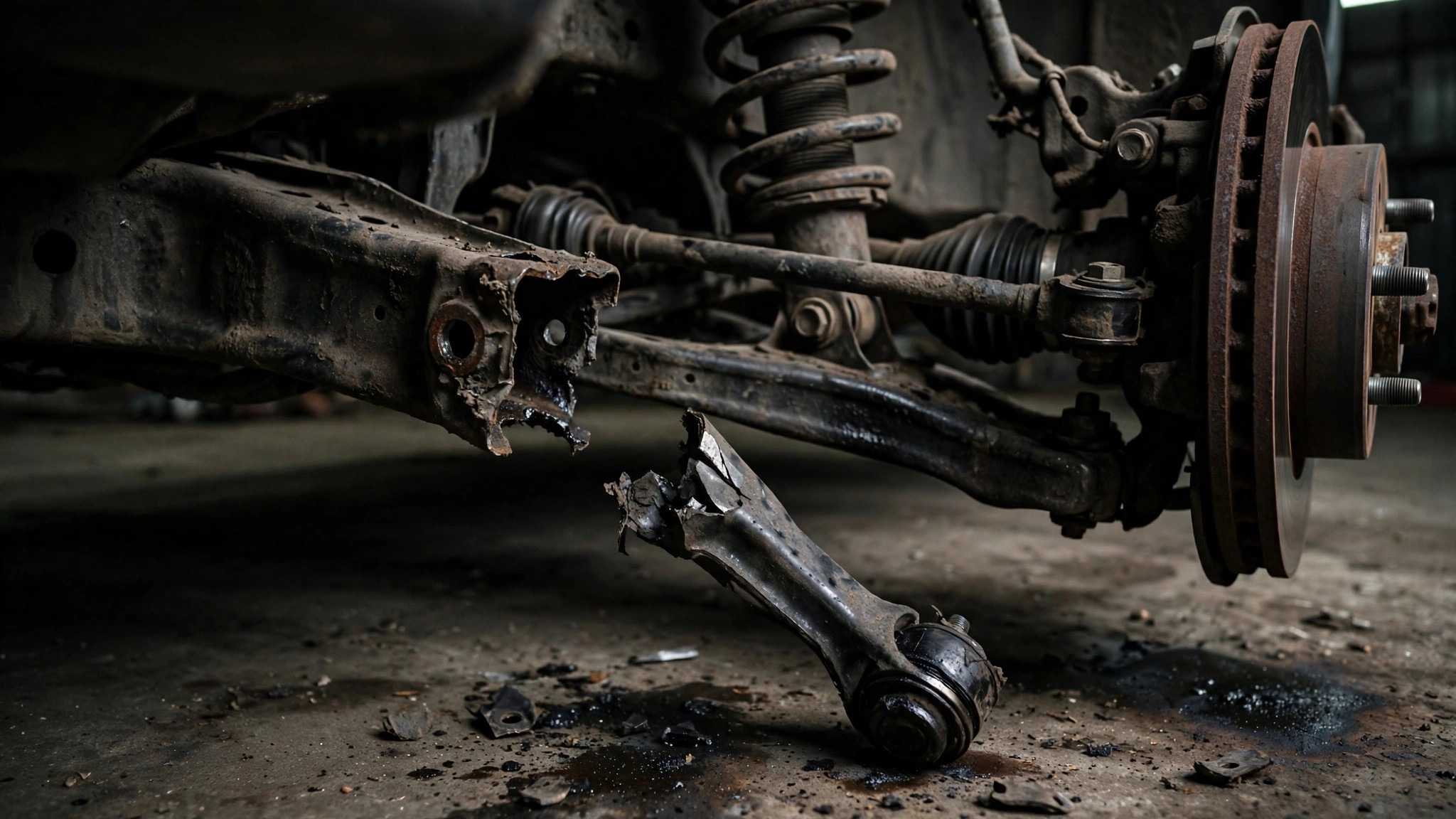
On Friday, NHTSA opened a preliminary investigation into 1.2 million Tesla Model 3 and Model Y vehicles over reports that the front lower lateral link can detach from the subframe without warning, potentially causing loss of steering control.[1] The agency has 156 complaints on file. Most owners said the part just broke, with no advance noise, no dashboard alert, no indication that anything was wrong until the front wheel alignment shifted mid-drive and the car needed a tow truck.
If this sounds familiar, it should. In 2021, Tesla recalled 2,800 Model 3s for the exact same component: front suspension lateral link fasteners loosening and potentially separating from the subframe.[2] Tesla called it a production issue, fixed the torque spec on the assembly line, and moved on. In April 2023, another 422 Model 3s got the same recall, an expansion of the first batch.[3] Same part, same failure mode, same "production issue" language. Two recalls, 3,222 vehicles total, and case closed, apparently, except now the case is 1.2 million vehicles wide and NHTSA says the failures "extend beyond the scope of those recalls and do not appear to be related to the production issue that prompted them."[1]
That sentence deserves a second reading, because the agency is saying these aren't leftover manufacturing mistakes from the same bad batch. Something else is going on.
Rewind further. This isn't Tesla's first tour through the suspension failure investigation process. In November 2020, NHTSA opened a probe into 115,000 Model S and Model X vehicles over suspension component failures.[4] China had already recalled 30,000 of the same cars. Tesla told American regulators the issue was "exceedingly rare" and no US recall was needed. In January 2026, NHTSA closed that probe covering roughly 75,000 vehicles after finding 426 reports of fore link failures but concluding that drivers could still control the vehicle when the part broke.[5] Think about that threshold for a moment: the regulatory standard for closing an investigation was "the suspension can fail and the car doesn't immediately become uncontrollable." Not "the suspension shouldn't fail." Not "a structural component on a car with 50,000 miles shouldn't snap without warning." Just: the driver can probably wrestle the wheel enough to pull over safely. Probably.
Behind the scenes, Tesla knew the problem ran deeper than any single recall. Reuters reported in June 2023 that the company had internally tracked chronic suspension and steering component failures for years.[6] A 2019 internal analysis by a Netherlands-based Tesla engineer found the company was spending nearly $4 million per year on global suspension warranty repairs for the Model S and X alone. Aft-link failures, often on cars less than two years old, accounted for $1.3 million of that total. Tesla had replaced roughly 11,000 suspension parts in 12 months, two-thirds of them under warranty. By February 2022, an internal review noted that "multiple revisions" to the part over several years had finally fixed all "major flaws." Multiple revisions. Several years. Major flaws. But externally, when owners reported suspension failures, Tesla's documented response was to blame driver abuse and deny warranty coverage.[6]
Nine steering and suspension recalls since 2018, per NHTSA records, each one treated as isolated, each one small enough to avoid the kind of headline that forces an engineering reckoning. The 2021 recall covered 2,800 cars; the 2023 expansion added 422. The total from both: 3,222 vehicles, or 0.27% of the 1.2 million now under investigation. If the new probe leads to a recall, it will mean 99.7% of the affected cars were never covered by the fixes Tesla already knew were needed.
There is a paradox buried in the FARS data worth noting. In NHTSA's own fatality statistics, the Model 3 and Model Y are among the safest vehicles on American roads. The Model 3 has a fatality rate of 0.05 deaths per 100 million vehicle miles traveled; the Model Y, 0.03.[7] For context, the average sedan sits around 1.5 to 2.0. These are cars where the occupant protection systems, the crash structures, and the battery packaging conspire to create a remarkably survivable cabin in the event of a collision. That the safest cars in FARS have a chronic structural integrity problem their manufacturer spent years blaming on customers does not cancel out their crash performance. It does, however, suggest that safety ratings and structural durability are two entirely different questions, and conflating them gives manufacturers cover they haven't earned.
As of Friday, NHTSA reports zero crashes, injuries, or fatalities from the lateral link detachments in the current investigation population, which is genuinely good news. It is also the reason every prior investigation into this defect family was closed or resulted in a narrow recall. The suspension breaks, but nobody has died yet, so the regulatory apparatus treats each instance as a contained event rather than an accumulating pattern. The scope went from 2,800 to 1.2 million. The problem went from "production issue" to "extends beyond the scope" of prior recalls. Whether 1.2 million is the final number depends on whether NHTSA is looking at the right question this time.
Sources & References
- Reuters, “US auto safety regulator probes 1.2 million Tesla vehicles over suspension failure risks,” July 31, 2026. reuters.com
- Carscoops, “Tesla Recalls Nearly 3,000 Vehicles For Suspension Link That May Come Loose.” carscoops.com
- Reuters, “Tesla recalls 422 U.S. vehicles over suspension part,” April 7, 2023. reuters.com
- Reuters, “U.S. agency opens probe into 115,000 Tesla vehicles over suspension issue,” November 27, 2020. reuters.com
- IEN/AP, “NHTSA Ends Probe of Tesla Suspension Failures Without Recall,” January 2026. ien.com
- Reuters Special Report, “Tesla blamed drivers for failures of parts it long knew were defective,” June 2023. reuters.com
- NHTSA, Fatality Analysis Reporting System (FARS), 2014–2023. nhtsa.gov