The Model Y Is the Safest Car in America and the Subject of the Largest Safety Investigation in History. Both Are True.
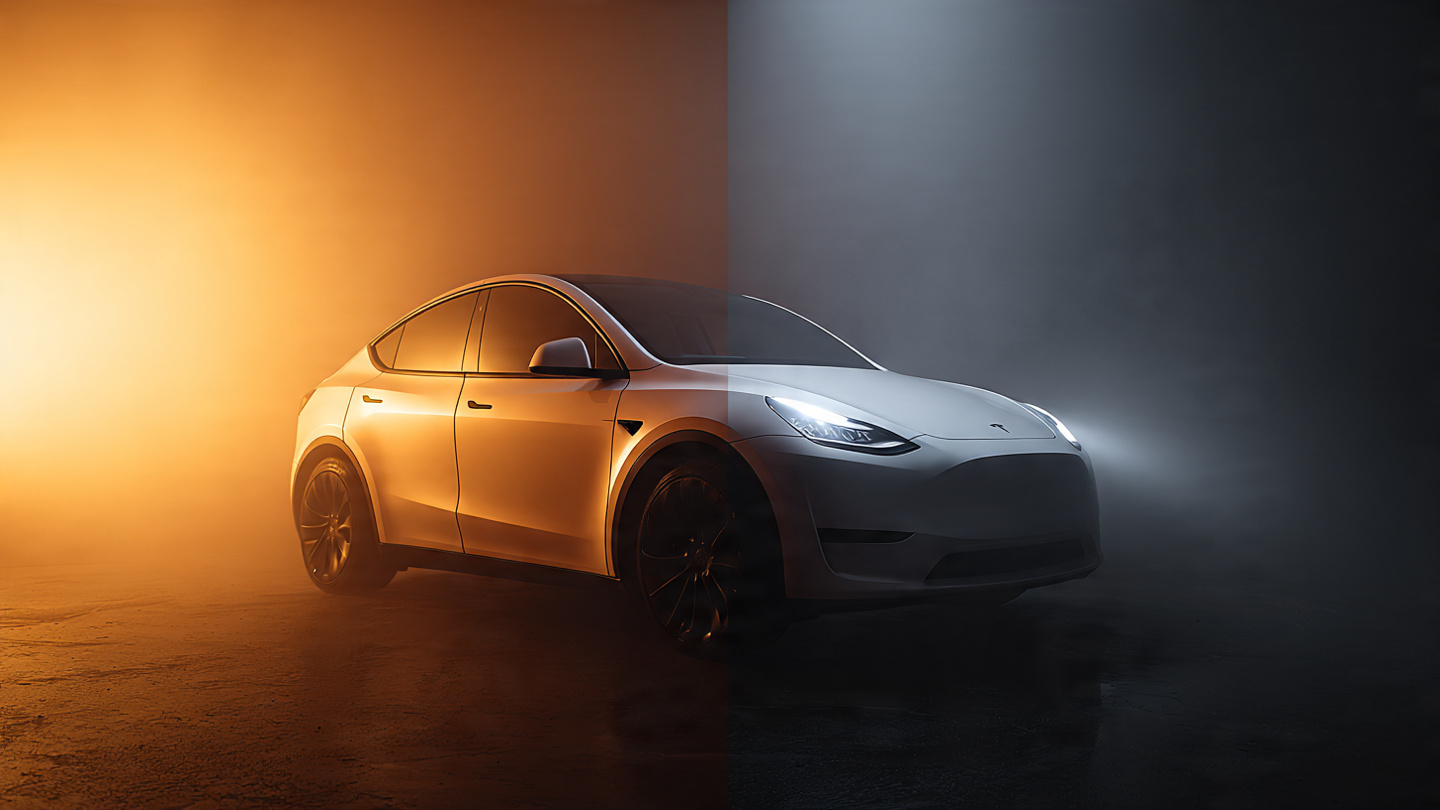
NHTSA runs a database called FARS that tracks every fatal crash on American roads going back decades, logging vehicle make, model, year, and enough toxicology to reconstruct a driver's last bad decision in forensic detail. Across 337 models with statistically meaningful sample sizes, the Tesla Model Y has the lowest fatality rate: 0.03 deaths per 100 million vehicle miles traveled.
Context matters here because the number is so low it barely parses. A Honda Civic kills at 2.25 per 100 million VMT; a Ford Mustang sits at 6.02, which is two hundred times the Model Y's rate and the kind of figure that should come with a liability waiver stapled to the window sticker. Even a Toyota RAV4, that Consumer Reports darling chosen by suburban parents who cross-reference crash ratings before choosing a breakfast cereal, posts a 0.19, which is six times higher and the kind of gap that should make actuaries weep.
This past month NHTSA decided to codify what the data already showed, rolling out its first-ever Advanced Driver Assistance System evaluation criteria and adding four new tests to the New Car Assessment Program: pedestrian automatic emergency braking, lane keeping assistance, blind spot warning, and blind spot intervention.[2] Eight criteria total. A 2026 Model Y passed every single one, making it the only vehicle on sale in America to do so, while the auto industry's lobbying arm, the Alliance for Automotive Innovation, successfully pushed full implementation back to 2027, buying the other 336 vehicles in FARS another year before anyone checks whether their lane-keeping systems actually keep lanes.[3]
One of one.
And here is where the commute turns dark. That same agency, that same NHTSA, is simultaneously running the largest vehicle safety investigation in its history into the same manufacturer, an engineering analysis covering 3.2 million Tesla vehicles equipped with Full Self-Driving software after the agency found that FSD's camera-based perception system fails to detect degraded visibility from glare, fog, and dust.[4] Nine incidents, one fatal crash in November 2023, two injuries. When conditions prevent the cameras from seeing, the system does not gracefully hand control back to the driver; it keeps driving until physics intervenes.
So the federal government is simultaneously celebrating and investigating the same vehicle: safety trophy in the right hand, subpoena in the left.
Not a contradiction but something worse: two different tests measuring two different realities that happen to live inside the same sheet metal, produced by the same company, regulated by the same understaffed agency that cannot decide whether to pin a medal on Tesla or pull its software off the road.
ADAS tests evaluate whether a car can slam on the brakes when a pedestrian dummy steps into the road at 25 mph, whether a lane departure warning chirps before you drift into oncoming traffic, and whether a light blinks when a Honda Odyssey enters your blind spot at highway speed. Reflex tests, essentially, checking whether the car can react to simple, well-defined stimuli under controlled lab conditions. A Model Y aces them because its sensor array and compute stack were built to do far more ambitious things than emergency stops at school-zone speeds, and the surplus capability makes the basics trivial.
FSD is that ambitious thing, the one that takes over steering, acceleration, braking, and navigation on real roads with real weather, real construction zones, and real idiots running red lights in lifted F-250s with paper plates. NHTSA's investigation found that when cameras get blinded by glare or obscured by dust, the system keeps driving without downgrading gracefully and without handing control back with enough warning, which is a polite engineering way of saying it crashes and then a federal agency starts counting bodies.
You can be the safest vehicle in the country when measured by the old rules and simultaneously be the most investigated when measured by the new ones, because the old rules measure physics and the new rules measure software, and these are fundamentally different domains with fundamentally different failure modes. A Model Y's 0.03 death rate is a product of 4,400 pounds of battery-weighted mass, a center of gravity so low the thing grips asphalt like a hockey puck, modern crumple zones designed by engineers who've studied every fatal crash NHTSA has ever recorded, and a driver population that skews wealthy, educated, and sober. FSD crashes are a product of a neural network that processes camera feeds and sometimes hallucinates open road where there is fog.
Physics doesn't have visibility bugs.
There is a temptation to pick sides, and both sides are wrong in the same way: Tesla partisans cite the 0.03 and call the investigation regulatory theater, while Tesla critics cite the investigation and dismiss the 0.03 as survivorship bias from a heavy car that kills the other guy instead of its own occupants. Both camps miss the point that these data measure completely separate failure modes coexisting in a single vehicle without canceling each other out, which is exactly the kind of nuance that disappears when a story gets compressed to a headline.
Within Tesla's own lineup the paradox compounds, because a Model S posts a fatality rate of 0.50, more than sixteen times deadlier than a Model Y per mile driven.[1] Same manufacturer, same Autopilot hardware generation, same FSD software subscription, same over-the-air update cadence, but a completely different vehicle attracting a completely different driver. A Model S drew early-adopter buyers with impairment rates rivaling sports cars, while a Model Y attracted families who wanted a safe crossover and a federal tax credit, which means the vehicle didn't change but the driver did, and the driver turned out to be the variable that mattered most.
Limitations
FARS covers 2014 through 2023, but a Model Y only entered the market in 2020, which means the 0.03 rate rests on roughly four years of data and only 57 occupant deaths across the entire fleet, a sample small enough that a handful of additional fatalities in a single quarter would shift the rate meaningfully. Tesla's fleet size is estimated from sales data rather than DMV registrations, introducing higher uncertainty than legacy OEM figures. FSD's investigation has not concluded and may not result in a confirmed defect or recall. Finally, ADAS tests and Full Self-Driving are fundamentally different systems operating at different levels of autonomy; passing one says nothing about the safety of the other, which is precisely the point of this article but worth stating explicitly so nobody mistakes correlation for validation.
What to do with this
If you are shopping for an SUV and care about surviving a crash, the Model Y's FARS record is the best in the database, full stop, and the physics protecting occupants (mass, battery placement, structural rigidity) work regardless of what software is running. If you are using Full Self-Driving, NHTSA's investigation documents that the system fails in fog, glare, and dust without adequate warning, so keep your hands on the wheel and your eyes on the road, especially when the road is hard to see. Check your vehicle's NHTSA safety rating and any open investigations at nhtsa.gov/vehicle.
Sources & References
- NHTSA, Fatality Analysis Reporting System (FARS), 2014–2023. 337 models with 50+ deaths or >1k annual sales. Tesla Model Y: 57 deaths, 0.03/100M VMT. Model S: 0.50/100M VMT. nhtsa.gov
- NHTSA, New Car Assessment Program: ADAS evaluation criteria, May 2026. Four new tests: pedestrian AEB, lane keeping, blind spot warning, blind spot intervention. Tesla Model Y first vehicle to pass. nhtsa.gov
- Alliance for Automotive Innovation lobbied for delayed ADAS test implementation to 2027. Reported by TechCrunch, Autoblog, Electrek, May 2026. autonews.com
- NHTSA, Engineering Analysis EA-25-001: Tesla Full Self-Driving, 3.2 million vehicles. FSD camera system fails to detect degraded visibility from glare, fog, dust. Nine incidents, one fatal. nhtsa.gov
- Reuters, “Tesla Model Y is first vehicle to pass new US driver assistance system tests,” May 2026. reuters.com
- Electrek, “Tesla is one step away from having to recall FSD in NHTSA visibility crash probe,” 2025–2026. electrek.co
Source: NHTSA FARS 2014–2023. Fatality rates are estimated using sales-based fleet sizes and NHTS VMT averages; Tesla fleet estimates may carry higher uncertainty than legacy OEM figures. FSD investigation is ongoing and no defect has been formally confirmed. See methodology for caveats.