The Safest Vehicle in America Might Burn Down in Your Garage
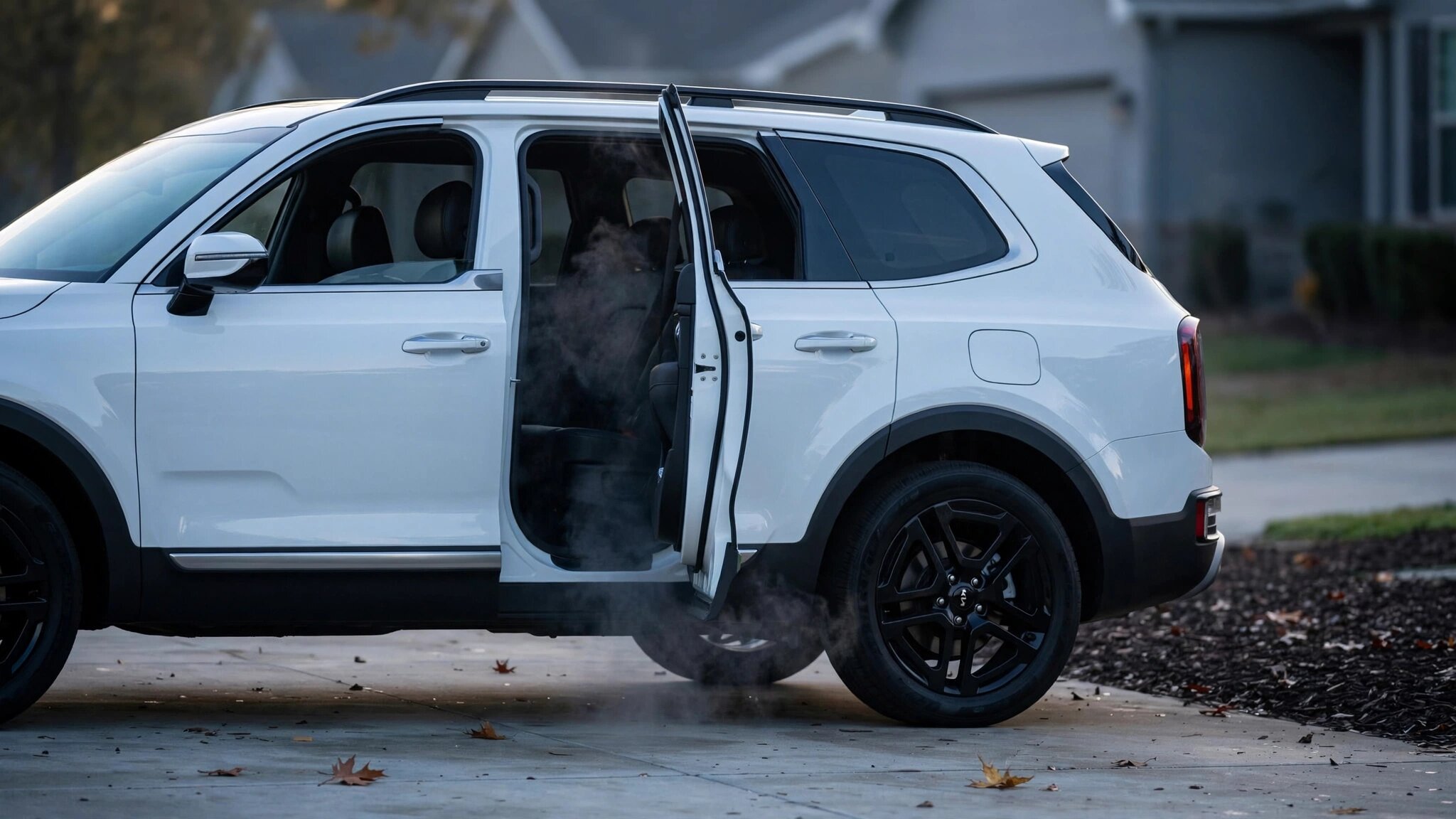
Thirty-one people. That is how many occupants the Kia Telluride has killed in fatal crashes across the entire FARS dataset, spanning a decade and a fleet of more than 600,000 vehicles.[1] Its fatality rate sits at 0.04 deaths per 100 million vehicle miles traveled, second only to the Tesla Model Y at 0.03. Every other vehicle on American roads kills at a rate more than twenty times higher.
On July 9, NHTSA posted the recall. Under certain conditions, the front power seat motor can overheat and ignite a fire, whether the Telluride is parked in your driveway at 3 a.m. or cruising at highway speed.[2] A stuck slide knob or, in a detail that should make your teeth itch, an improper repair from a previous recall is the cause. What was supposed to fix one problem became the ignition source for the next. Kia estimates 100 percent of the recalled vehicles carry the defect.
That number demands a question nobody building safety rankings has bothered to ask. FARS tracks crash deaths, and only crash deaths, which means a Telluride that incinerates in a parking garage without ever touching another vehicle at speed produces zero entries in the database powering every safety ranking you have ever read. IIHS ratings, NHTSA's five-star program, Consumer Reports: all built on crash test performance and crash avoidance.[3] Not one asks whether the driver's seat might spontaneously combust.
According to the National Fire Protection Association, vehicle fires kill roughly 560 people and injure 1,500 annually in the United States alone, causing $1.9 billion in property damage.[4] Those deaths never lower a safety rating and never appear in the comparison tables we publish on this site. A vehicle can have a death rate of zero and still leave a family homeless because the seat motor decided to cosplay as a space heater while everyone slept upstairs.
Here is the strongest argument against panic, and it is also true: the recall system worked as designed. Kia found the defect, NHTSA posted the notice, dealers will install an electronic fuse at no charge. Nobody has publicly reported a death from this failure. By every crashworthiness measure, the Telluride remains genuinely safe — its 0.360 death-per-crash ratio means occupants survive nearly two-thirds of fatal incidents.[1] Real engineering built that margin. A seat motor defect does not erase it.
But the gap between what we measure and what can hurt you is the whole story. Crash death rates are the sharpest tool we have, and we will keep using them, but they are structurally blind to fire risk, electrical failures, carbon monoxide intrusion from exhaust leaks, post-park thermal runaway in EVs — an entire category of automotive hazard invisible at the point of purchase. Nobody has ever walked into a dealership asking for a vehicle's recall-risk score, and maybe it is time they did.
If you own a Telluride, check your VIN at nhtsa.gov/recalls today rather than waiting for the mailed notification. And the next time someone tells you a vehicle is the safest on the road, ask them: safest against what?
Sources & References
- NHTSA, Fatality Analysis Reporting System (FARS), 2014–2023. Kia Telluride: 31 deaths, 86 fatal crash involvements, estimated fleet 612,500, rate 0.04/100M VMT. nhtsa.gov
- Reuters, “Kia to recall about 463,000 US vehicles over fire risk, regulator says,” July 9, 2026. Front power seat motor overheat, all model years. reuters.com
- IIHS, Vehicle Ratings; NHTSA, 5-Star Safety Ratings. Both programs evaluate crashworthiness and crash avoidance. Neither tests for non-crash fire risk. iihs.org
- National Fire Protection Association, Vehicle Fire Trends and Patterns. Approximately 174,000 highway vehicle fires annually, 560 deaths, 1,500 injuries, $1.9B in property damage. nfpa.org