72% of America's Road Deaths Happen in Cars Too Old for Stability Control
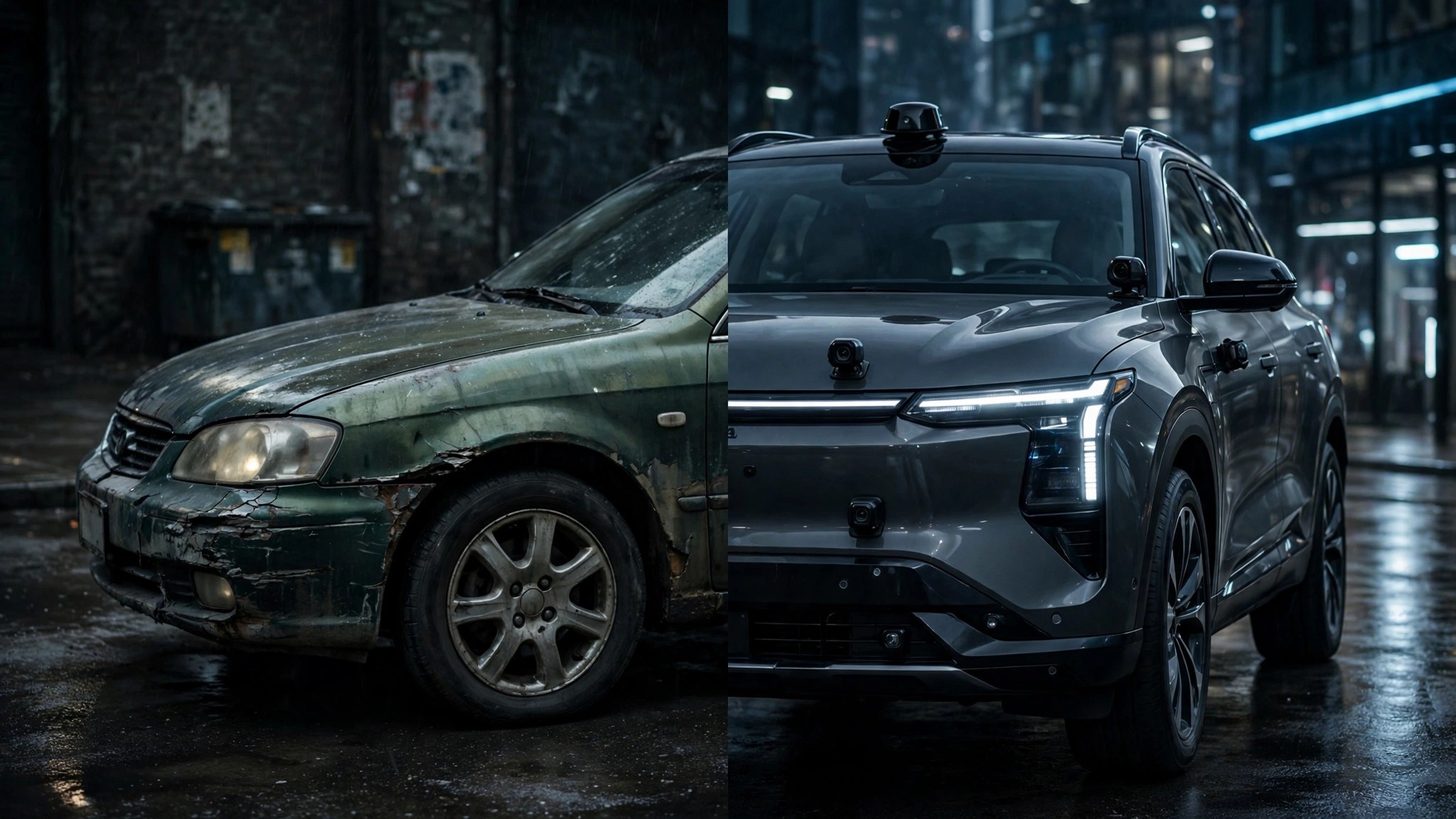
NHTSA just dropped its 2025 sub-category report, and the headline writes itself: 36,640 people died on American roads last year, down 6.7% from 2024's 39,254. That's 2,614 fewer funerals. A fatality rate of 1.10 per 100 million VMT, the lowest full-year number since 2014.[1] Encouraging. Historic, even.
Except the decline has a demographic it forgot.
Cross-tabulating a decade of FARS model-year data (2014–2023, 337 vehicle models), I sorted every fatality by whether the vehicle was built before or after model year 2012, the year electronic stability control became mandatory under FMVSS 126.[2] The split: 134,491 deaths in pre-2012 vehicles. 52,567 in post-2012. Nearly three-quarters of America's crash deaths over that decade happened in cars that never had to pass a stability control test.
Push the cutoff to model year 2018, roughly when automatic emergency braking started becoming a standard feature across most lineups, and the gap gets obscene: 172,849 pre-AEB deaths versus 14,209 post-AEB. A 12.2-to-1 ratio.[3]
This matters right now because the 2025 sub-category breakdown reveals exactly where the savings are landing. Fatalities in newer vehicles (under 10 years old) dropped 12%. Older vehicles dropped only 9%. Rollovers, the crash type ESC was specifically designed to prevent, fell 11%. Ejections fell 13%, tightly correlated with seatbelt-reminder improvements in modern interiors.[1]
The pre-2012 death leaders read like a used-car lot inventory. Silverado: 7,731 pre-ESC deaths. F-150: 7,307. Accord: 5,611. Civic: 4,907. Camry: 4,561. These aren't exotic vehicles with exotic failure modes. They're the exact cars sitting on every buy-here-pay-here lot in the country, the ones that 22-year-olds finance at 18% APR because the monthly payment fits.
Meanwhile, the 65-and-older age group saw exactly zero percent decline in 2025. Not a rounding artifact. Flat. Every other age bracket improved; the 25–34 cohort dropped 13%.[1] Older drivers are also the demographic most likely to be in a decade-old sedan without curtain airbags, without AEB, without ESC. Safety tech saving everyone else hasn't reached their driveway yet.
Even the outliers reinforce the pattern. Rural interstates, the one road type where deaths actually increased (up 1%), are the roads where older, longer-held vehicles accumulate. Pedalcyclists, up 4%, have no vehicle protection at all. The 2025 miracle is an engineering miracle, and it works exactly as far as the engineering reaches.
Uncomfortable math: if every vehicle on the road today had ESC and AEB, a back-of-envelope calculation using the 12% newer-vehicle improvement rate and current fleet-age distribution suggests somewhere north of 3,500 additional lives saved annually. That's a mid-size city's worth of people, alive, because their car's computer grabbed the brakes 200 milliseconds before impact.
What you can do: Check your vehicle's model year. If it's 2011 or older, it almost certainly lacks mandatory ESC. If it's pre-2018, it likely lacks AEB. IIHS maintains a searchable rating database where you can check what your specific vehicle has. If you're shopping used, a 2018+ model year with standard AEB is the single biggest safety upgrade you can buy, often for the same price as an older vehicle a few trim levels higher. The 6.7% decline is real. Whether it applies to you depends on what's parked in your garage.
Sources & References
- NHTSA, Early Estimates of Motor Vehicle Traffic Fatalities and Fatality Rate by Sub-Categories in 2025, DOT HS 813 829, July 2026. crashstats.nhtsa.dot.gov
- NHTSA, Federal Motor Vehicle Safety Standard No. 126: Electronic Stability Control Systems, Final Rule, April 2007. ESC required for all passenger vehicles model year 2012 and later. govinfo.gov
- NHTSA FARS 2014–2023, cross-tabulation of fatalities by vehicle model year. 337 models with 50+ deaths. Model-year cutoffs: MY 2012 (ESC mandate) and MY 2018 (approximate start of widespread standard AEB). See methodology.
- IIHS, “Life-saving benefits of ESC continue to accrue,” 2011. iihs.org
Limitations
This analysis attributes deaths to technology cohorts by model year, not by individual vehicle equipment verification. Some pre-2012 vehicles had voluntary ESC; some post-2012 vehicles have aftermarket modifications that may disable it. The 72% figure uses FARS data from 2014–2023, meaning the oldest vehicles in the dataset were already aging out of the fleet during the observation period. Fleet composition in 2025 likely has a higher share of post-2012 vehicles than the 10-year average suggests. The "3,500 additional lives" estimate assumes the newer-vehicle improvement rate would apply uniformly to the older fleet, which overstates the impact because some older-vehicle deaths involve factors (vehicle age-related component failure, structural degradation) that ESC and AEB cannot address.
Strongest Counterargument
Correlation between vehicle age and fatality rates conflates technology with economics. Drivers in older vehicles skew younger, lower-income, and are more likely to drive in higher-risk conditions (longer commutes, less-maintained roads, no comprehensive insurance incentivizing safer choices). The 72% figure may overstate technology's role and understate the economic determinants of crash survival. A Cash for Clunkers-style fleet turnover program might not reproduce the 12% improvement rate if the same drivers simply transfer their risk profile to newer vehicles.