Every Vehicle Category Got Safer in 2024. Except the One You Bought.
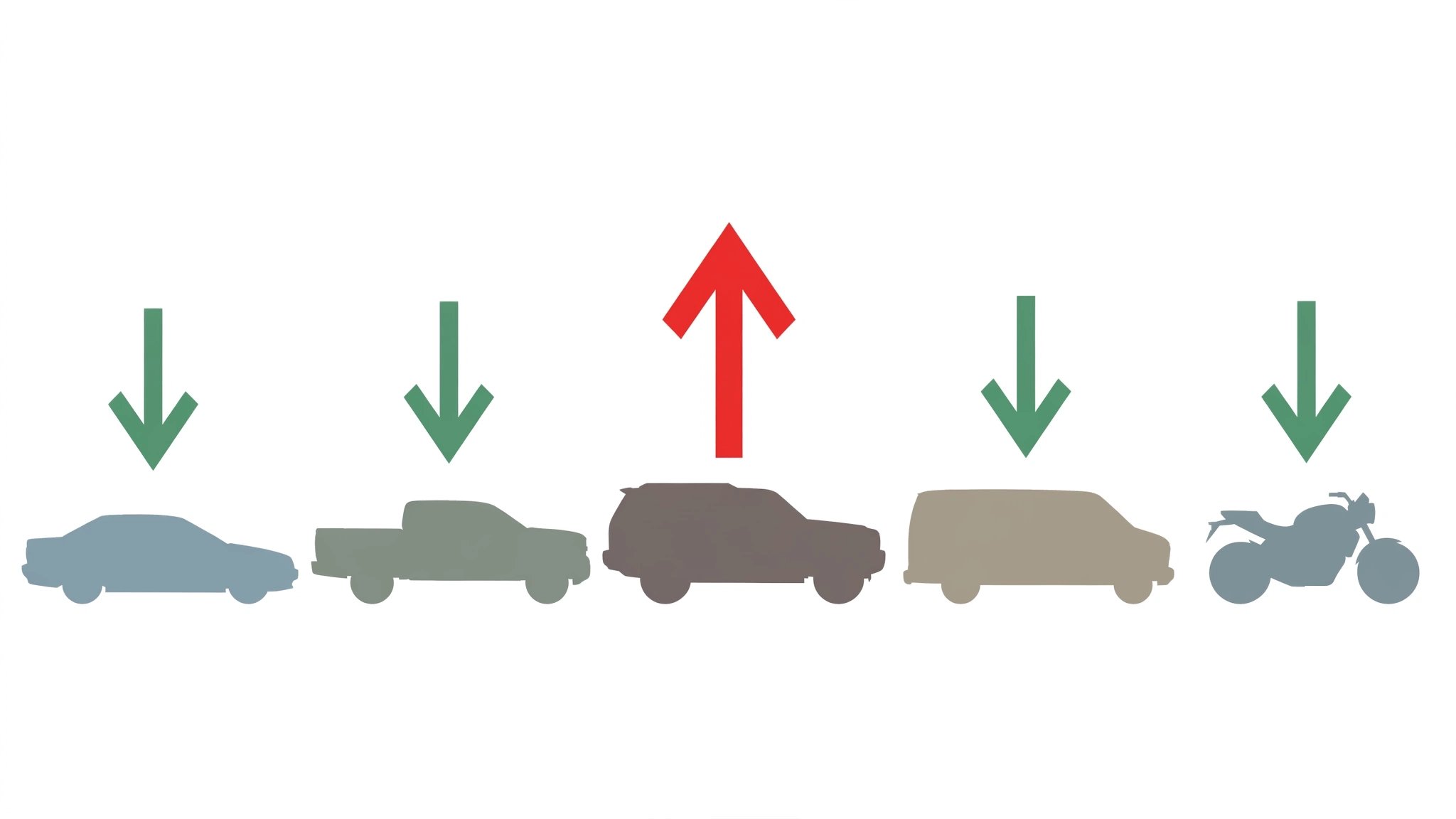
NHTSA released its 2024 Fatality Analysis Reporting System data in April, and the headline number looks like progress: 39,254 people died on American roads, down 4.3 percent from 41,025 in 2023. Passenger car occupant deaths plummeted 9.7 percent, pickup deaths fell 4.9 percent, and vans dropped 5.7 percent. Pedestrian deaths declined 3.9 percent, pedalcyclist deaths fell 6 percent, and even motorcyclists caught a break at negative 2.2 percent. Every line in the FARS table moved in the right direction.
Every line except one.
SUV occupant fatalities rose from 6,901 to 7,013, a 1.6 percent increase, not dramatic, not a spike, just a quiet, steady lurch in the wrong direction while the rest of American traffic safety was, for once, collectively doing something right. America drove 47 billion more miles in 2024 than in 2023, a 1.5 percent increase, and the overall fatality rate dropped to 1.19 per 100 million vehicle miles traveled, the third consecutive year-over-year decline since the 2021 pandemic-era carnage peak.[1]
Injuries tell the same story, only louder. An estimated 723,240 SUV occupants were injured in 2024, up 4.2 percent from 694,288 the prior year. Pickup occupant injuries fell 9.2 percent and car occupant injuries dropped 4.6 percent, both statistically significant, while SUV injuries climbed at nearly three times the rate of national VMT growth. This is not a rounding error in more driving.[1]
The instinctive rebuttal writes itself: more SUVs on the road means more SUV crashes, and SUV registrations have been climbing for a decade, and the crossover boom shows no sign of slowing. If the SUV fleet grew 3 to 4 percent while deaths grew only 1.6 percent, the per-vehicle death rate actually improved. That argument deserves its full weight, because it is partly correct, and partly the most dangerous thing you can say about traffic safety. A category that adds 112 bodies to a declining national total is not "improving." It is eating the gains. The 1,153 fewer car occupant deaths in 2024 are extraordinary. They represent, in crude terms, three fewer families per day receiving the worst phone call of their lives. SUVs gave 112 of those lives back, and pickups, vans, large trucks, motorcyclists, pedestrians, and cyclists all took fewer; only SUVs took more.
Something else moved in the wrong direction in 2024: fatalities involving older drivers, those 65 and above, increased by 115, a 1.4 percent rise, the only driver age group to worsen.[1] Older Americans buy SUVs at disproportionate rates. The high seating position, the ease of entry, the sense of mass and command. Whether that demographic shift explains part of the SUV divergence is an open question NHTSA has not broken out, and the 2024 ARF does not cross-tabulate driver age by vehicle subtype. But the correlation deserves scrutiny rather than a shrug.
Alcohol is not the explanation, either, because the number of alcohol-impaired SUV drivers in fatal crashes actually decreased slightly, from 2,641 in 2023 to 2,624 in 2024. Nineteen percent of SUV drivers in fatal crashes were impaired, unchanged from the prior year and well below the 25 percent rate for passenger car drivers. The additional 112 SUV deaths were sober crashes, which makes the problem harder, not easier.[1]
FARS per-model data from 2014 through 2023 shows the SUV class averaging a fatality rate of 5.47 deaths per 100 million vehicle miles traveled, straddling sedans at 13.92 and pickups at 8.86 (both inflated by high-rate legacy models). But the SUV label covers a 41-fold rate gap: the Toyota RAV4 sits at 0.19 deaths per 100M VMT with 914 total deaths across a fleet of 3.76 million, while the Chevrolet Tracker clocks 7.83 with 856 deaths from a fleet one-forty-third that size.[2] Calling both "SUVs" is like calling a surgical scalpel and a chainsaw "cutting tools," technically accurate but operationally meaningless.
If you are shopping for an SUV right now, the FARS data suggests a short list with outsized safety margins: the RAV4, the Equinox at 0.36, the Rogue at 0.35, the Tucson at 0.34, and the Grand Cherokee at 0.51. On the other end, the Tracker, Trailblazer at 2.83, Tahoe at 2.49, and GMC Yukon at 2.55 carry rates that would embarrass some sedans. Check your VIN at nhtsa.gov/recalls regardless of where your model falls.[2]
The 2024 FARS data is the Annual Reporting File, not the Final File, which typically arrives months later and can revise numbers by low single-digit percentages. The SUV category lumps subcompact crossovers with full-size body-on-frame trucks wearing the same regulatory label. And NHTSA has not released per-model 2024 data yet, so this analysis cannot pinpoint which specific SUVs drove the increase. Those caveats are real, but they do not change the structural fact: in a year when American roads got meaningfully safer, the vehicle type that now accounts for the largest share of new-car sales was the sole category that got measurably worse.
The national headline will say 39,254, down 4.3 percent, and it is genuine progress. But progress built on the category that tens of millions of Americans drive getting quietly, sober-ly, 112-bodies-more-dangerous is progress with a crack in the foundation. The question is whether anyone looks down before the next model year.
Sources & References
- NHTSA, Research Note: Overview of Motor Vehicle Traffic Crashes in 2024 (DOT HS 813 791), April 2026. crashstats.nhtsa.dot.gov
- NHTSA, Fatality Analysis Reporting System (FARS), 2014–2023 Final Files. nhtsa.gov
- NHTSA, 2025 Traffic Death Estimates & 2024 FARS, press release. nhtsa.gov