The Cheapest Sports Car in America Is Also the Deadliest Vehicle on the Road
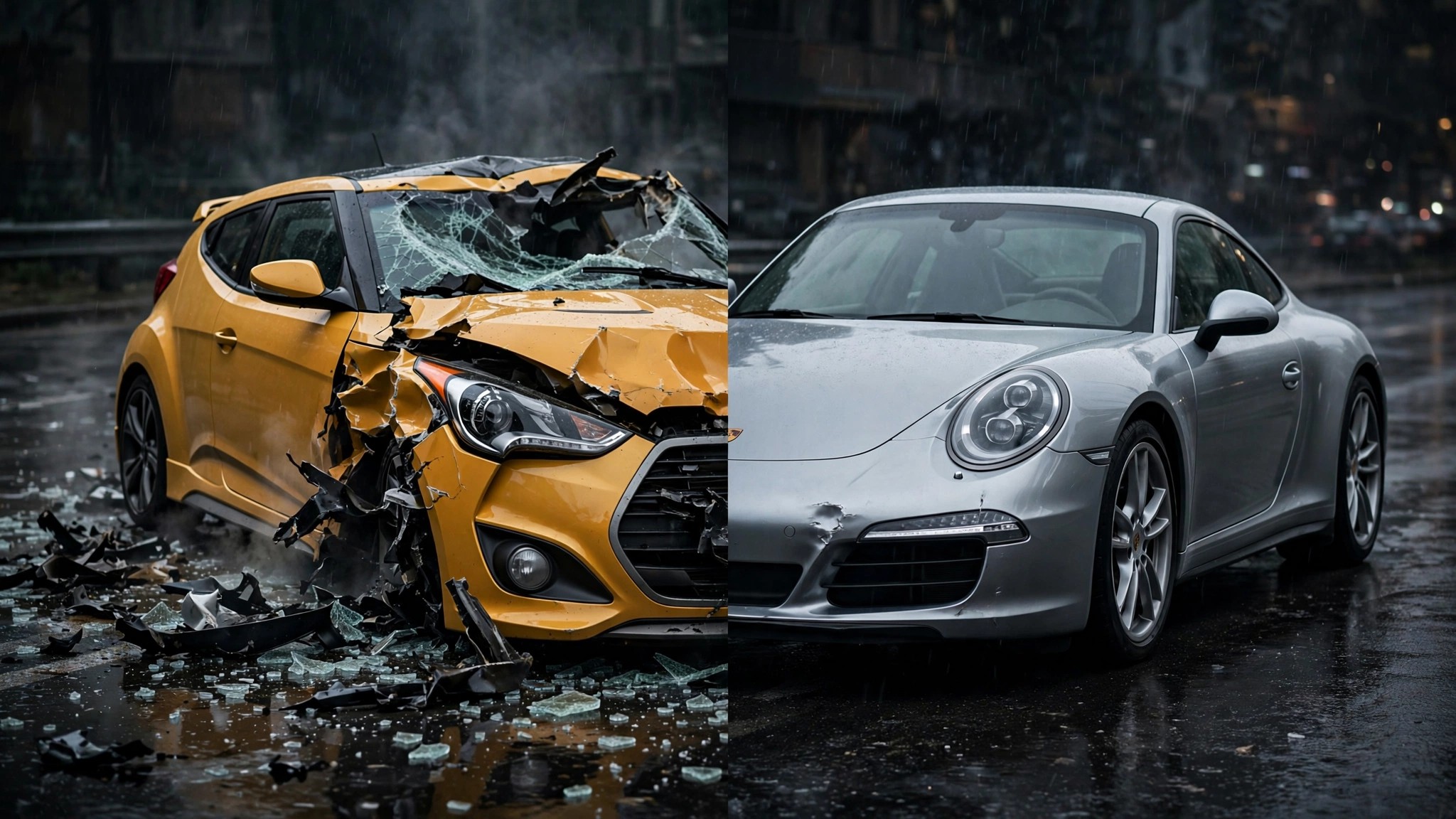
Across 337 vehicle models in NHTSA's FARS database, one stands alone at the top of the fatality rate chart, and it's neither a pickup nor a muscle car. Hyundai's Veloster kills at 8.54 deaths per 100 million vehicle miles traveled, outpacing every single model in the dataset from 2014 to 2023. Next closest sports car: Ford Mustang at 6.02, with the Porsche 911 sitting at 0.69.
Conventional wisdom says sports cars are dangerous because of the people who drive them, but FARS toxicology data says otherwise. Among 489 Veloster drivers involved in fatal crashes, only 17.4% tested positive for alcohol or drugs. That's the lowest impairment rate of any sports car in the database with a meaningful sample size. Compare that to the Corvette, where 26.2% of 1,147 fatal-crash drivers were impaired, or the 911 at 22.8% of 171 drivers. Cars that cost the most have the drunkest drivers, and the cheapest one has the most sober drivers dying in it.
That math should bother you, because a Corvette driver is 50% more likely to be chemically impaired in a fatal crash than a Veloster driver. Yet the Veloster driver is 5.6 times more likely to die per mile driven. If behavior explained the gap, those numbers would run in the same direction. They don't, and the reason isn't complicated: it's 2,750 pounds of sheet metal and a $22,000 sticker price against engineering that costs three times as much to build right.[1]
IIHS research quantifies the physics: below the 4,000-pound fleet average, every additional 500 pounds of curb weight reduces driver fatality rates by 17 deaths per million registered vehicle years. At roughly 2,750 pounds, the Veloster sat well below that threshold. A Challenger, which posts a comparatively tame 1.00 death rate, tips the scales at 4,200, but weight alone doesn't explain everything. Mazda's MX-5 Miata weighs even less than the Veloster at about 2,400 pounds and still manages a rate of just 1.79. Mazda's SKYACTIV platform absorbs energy differently than Hyundai's subcompact architecture from that era, and the Miata attracts an older, more experienced buyer demographic than a car marketed as the cheapest thrill on four wheels.[2][3]
Which means this isn't purely a physics story, and pretending otherwise would be sloppy. What killed at 8.54 per 100M VMT was a compound of structural inadequacy, low curb weight, and a specific population of young, first-time buyers Hyundai targeted with sub-$23,000 pricing and aggressive styling cues that advertised speed without engineering the survival to match. But the toxicology data eliminates the laziest excuse in the book. These drivers weren't partying harder than Corvette owners. They just had less car around them when the crash happened.
Hyundai discontinued the Veloster in 2021, and NHTSA never opened a formal defect investigation into its crashworthiness. Across a fleet of roughly 87,500 vehicles over the study period, those 598 deaths work out to about 60 fatal crashes per year in a car that was never a volume seller.
That pattern holds across the entire segment. Plot MSRP against FARS fatality rate for every sports car and the curve is unmistakable: death rates drop as price rises, not because rich people drive more carefully — impairment data proves they don't — but because more expensive cars are engineered with better crash structures, stiffer passenger cells, more advanced restraint systems, and wider tires that keep the car pointed the right direction in the first instant of a loss-of-control event. Safety costs money, and FARS measures who paid enough.
What This Means for Buyers
If you're shopping for a sports car under $30,000, FARS data has a clear message: weight and structural engineering matter more than horsepower figures. A Dodge Challenger, at 4,200 pounds and a rate of 1.00, is six times safer per mile than a Mustang at 3,700 pounds and 6.02. Even the Miata, despite being featherweight, benefits from purpose-built roadster engineering that the Veloster's repurposed subcompact platform never had. Check IIHS ratings, look at crash-test video deformation patterns, and understand that a low sticker price on a light car means the savings came from somewhere.