Speed Deaths Returned to Pre-Pandemic Levels. That's 10,000 Funerals Per Year.
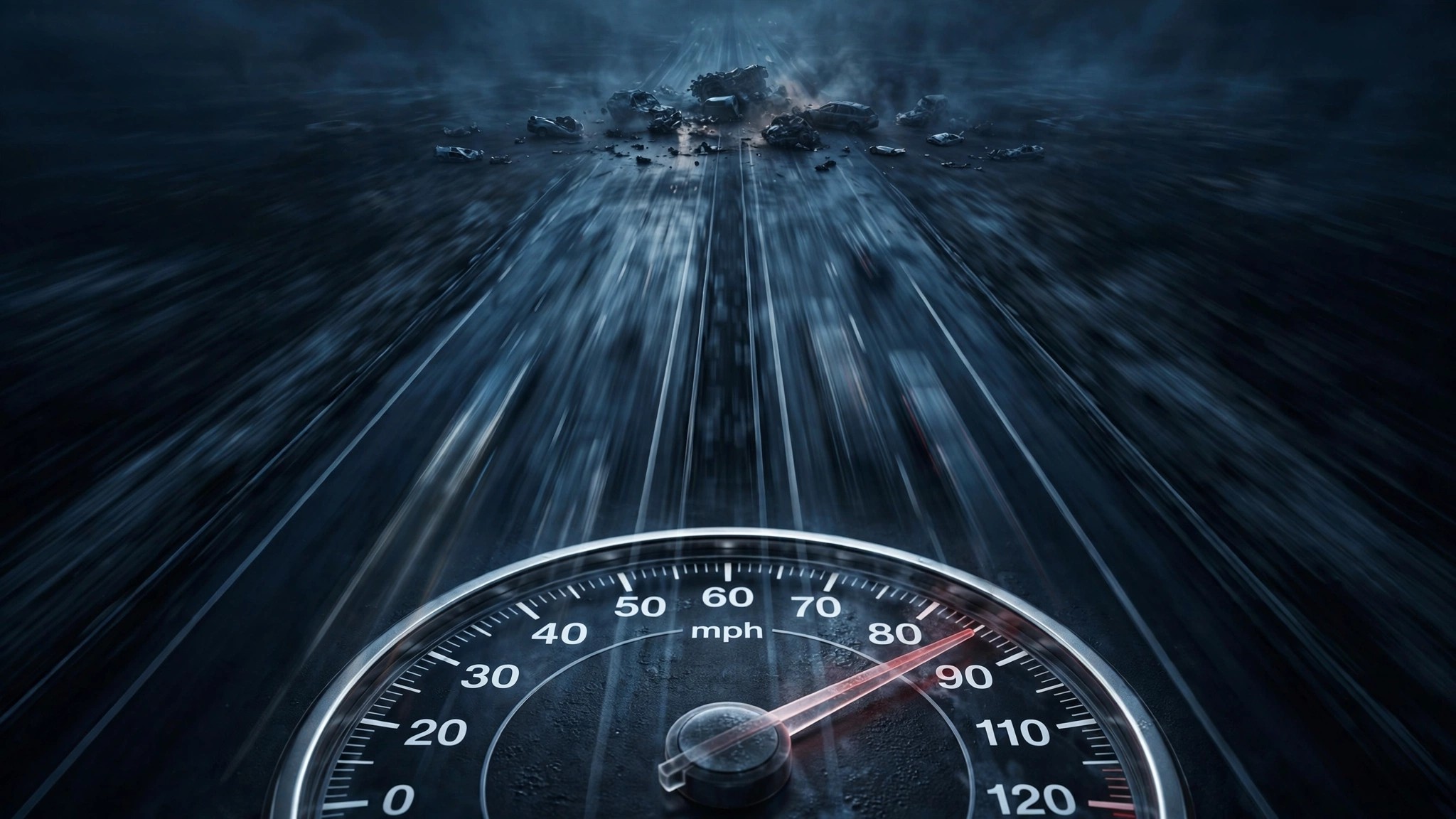
NHTSA's latest numbers are in: an estimated 10,035 people died in speeding-related crashes in 2025, an 11% drop from 2024's 11,288. Agency officials call this "a return to pre-pandemic numbers last seen in 2019." That framing does a lot of work. It asks you to feel relief that America only speed-killed ten thousand people last year.[1]
Between 2020 and 2024, speeding deaths ran 1,000 to 2,200 above 2019 levels each year. COVID emptied highways, and remaining drivers treated I-95 like the Autobahn. Lockdowns ended. Foot-to-floor behavior persisted for half a decade. Conservatively, that behavioral overshoot produced 5,000 to 8,000 excess deaths that didn't have to happen.[2]
Speeding accounted for 29% of all traffic fatalities in 2024. Not impairment. Not distraction. Raw, unmodified velocity. It remains the single largest behavioral contributor to road deaths in America, yet it doesn't get a fraction of the enforcement attention that drunk driving does.
FARS data complicates this picture further. Vehicles with the highest per-mile fatality rates aren't just obvious sports cars. Three sedans match or exceed purpose-built performance machines: Nissan Maxima (5.11 deaths per 100M VMT), Chevrolet Cobalt (5.10), and Chevrolet Impala (5.00). Ford's Mustang sits at 6.02. Camaro: 3.44. Corvette: 1.52. A V6 Maxima from 2008 is statistically more dangerous per mile driven than a Corvette.[3]
Impairment data breaks the intuition completely. Sports cars average 22% impairment in fatal crashes. Meaning 78% of the time, a driver who died behind the wheel of a Mustang or Camaro was stone cold sober. Speed was chosen. Deliberately. That "drunk driver going fast" narrative accounts for barely a fifth of sports car fatalities.[4]
Class-level death rates tell the macro story: sports cars kill at 15.93 per 100M VMT, sedans at 11.86, pickups at 8.86, vans at 5.71, SUVs at 5.06. Sedans kill at more than twice the rate of SUVs. Every suburban parent who upgraded from a Camry to a RAV4 made a statistical bet that paid off, though they probably didn't know it at the time.
So 2025 brought us back to 2019. NHTSA's campaign announcing this was titled "Speeding Catches Up with You." Irony is structural: speed enforcement budgets have been declining for a decade, automated speed cameras remain politically radioactive in most states, and vehicle horsepower-to-weight ratios sit at historic highs. An 11% drop may reflect economics (higher gas prices curbing VMT growth) more than behavioral change.
If you're shopping for a used sedan with a V6: check its FARS death rate, not just its IIHS sticker. Maxima, Impala, and Cobalt all earned decent safety ratings in their day. Crash-test dummies survived. Real drivers, at highway-plus speeds, did not. IIHS lab tests max out at 40 mph. American highways operate at 75.
Sources & References
- NHTSA, "Speeding Catches Up with You" Campaign Launch and 2025 Speeding Fatality Estimates, July 2026. nhtsa.gov
- NHTSA, Early Estimates: Traffic Crash Deaths Jan–Sept 2025. Projected 27,365 fatalities, 6.4% decline vs. 2024; fatality rate 1.10/100M VMT. nhtsa.gov
- NHTSA, Fatality Analysis Reporting System (FARS), 2014–2023. Per-model death rates estimated from FARS fatalities, industry fleet data, and NHTS VMT assumptions. nhtsa.gov
- FARS Toxicology data, 2014–2023. Sports car class average: 22.0% any-impairment rate across 14 models. Impairment defined as BAC > 0 or drug-positive result.