Toyota Built a Camry Coupe. It’s 2× Deadlier Than the Camry.
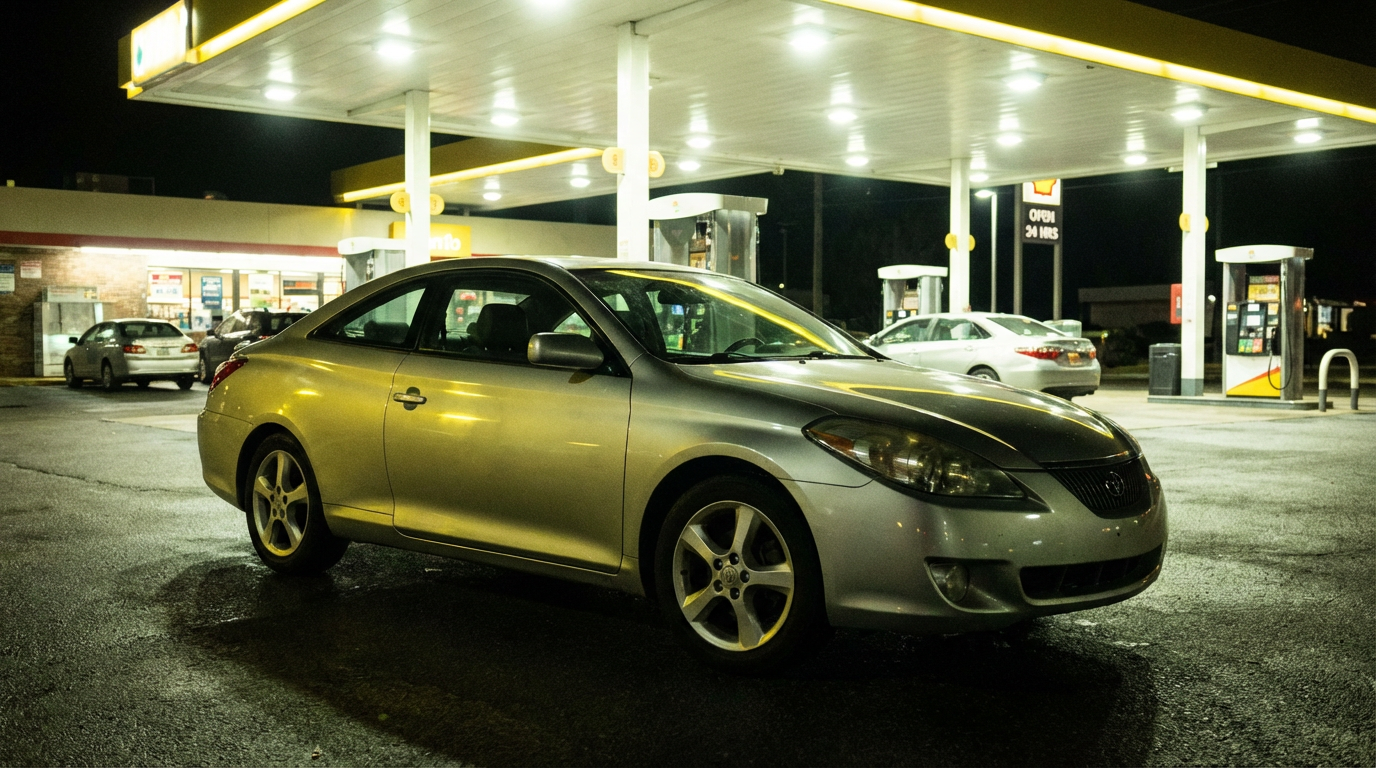
Let’s talk about what happens in the first 150 milliseconds. Because if you’re in a Toyota Solara, those milliseconds are working against you at 4.25 deaths per 100 million vehicle miles traveled — making it the deadliest Toyota per mile in the entire FARS database.
The Solara is, mechanically speaking, a Toyota Camry. Same XV20 and XV30 platform. Same 2.4-liter inline-four or 3.3-liter V6. Same factory in Georgetown, Kentucky. Toyota took America’s best-selling sedan, chopped two doors off, stiffened the suspension, and created something that kills at more than double the rate.
How? Start with the demographics. The Solara attracted a different buyer — younger, more likely to push the car’s limits on back roads and highway on-ramps. But the impairment data undercuts the obvious explanation: only 4.1% of Solara drivers in fatal crashes tested positive for any substance. The Camry? 19.2%. Solara drivers are dying sober at a rate that should alarm Toyota engineers.
The model year data tells the rest of the story. Year 2000 Solaras peaked at 60 fatalities — from a model that sold roughly 100,000 units in its best year. That’s a staggering concentration. The second generation (2004–2008) continued the trend: 42 deaths from model year 2006 alone, a full decade after the car was new. These aren’t first-owner crashes. They’re used-car-lot casualties.
For context, look at every other sporty coupe in the database with comparable fleet size. The Mitsubishi Eclipse: 0.81. The Toyota Celica: 0.63. Even the Hyundai Tiburon manages 0.84. The Solara isn’t just worse than the Camry — it’s 5× deadlier than the Eclipse and nearly 7× the Celica. Two-door coupes aren’t inherently dangerous. This one is.
Toyota killed the Solara after 2008. In its place: nothing. The company never tried a Camry coupe again. 642 people are dead, and Toyota’s only answer was to stop making it.