Zero Out of Five: The Back Seat of America’s Best-Selling Small Cars Is a Death Trap
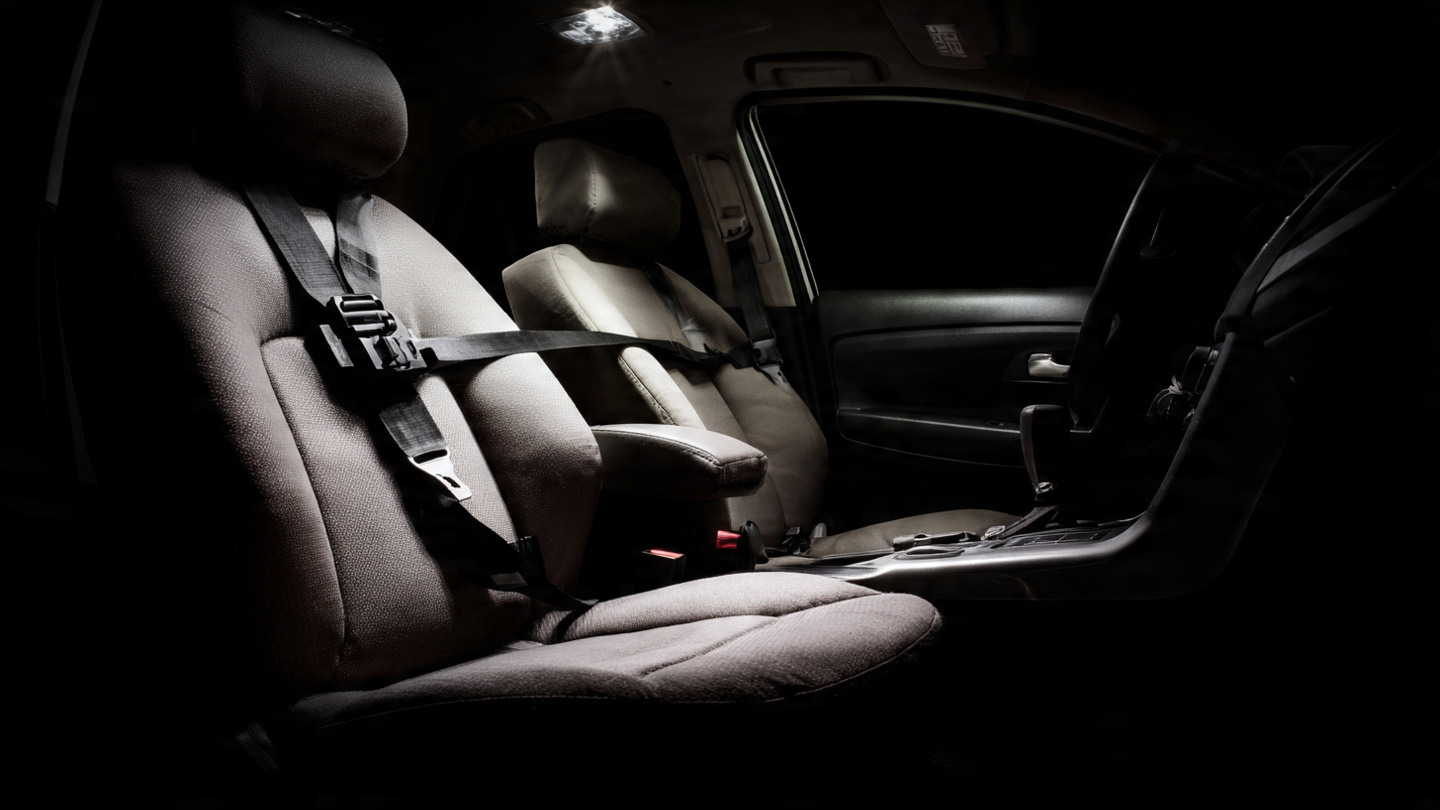
IIHS put a crash test dummy in the rear seat of five small cars. In all five, the dummy slid under the seat belt, the lap belt rode up onto the abdomen, and the restraint system did approximately nothing. Zero out of five earned a Good rating for rear-seat protection. Three scored Poor. Honda Civic and Toyota Corolla managed Acceptable, which in crash-test language means "technically not the worst."
The vehicles tested: 2022–23 Honda Civic sedan, 2023 Toyota Corolla sedan, 2022–23 Kia Forte, 2022–23 Nissan Sentra, 2022–23 Subaru Crosstrek. These are not obscure models. Civic and Corolla alone account for 11,498 deaths in FARS data from 2014 to 2023. Add the Sentra and the combined toll is 14,069.[1]
Every single test vehicle exhibited "submarining," a failure mode where the rear-seat occupant slides forward beneath the lap belt during a frontal crash. Instead of catching the pelvis, the belt migrates upward across the abdomen. Internal organ damage follows. IIHS's 2019 study of 117 real-world crashes with injured or killed rear-seat passengers found chest injuries in 22 of the injured and 17 of the 37 documented fatalities. That failure mode is already killing people.[2]
The front seats of all five vehicles scored Good. Every one of them. Twenty years of crash tensioner development, force limiter refinement, and airbag innovation made the front seat dramatically survivable. In back? Still the same basic three-point belt with no tensioner, no force limiter, and no frontal airbag. IIHS President David Harkey stated the obvious: "We hope a new evaluation will spur similar progress in the back seat."[3]
"Hope" is doing considerable structural work in that sentence.
In the Kia Forte, Nissan Sentra, and Subaru Crosstrek, the rear dummy recorded moderate or high risk of head, neck, or chest injuries in addition to the submarining failure. In the Corolla, the rear dummy's head approached the front seatback closely enough to flag head-injury risk. Civic was the least bad, with submarining as its primary failure. All five vehicles received Poor ratings specifically for rear passenger restraints and kinematics.[3]
Roughly 2,000 people die annually as rear-seat passengers in passenger vehicles nationwide.[2] If even a quarter of small sedan fatalities involve rear-seat occupants, the Civic, Corolla, and Sentra alone contributed an estimated 3,500 rear-seat deaths over the FARS observation period. All three are now confirmed to fail the specific crash mode that causes most rear-seat fatalities in frontal impacts.
Parents are told to put children in the back seat. IIHS confirms that remains correct for children under 13, who face greater risk from front airbag deployment. But for older children and adults in the rear, the protection gap is now quantified: the front seat has airbags, crash tensioners, and force limiters. In back, a belt lets you slide underneath it.
What You Can Do
Check whether your vehicle's rear seat belt has a crash tensioner or force limiter (most small sedans do not). If you regularly carry adult passengers or children over 12 in the rear of a Civic, Corolla, Forte, Sentra, or Crosstrek, these IIHS results are directly relevant. Look up your vehicle at iihs.org/ratings to see if it has been tested under the updated protocol. For your next vehicle purchase, check whether the rear seat includes crash tensioners and inflatable seat belts.
Limitations
FARS does not separate front-seat from rear-seat fatalities by vehicle model, so our rear-seat death estimate uses population-level proportions applied to model-level totals. The IIHS updated overlap test evaluates one specific crash configuration; real-world crashes are heterogeneous. Older model years in the FARS dataset predate the vehicles IIHS tested and would not reflect current structural design. The 25% rear-seat proportion is an aggregate across all vehicle types and may differ for small sedans specifically.
Counterargument at Full Strength
These vehicles all earned Good front-seat ratings, meaning manufacturers prioritized where the data said the problem was. Front-seat fatality rates have declined significantly. Rear-seat protection arguably lagged because the numbers didn't justify the engineering investment. IIHS's own research notes that the rear seat remains safer for young children. And the FARS death count reflects all crash types, not just frontal overlap. The 14,069 number overstates the rear-seat-specific problem by design. Fair. But the IIHS didn't test these vehicles because the problem was theoretical. They tested them because rear-seat passengers started dying at higher rates than front-seat passengers in newer vehicles.[2] The data justified the test. The test confirmed the data.