Same Truck, Different Body Count: The Silverado Kills 24% More Per Mile Than the Sierra
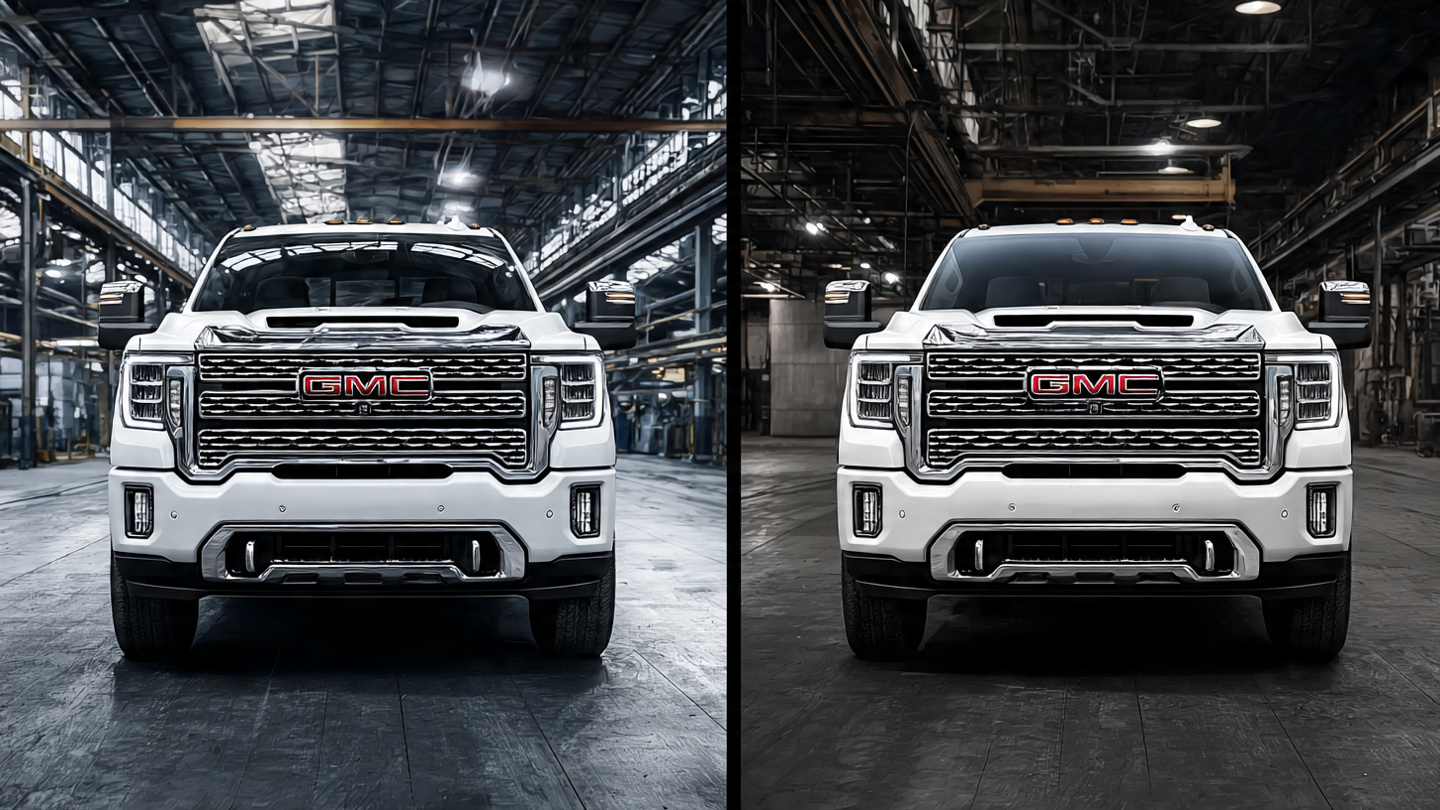
Walk into a GM dealership in 2004 and order a full-size pickup. Cross the lobby to the GMC side and order the same one. Same 5.3L Vortec V8, same GMT800 frame rails, same Silao assembly line, same crash test scores from the same federal agency. You will have purchased two trucks that differ in exactly one meaningful dimension: the grille. Over the next two decades, the Chevrolet version will kill its occupants at a rate 24% higher than the GMC version.
Between 2014 and 2023, NHTSA's Fatality Analysis Reporting System recorded 9,591 deaths in Chevrolet Silverados and 3,337 in GMC Sierras.[1] The Silverado outsells the Sierra roughly 2.3 to 1. If both trucks behaved identically on the road, deaths should track that same ratio. They don't. The Silverado's death count runs 2.87 times the Sierra's, a 24% overshoot that represents roughly 1,800 deaths the sales ratio alone cannot explain.
Impairment data erases the obvious objection before anyone raises it. Alcohol-positive rates are identical: 15.7% for both trucks, across a combined pool of nearly 33,000 fatally crashed drivers. Drug positivity barely diverges (8.7% Silverado, 9.2% Sierra). Overall impairment runs 20.6% versus 21.0%, making Sierra drivers fractionally more impaired if anything, which means substances don't explain the gap.
Crash lethality between these mechanically identical trucks runs nearly parallel as well. When a Silverado enters the FARS database, it produces 0.486 deaths per crash; the Sierra produces 0.471. That 3% spread falls within statistical noise for datasets this size. Both trucks absorb and distribute crash energy in essentially the same way, because they are, structurally and mechanically, the same truck. GM's own 2014 NHTSA testing confirmed both earned identical five-star overall scores.[2]
So the engineering is identical, the substances are identical, and the crash physics are identical — leaving only one variable the badge actually controls: the buyer. GMC markets itself as "Professional Grade," commanding a $5,000 to $10,000 premium at equivalent trim levels. The Denali trim anchors the Sierra lineup upmarket while the Silverado's volume sits in the Work Truck and LT trims that fill commercial fleets and dealership lots in rural counties where the sticker price matters more than the grille emblem. The model year death curves tell the story in reverse: both trucks peak in the early-2000s model years, but the Silverado's 2004 vintage alone produced 663 deaths against the Sierra's peak of 239 in 2005, a ratio of 2.8x that tracks the gap across the entire dataset, suggesting the demographic stratification has been stable for at least two decades.
What follows is uncomfortable and direct: you can't engineer a badge gap, can't recall it, and can't patch it with a software update. That 24% gap is a measurement of who General Motors sells each truck to and how those buyers drive, age, and die. Safety regulators who focus exclusively on vehicle design are measuring the instrument, not the musician.
A fair counterargument: Chevrolet sells proportionally more Work Truck trim levels to commercial fleets. Fleet trucks accumulate miles differently, maintain on different schedules, and put less experienced drivers behind the wheel. If commercial Silverados log systematically more VMT than our estimates capture, the rate calculation would inflate the Silverado's number. We cannot disaggregate by trim within FARS, so it is possible that a properly trim-matched comparison would narrow the gap. Fleet-mix as an explanation remains plausible but untestable with public data.
What FARS cannot tell us: trim-level breakdown, actual odometer readings, driver age or income, commercial vs. personal registration status, or whether the dying occupant was the driver or a passenger. Our rate calculation uses estimated VMT derived from fleet size and national average miles, introducing roughly ±15% uncertainty on low-volume models (though both the Silverado and Sierra have fleets large enough to reduce that margin substantially). This analysis also pools all model years in the 2014–2023 window; a year-by-year rate analysis might reveal whether the gap is widening or narrowing as newer safety tech proliferates across both trucks.
What to do with this: if you're buying a full-size GM pickup and you have no trim preference, the FARS data says pay the GMC premium. You'll get the same truck with a statistically meaningful survival advantage. More broadly, the Sierra-Silverado gap is evidence that vehicle safety cannot be reduced to crash test scores and star ratings. Identical hardware produces non-identical outcomes when sold to different populations. NHTSA's five-star scale measures the truck, but FARS measures the system — truck, driver, road, and choice — and those are fundamentally different things.
Sources & References
- NHTSA, Fatality Analysis Reporting System (FARS), 2014–2023. nhtsa.gov
- MotorTrend, “2014 Chevrolet Silverado, GMC Sierra Earn Five-Star NHTSA Rating,” 2013. motortrend.com
- IIHS, Current Ratings for Large Pickups. iihs.org
- NHTSA FARS Query Tool. cdan.dot.gov