Three Automakers Forgot How to Bolt Down a Back Seat. 1.67 Million Vehicles Later, Here We Are.
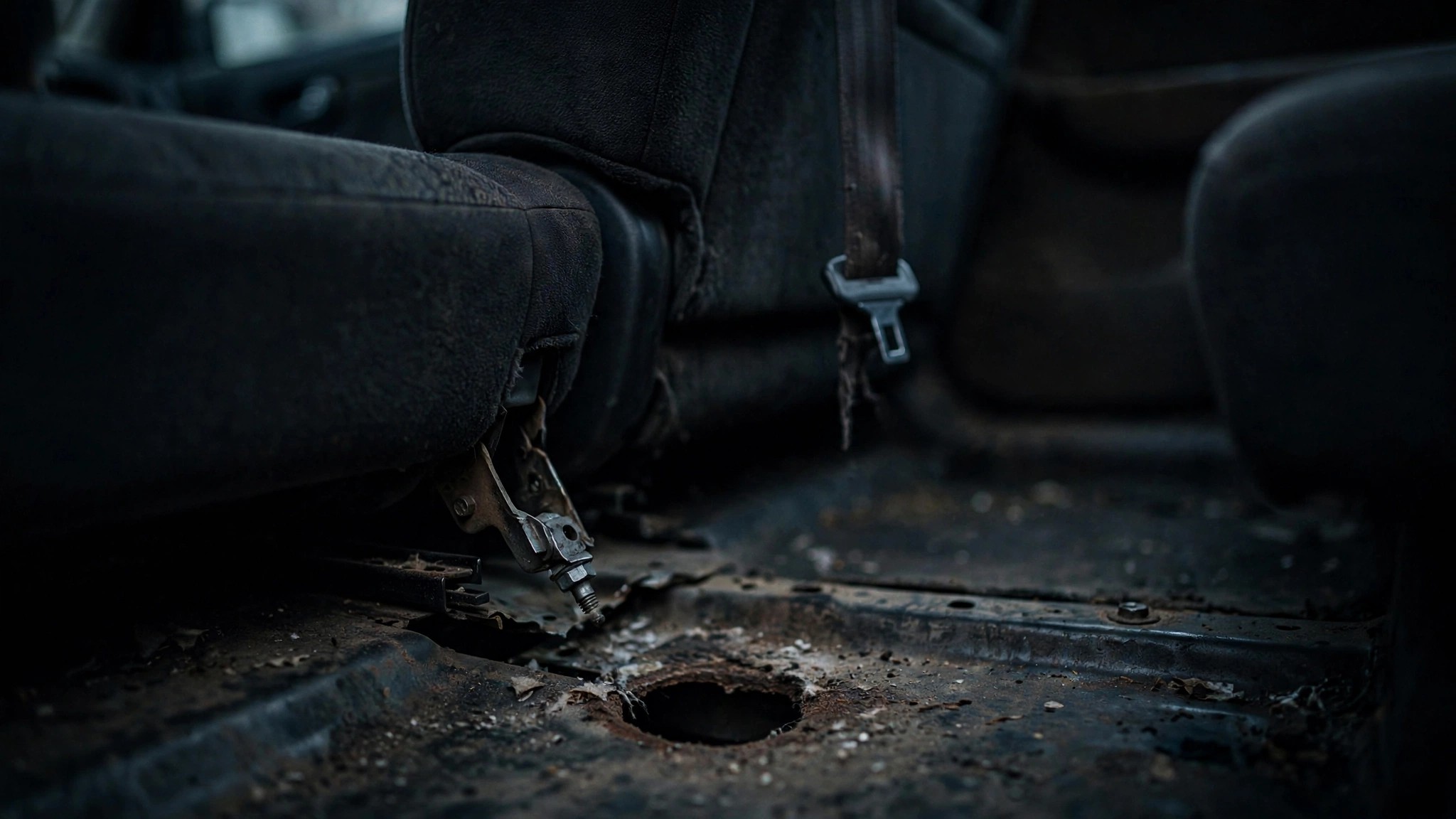
Between June 9 and July 31, Ram, Ford, and Kia recalled a combined 1,664,000 vehicles for second-row occupant restraint failures, and none of them involve electronic glitches or software errors. Seat belt anchors that weren't bolted to the vehicle body, seats that tip forward while doing seventy on I-95, a retractor assembled with the wrong sensor so the belt locks before you can buckle it. These are structural attachment problems in the part of the car where your children sit.
Start with the biggest. On July 31, Stellantis disclosed that 1.27 million Ram 1500 trucks spanning model years 2019 through 2026 left the factory with second-row seat belt buckle anchors that may not have been properly attached to the vehicle's body structure.[1] Seven model years of production. The seat belt anchor is arguably the most mechanically simple safety component in a vehicle: a bolt, a bracket, a section of floor pan. Stellantis managed to get it wrong for the better part of a decade before issuing a recall, and the company is only aware of a single potentially related injury.
Nine days before that, Ford expanded a recall to cover 387,911 Explorer and Aviator SUVs whose second-row easy-entry seats can unlatch, tip forward, or slide while the vehicle is in motion.[2] The original campaign, 25V393, launched in June 2025 after Ford traced the failure to incorrectly installed switch bezels from its seat supplier. Ford believed it had contained the problem, but it had not. By April 2026, new field reports were coming in from vehicles built after the original recall cutoff. Four of the reports involved vehicles that had already received the earlier recall repair. The defective bezel design wasn't removed from production until June 24, 2026, a full twelve months after the original recall.
Kia's numbers are smaller but the failure mode is just as telling. Only 6,264 units of the 2027 Telluride and Telluride Hybrid, yet the failure mode is instructive: a supplier installed the wrong sensor in the driver seat belt's emergency locking retractor, causing it to lock prematurely and prevent the belt strap from extending.[3] An unavailable seat belt is not a safety feature. It is a compliance violation masquerading as one.
Three OEMs, three different failure modes, all in the part of the vehicle that the Insurance Institute for Highway Safety has been warning is already catastrophically underengineered.
IIHS research quantified the gap in terms that should have prompted a full-spectrum industry response: in vehicles from model year 2007 onward, belted rear-seat occupants face a 46 percent higher risk of fatal injury than belted front-seat occupants in the same crash.[4] Not because the rear seat degraded, but because the front seat got dramatically safer with crash pretensioners that tighten belts at the instant of impact, force limiters that meter out webbing to reduce chest loading, and knee airbags that catch the lower body before it submarines beneath the lap belt. Less than half of new vehicles offer any of these technologies in the second row.[5]
When IIHS began testing midsize SUVs with a rear-seat dummy, six of them earned a poor rating: the Honda Pilot, Hyundai Palisade, Jeep Grand Cherokee, Jeep Wrangler 4-door, Mazda CX-9, and Nissan Murano.[5] Small pickups fared even worse; every crew cab tested except the Toyota Tundra received a marginal or poor rating.[6] Among midsize sedans, only the Honda Accord earned a good rating for rear-seat protection.[7]
That is the engineering baseline these recalls are eroding further. The back seat was already the most dangerous position in the car for a belted occupant. Now we know that in 1.67 million of those vehicles, the restraints themselves were defective. A seat belt that isn't attached to the floor does not become more effective in a crash because the frontal crash rating says "good." An occupant-loaded seat sliding forward at impact transmits force through the human body in ways the restraint system was never designed to manage.
The strongest counterargument is that these are unrelated quality escapes at three different companies, not a systemic failure. Ram's issue is a fastener torque problem on the assembly line, Ford's is a supplier-side bezel misalignment, and Kia's is a wrong-part substitution. Fair enough. But the IIHS data reveals why unrelated quality escapes in the rear seat carry more consequence than the same failures in the front: there is no backup system. When a front seat belt is marginal, airbags and pretensioners absorb the gap. In the second row, the belt is the last line, and if it fails, there is nothing behind it.
Sources & References
- Reuters, “Stellantis to recall 1.5 million Ram 1500 pickup trucks over seat belt issue,” July 31, 2026. reuters.com
- Carscoops, “Ford Thought It Fixed This Seat Problem In 2025. It Just Recalled 388,000 More,” July 2026. carscoops.com
- NHTSA recall notice, Kia Telluride seat belt retractor, June 2026. nhtsa.gov
- IIHS, “New crash test spotlights lagging protection for rear passengers.” iihs.org
- IIHS, “Rear passenger protection falls short in most midsize SUVs.” iihs.org
- IIHS, “Small pickups fall short when it comes to rear-seat safety.” iihs.org
- IIHS, “Honda Accord shines while other midsize cars struggle in rear-seat safety test.” iihs.org
What you should do: If you own a 2019–2026 Ram 1500, a 2020–2027 Lincoln Aviator, a 2020–2026 Ford Explorer, or a 2027 Kia Telluride, check your VIN at nhtsa.gov/recalls today. Ram owner notification letters are expected August 18, Ford is replacing the bezel assembly at dealerships now, and Kia began mailing notices July 31. Until the repair is complete, understand that the restraints holding your second-row occupants may not perform as designed in a crash.