America Just Had Its Safest Quarter in a Decade. ADAS Crashes Hit an All-Time High. Both Are True.
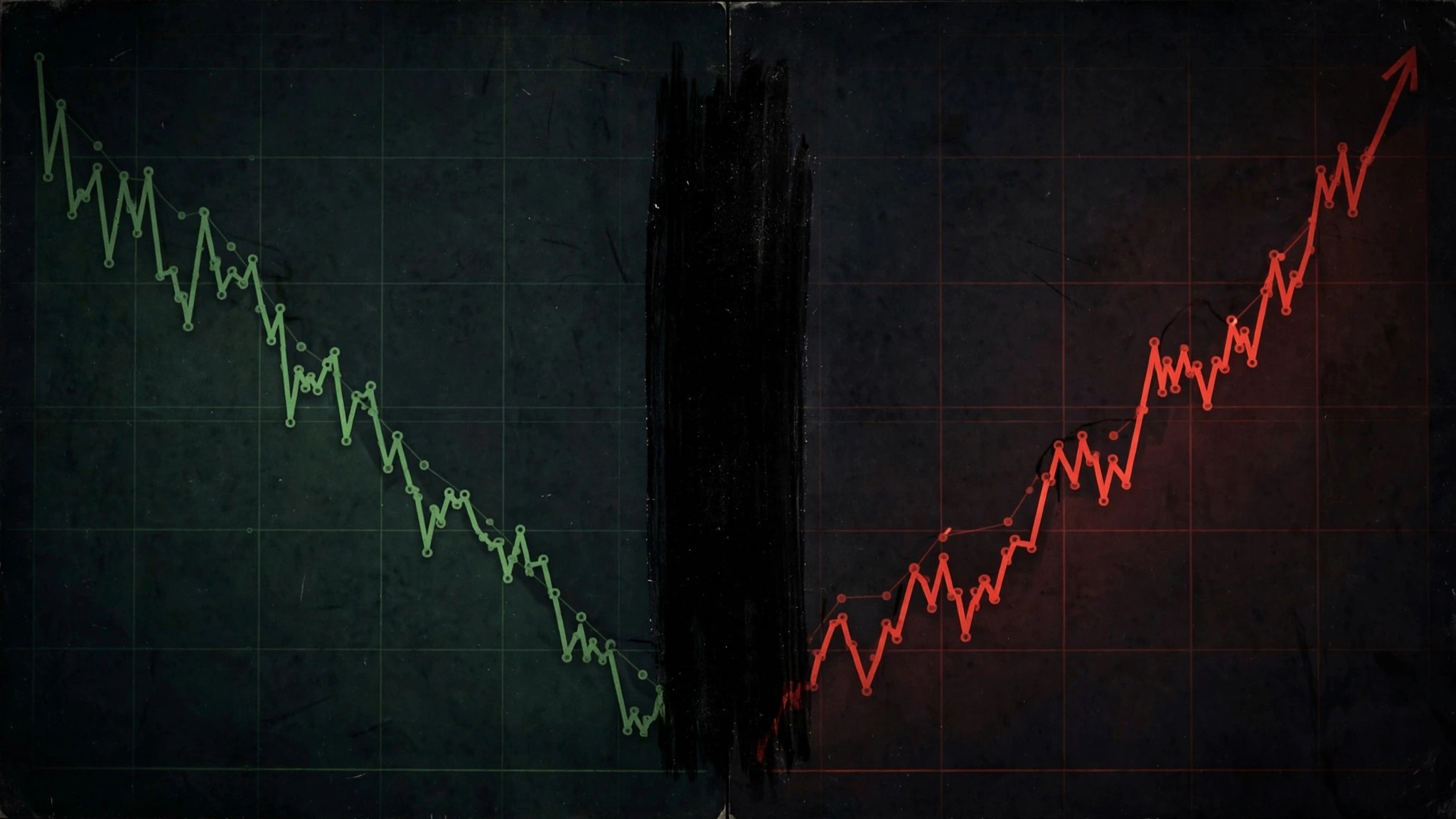
I ran the numbers, then I ran them again, and what came back was two federal datasets released in the same month by the same agency that tell flatly contradictory stories about whether American roads are getting safer or more dangerous.
Dataset one is a genuine milestone that deserves the champagne it will never receive: 0.99 fatalities per 100 million vehicle miles traveled in Q1 2026, the lowest first-quarter figure since 2014, a rounding error from the all-time record set fifteen years ago, and the clearest evidence yet that five years of pandemic-era carnage on American roads is ending.[1] Roughly 7,770 people died on American roads from January through March, a 4.3 percent decline from the same period in 2025 that occurred even though Americans collectively drove 11 billion more miles than they did a year earlier. Thirty states and Puerto Rico posted declines.
Full-year 2025 reinforces the trajectory in virtually every subcategory NHTSA tracks. Deaths totaled 36,640, down 6.7 percent from 39,254 in 2024, producing an annual fatality rate of 1.10 per 100 million VMT that qualifies as the second-lowest ever recorded in the history of American driving. Ejection deaths dropped 13 percent, meaning seatbelt enforcement campaigns that regulators have been funding for decades are finally compounding at scale. Rollover fatalities dropped 11 percent because electronic stability control, mandated since 2012, keeps accumulating fleet penetration every year that older vehicles age out of service. Nighttime crashes fell 8 percent, and deaths in vehicles less than ten years old fell 12 percent, suggesting that advanced crash structures and automatic emergency braking in newer cars are delivering exactly what their engineering departments promised at exactly the pace that fleet turnover allows.[2]
Hold that thought for one paragraph.
Dataset two is NHTSA's Standing General Order export, which compiles the mandatory crash reports that automakers must file whenever a driver-assist system was engaged within 30 seconds of impact and the crash crossed a severity threshold: an airbag deployment, a tow-away, an injury, a fatality, or a struck pedestrian or cyclist. In May 2026, Tesla logged 207 such crashes in a single month, exceeding everything the company reported in the entirety of 2021, which totaled 157.[3] Across the full file dating back to 2019, Tesla accounts for 3,763 unique Level 2 ADAS crashes, roughly 85 percent of every driver-assist crash that the entire American auto industry has reported to the federal government under this mandate.
Not flattening. Comparing January-through-June windows year over year: 180, then 261, 269, 476, and now 826, a 73 percent jump off what was already the steepest line on any chart in NHTSA's public data. At current pace, 2026 will roughly double last year's total of 1,043.
So which story describes reality? Safest quarter in a decade, or driver-assist crashes accelerating at a pace nobody in the industry predicted three years ago?
Both stories are true simultaneously, and the reason they cannot be reconciled is a denominator problem baked into the public record by one company's refusal to disclose the single variable that would resolve the contradiction.
NHTSA's fatality data has a denominator: vehicle miles traveled, estimated at roughly 850 billion for Q1 2026. Divide deaths into miles and you get a rate that is declining in ways that track genuine structural improvements in vehicle engineering, road design, speed enforcement, and seatbelt compliance. Good.
Tesla's ADAS crash data has no denominator whatsoever because the company does not disclose how many miles its vehicles drive on Autopilot or Full Self-Driving in any given month, quarter, or year. Without that number, 207 crashes in May could indicate that the system is becoming more dangerous per mile driven, or that dramatically more drivers are using it on dramatically more miles, or that some unknowable combination of both is occurring, and only Tesla's internal engagement data could distinguish between those scenarios. We do not know. We cannot compute a crash rate per ADAS mile without the mileage denominator, and the company holding that denominator treats its disclosure as a competitive threat rather than a public safety obligation.
There is also a structural wrinkle that deserves its full weight: Tesla almost certainly has a larger ADAS-equipped fleet than any competitor, possibly larger than all competitors combined, which means the 85 percent crash share may be roughly proportional to fleet share rather than evidence of disproportionate danger. On top of that, Tesla's telemetry-based automatic reporting likely captures crashes more comprehensively than the manual, dealer-mediated reporting that most legacy automakers rely on. Both of these factors pull in Tesla's favor. Neither of them justifies withholding the denominator that would settle the question.
Compounding the denominator gap is a narrative blackout. Tesla has redacted 99.9 percent of its 3,763 crash reports, replacing each narrative with identical boilerplate: "[REDACTED, MAY CONTAIN CONFIDENTIAL BUSINESS INFORMATION]." Software version is blacked out too, which means the public cannot distinguish whether a given crash involved basic Autopilot lane-keeping or the $8,000 Full Self-Driving package that Tesla markets as approaching autonomous capability. GM, Ford, Honda, and Toyota, by contrast, redact essentially none of their narratives and routinely describe road conditions, driver actions, and system behavior in multi-paragraph accounts that journalists, researchers, and competing engineers can actually learn from.[3]
Notably, Tesla did unredact its 17 autonomous driving crash reports covering its small robotaxi fleet, and those narratives revealed mostly minor incidents caused by other drivers that made the company look competent.[4] All 3,763 consumer-car ADAS reports, covering the systems that millions of people actually own and use daily, remain fully sealed.
For anyone currently shopping for a vehicle with driver-assist technology, this creates an information environment that NHTSA's entire Standing General Order framework was specifically designed to prevent. You can read detailed crash narratives for GM's Super Cruise, Ford's BlueCruise, and Honda's Sensing, assess the failure patterns, and form a judgment about how each system behaves at its boundaries. For the system installed in 85 percent of the reported crashes, you get a redaction stamp and Tesla's assurance that making the data public would cause the company financial harm.
None of this diminishes the Q1 2026 milestone. Roads genuinely are getting safer because seatbelt enforcement is compounding, crash structures keep improving, and cities are redesigning the arterial roads that used to kill pedestrians at urban-warfare rates. But ADAS crashes occupy a parallel data universe that barely touches the fatality statistics, because most ADAS crashes produce airbag deployments, tow-aways, injuries, and struck pedestrians rather than deaths, appearing in the SGO file while registering as statistical noise in the overall fatality count.
One additional detail for anyone tracking these numbers quarter to quarter: May 2026's 207 crashes represent a floor, not a ceiling, because NHTSA's reporting process includes substantial lag. In this very export, the prior month's supposedly finalized crash count was revised upward by 139 as late-arriving reports trickled in, which means next quarter's export will almost certainly push May's real number higher.[3]
NHTSA possesses the statutory authority both to demand Tesla's per-mile ADAS engagement data and to strip the confidential-business designation from crash narratives after determining that the public safety interest in disclosure outweighs the claimed trade-secret interest in concealment.[5] It has exercised neither power. Its Standing General Order was designed to illuminate exactly this kind of divergence between fleet-wide safety improvement and system-specific crash acceleration. Illumination requires a flashlight, and NHTSA is holding one with the switch taped down.
If you drive a vehicle with any Level 2 driver-assist system, NHTSA's fatality data confirms that overall road safety is improving in ways you benefit from regardless of your car's brand or technology package. What the SGO data cannot tell you is whether your specific system is contributing to that improvement or running as an exception to it, because the manufacturer behind 85 percent of the crash file will not provide the denominator, the narratives, or the software version information that would let anyone outside the company decide. Check your VIN for open recalls at nhtsa.gov/recalls, and browse the raw SGO data at nhtsa.gov. Until the denominator appears, the redaction column is the most informative part of the file.
Sources & References
- NHTSA, Traffic Crash Deaths: Early Estimates Jan–March 2026, July 2026. crashstats.nhtsa.dot.gov
- NHTSA, Early Estimates of Motor Vehicle Traffic Fatalities and Fatality Rate by Sub-Categories in 2025 (DOT HS 813 829), July 2026. crashstats.nhtsa.dot.gov
- Electrek, “Tesla Autopilot and FSD crashes hit record 207 in a single month,” July 22, 2026. electrek.co
- Electrek, “Tesla finally reveals what happened in 17 ‘Robotaxi’ crashes,” May 15, 2026. electrek.co
- NHTSA, Standing General Order on Crash Reporting. nhtsa.gov
The Crash Report uses NHTSA, FARS, and IIHS data to identify vehicle safety patterns. This article reflects publicly available federal data. It is not legal, financial, or purchasing advice. Always verify recall status at nhtsa.gov/recalls.