The Chevy S-10 Hasn’t Been Built in 22 Years. It’s Still the Deadliest Pickup on the Road.
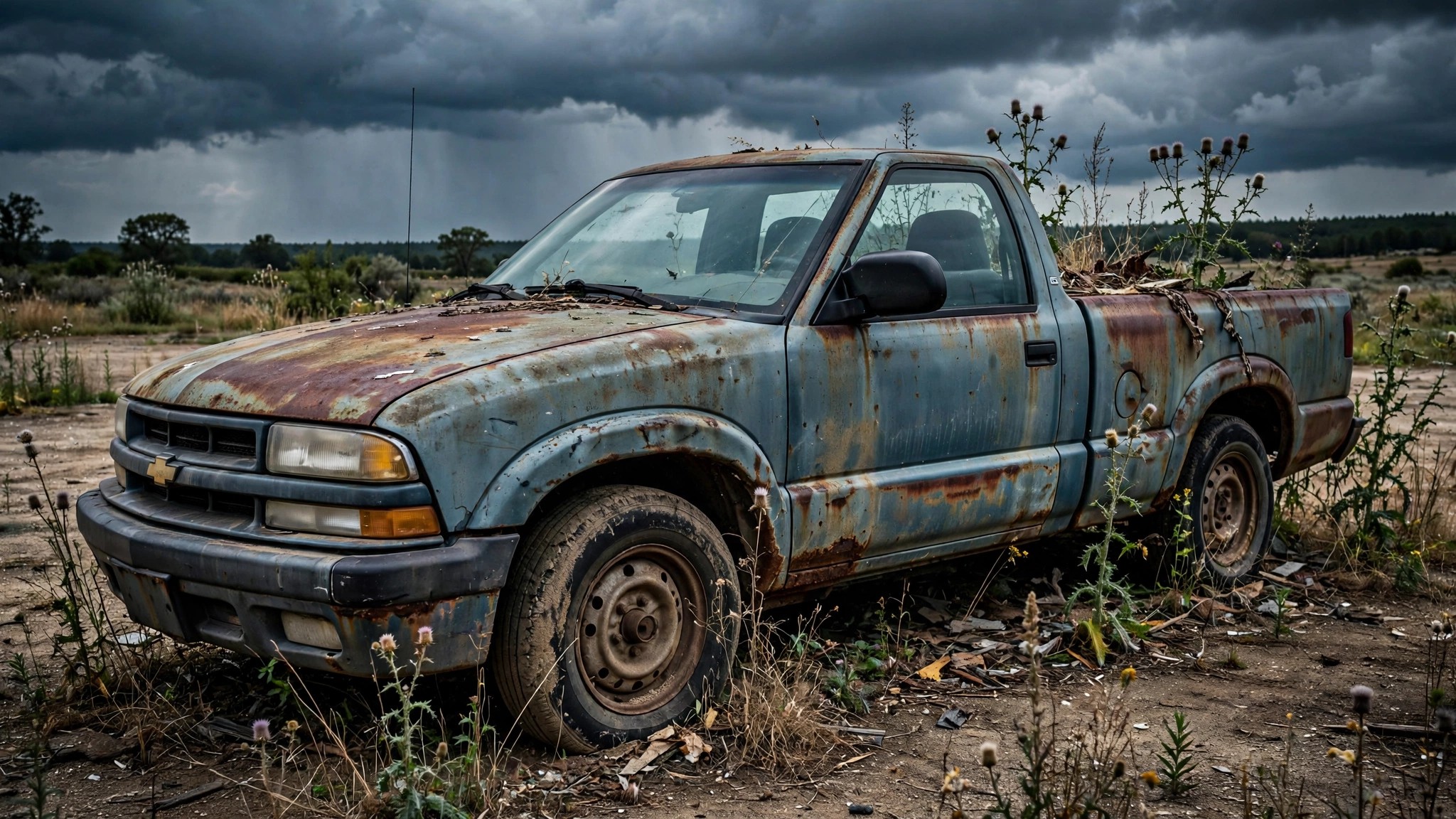
Chevrolet built its last S-10 in 2004. No new ones roll off a line. No dealer has one on the lot. It exists only as a shrinking population of aging survivors in driveways and side yards across rural America. And yet, across a decade of FARS data, the S-10 kills at 4.83 deaths per 100 million vehicle miles traveled — the highest rate of any pickup truck in the database, and the eighth-deadliest vehicle of any type with 200 or more recorded fatalities.[1]
GM replaced the S-10 with the Chevrolet Colorado. Same brand, same compact-truck segment, same showroom slot. The Colorado’s death rate: 0.28.[1] That is not a rounding difference. It is a 17.3-to-1 gap. If you drove an S-10 instead of a Colorado for the same number of miles, your odds of dying in a fatal crash were seventeen times higher. The safest thing GM ever did for compact-truck buyers was stop selling them the old one.
Blame the driver. Old truck, cheap truck, probably driven by someone who takes risks. Except the toxicology data kills that theory cold. The S-10’s impairment rate in fatal crashes is 20.5%. Colorado’s is 19.0%. Fleet-wide, the average sits at roughly 20%.[1] S-10 drivers are not measurably more likely to be drunk or high than anyone else. What killed them was not behavior. It is a design story.
And the design is old. The S-10 predates electronic stability control, which NHTSA did not mandate until the 2012 model year.[2] It predates the IIHS small-overlap crash test. It predates side curtain airbags as standard equipment. A 1998 S-10, the vintage that produced 143 FARS fatalities (more than any other year except 2000), shares more structural DNA with a 1988 truck than with anything sold today. The model year 2000 S-10 alone accounts for 178 deaths across the FARS window. That single vintage of a single discontinued truck killed more people than the entire FARS totals for the Saturn VUE, the Lincoln MKC, or the Acura MDX.[1]
For context, the S-10’s 4.83 rate is not just worse than the Colorado. It is worse than the Ford Ranger (2.91), the Dodge Dakota (2.62), the Silverado (1.25), and the F-150 (1.04). It is worse than every full-size truck in the database. The only vehicles that consistently beat the S-10 for lethality are sports cars with double the horsepower and small SUVs with half the weight. A compact truck that suburban dads bought in 1997 because it seemed practical kills at a rate that rivals the Mustang.
An estimated 218,750 S-10s remain in the American fleet. That pool shrank every year as trucks rust out, get totaled, or finally fail emissions. Over the FARS decade it still produced 1,427 deaths — roughly 143 people a year, or one every two and a half days. No recall fixes this. No software update reaches a 1999 body-on-frame chassis. The only remedy is attrition, and attrition is slow when your truck was built to haul plywood, not dissolve.
Sources & References
- NHTSA, Fatality Analysis Reporting System (FARS), 2014–2023. nhtsa.gov
- NHTSA, Federal Motor Vehicle Safety Standard No. 126: Electronic Stability Control Systems, Final Rule, June 2007. govinfo.gov
- IIHS, Life-saving benefits of ESC continue to accrue, 2011. iihs.org
What to do: If you or someone you know still drives an S-10, check for open recalls at nhtsa.gov/recalls. Better yet, look at the Colorado, the Tacoma, or any compact truck built in this millennium. The safety gap is not subtle. It is seventeen to one.
Limitations: FARS captures fatal crashes only. VMT estimates for vehicles this old carry ±15–20% uncertainty. Some S-10 fatalities involve multi-vehicle crashes where the S-10 occupant was struck by a heavier vehicle, compounding size disadvantage with structural age. We cannot fully separate S-10 design from general small-truck vulnerability, but the 17x gap to the Colorado, also a compact truck, isolates the era, not the segment.