Rivian Recalled 20,000 Trucks for a Suspension Defect Its Own Technicians Created. Now 115,000 Are Under Investigation.
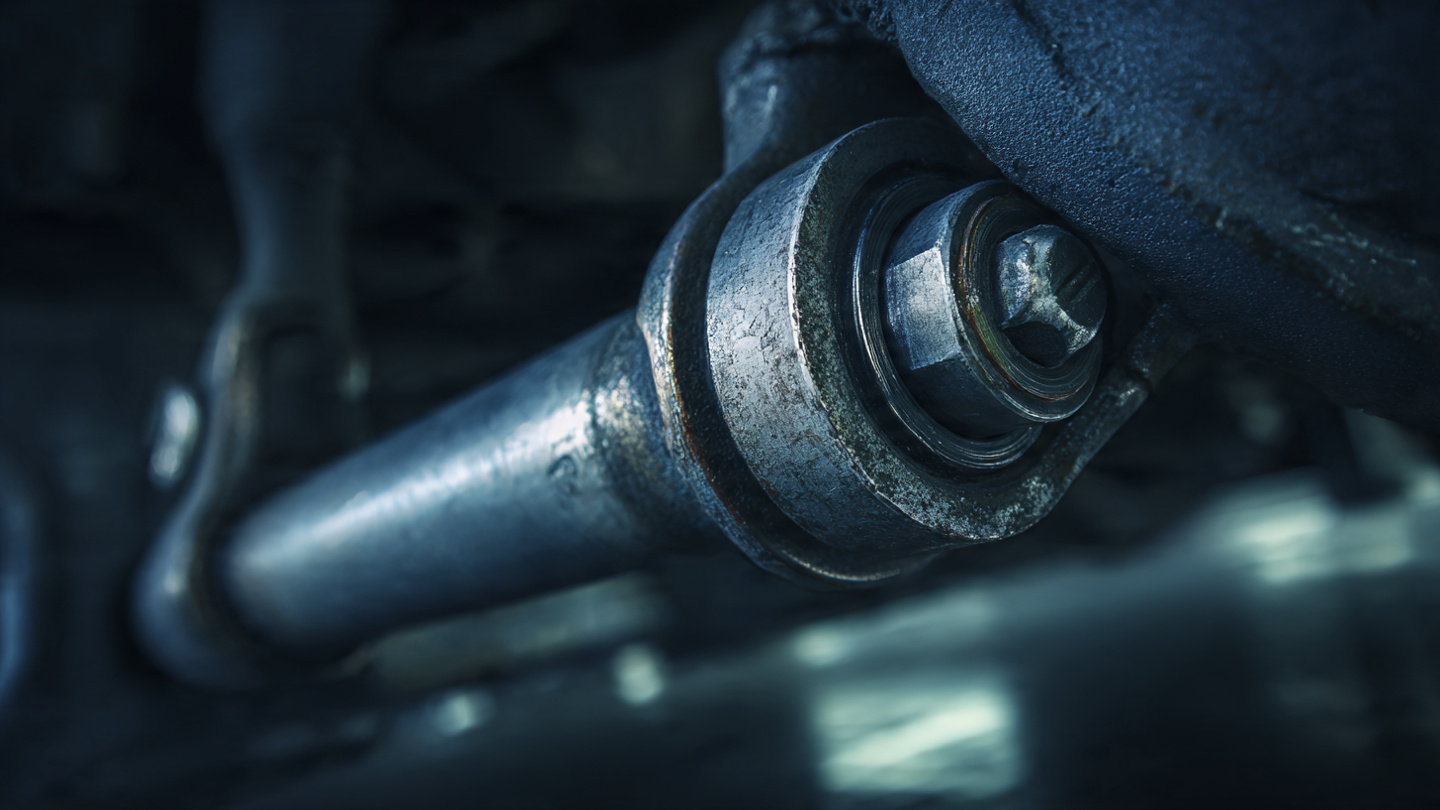
A rear toe link is a steel rod that controls where your back wheels point. It keeps the rear axle geometry within fractions of a degree while you brake, turn, and hit potholes at seventy miles an hour. When a toe link separates from its mounting point on a 7,000-pound electric truck traveling at highway speed, the rear wheels lose directional control. The vehicle swerves across multiple lanes of traffic with no warning and no driver input.
NHTSA's Office of Defects Investigation opened a preliminary evaluation on May 28, 2026, covering 114,922 Rivian R1T pickup trucks and R1S SUVs after two vehicle owner questionnaires described left rear toe links separating while driving.[1] One incident caused a collision with an adjacent vehicle and a roadside barrier. Two complaints triggered a probe spanning nearly every R1 Rivian has ever manufactured.
Rivian has delivered approximately 160,000 to 170,000 R1 vehicles since the first R1T rolled off the Normal, Illinois line in late 2021.[2] The investigation population of 114,922 represents roughly 70% of every R1S and R1T ever built. This is not a batch issue or a supplier lot defect. NHTSA is examining whether the fundamental design of the rear toe link joint is vulnerable to foreseeable road and service conditions.
Five months ago, Rivian told a different story about the same component. In January 2026, recall 26V-003 covered 19,641 previously serviced R1S and R1T vehicles whose rear toe links had been reassembled using a service procedure issued before March 10, 2025.[3] Rivian framed the defect as procedural: their own service technicians had reassembled the joint incorrectly, creating conditions where "vehicle motion may eventually cause toe link joint separation." The remedy was straightforward: replace the bolts using the updated procedure. The narrative was clean: a fixable human error, limited to vehicles that had been in for service, caused by a documented procedure gap.
That narrative survived exactly 143 days.
NHTSA's new investigation doesn't limit its scope to serviced vehicles. It covers 114,922 units, nearly six times the recall population, which means the agency is examining vehicles whose toe links were never touched by a service technician using the flawed procedure. The investigation will "assess the sensitivity of the rear toe link joint to foreseeable road and service conditions and evaluate Rivian's current toe link repair procedure."[1] Read that carefully. NHTSA isn't just asking whether the repair works. They're asking whether the joint itself holds up under normal driving.
Rivian's public response lands somewhere between confident and paradoxical. In an emailed statement to Reuters, the company said "its internal data indicates that the R1 toe link joints are operating as intended" and that the two owner complaints "do not implicate the joint itself."[1] This is the same company that acknowledged in January that the same joint on the same vehicles could separate without warning and increase the risk of a crash. Operating as intended is a bold position for a component you recalled five months ago.
Rivian's recall page tells its own story about the company's quality trajectory. Since beginning consumer deliveries in May 2022, the company has issued 22 safety recalls across its R1 and EDV lineup.[3] That averages one recall every 2.2 months, spanning four seat belt recalls, two steering or suspension defects, three airbag and occupant protection issues, and four lighting failures. The breadth matters: these are not clustered around a single supplier or subsystem. They span the vehicle from the steering knuckle to the B-pillar trim to the accelerator pedal to the high-voltage distribution box. For a company that has produced fewer than 200,000 consumer vehicles total, this is an unusually dense recall cadence.
Context demands the strongest counterargument here: two complaints is an extraordinarily thin basis for a probe, and most preliminary evaluations close without further action. Rivian is a young automaker still refining manufacturing processes, and early-production quality issues are common across the industry. Tesla's first four years of Model S production generated a comparable recall pace. Many of Rivian's recalls are minor compliance issues: a missing cruise control label, a tire placard weight error, a cosmetic feature that briefly disabled exterior lighting. Some were remedied via over-the-air updates within hours of discovery. The company's willingness to issue recalls proactively could reflect quality culture rather than quality failure.
That argument has force until you get to the physics. A toe link separation on a 7,000-pound-plus R1S at highway speed is categorically different from a missing dashboard label. Symptoms of an incipient toe link failure include rear-end wandering, instability during turns, sudden changes in handling balance, excessive sensitivity to crosswinds, and unusual rear tire wear.[4] These symptoms are subtle enough that most drivers attribute them to road conditions or tire wear rather than a suspension component preparing to let go. And at 7,000 pounds with a low center of gravity, an R1 that loses rear-end stability creates forces that a driver physically cannot counteract through steering input alone.
The structural question NHTSA has to answer: does the R1 toe link joint design have adequate margin for the forces a 7,000-pound EV actually generates over its service life? Electric vehicles produce peak torque instantaneously from zero RPM, and the R1's performance variants deliver up to 1,025 horsepower to the wheels. Those torque loads propagate through the suspension differently than in a conventional truck where power builds gradually through a torque converter. If the toe link joint was designed with margins calibrated to traditional load profiles, the forces an EV drivetrain actually imposes may erode those margins faster than anticipated. That is a design question, not a service procedure question, and it is precisely why NHTSA expanded the scope from 20,000 vehicles that were serviced to 115,000 vehicles that exist.
What R1 owners should do now: Check whether your VIN falls within the investigation scope at nhtsa.gov/recalls. Watch for rear-end looseness, lateral drifting at highway speed, unusual rear tire wear, or clunking noises from the rear suspension. If you experience any of these symptoms, document them immediately and file a complaint through NHTSA's Vehicle Owner Questionnaire at nhtsa.gov/report-a-safety-problem. If your vehicle had its rear toe links serviced before March 10, 2025, confirm that the January 2026 recall remedy (26V-003) has been applied by calling Rivian Service at 1-855-748-4265.
Sources & References
- Reuters, “US auto safety regulator opens probe into nearly 115,000 Rivian vehicles,” May 28, 2026. reuters.com
- Rivian Forums, “38,019 Total Rivian R1T / R1S Sales in 2025,” compiled from Rivian quarterly earnings reports and registration data. rivianforums.com
- Rivian Automotive, Recall Information page (last updated 5/27/2026), listing all recalls since May 2022 with NHTSA recall numbers. rivian.com
- HotCars, “Rivian Trucks And SUVs Investigated Over Sudden Loss Of Control,” May 28, 2026, citing NHTSA investigation details. hotcars.com