America Recalled 29.3 Million Cars Last Year. It Only Sold 15.9 Million.
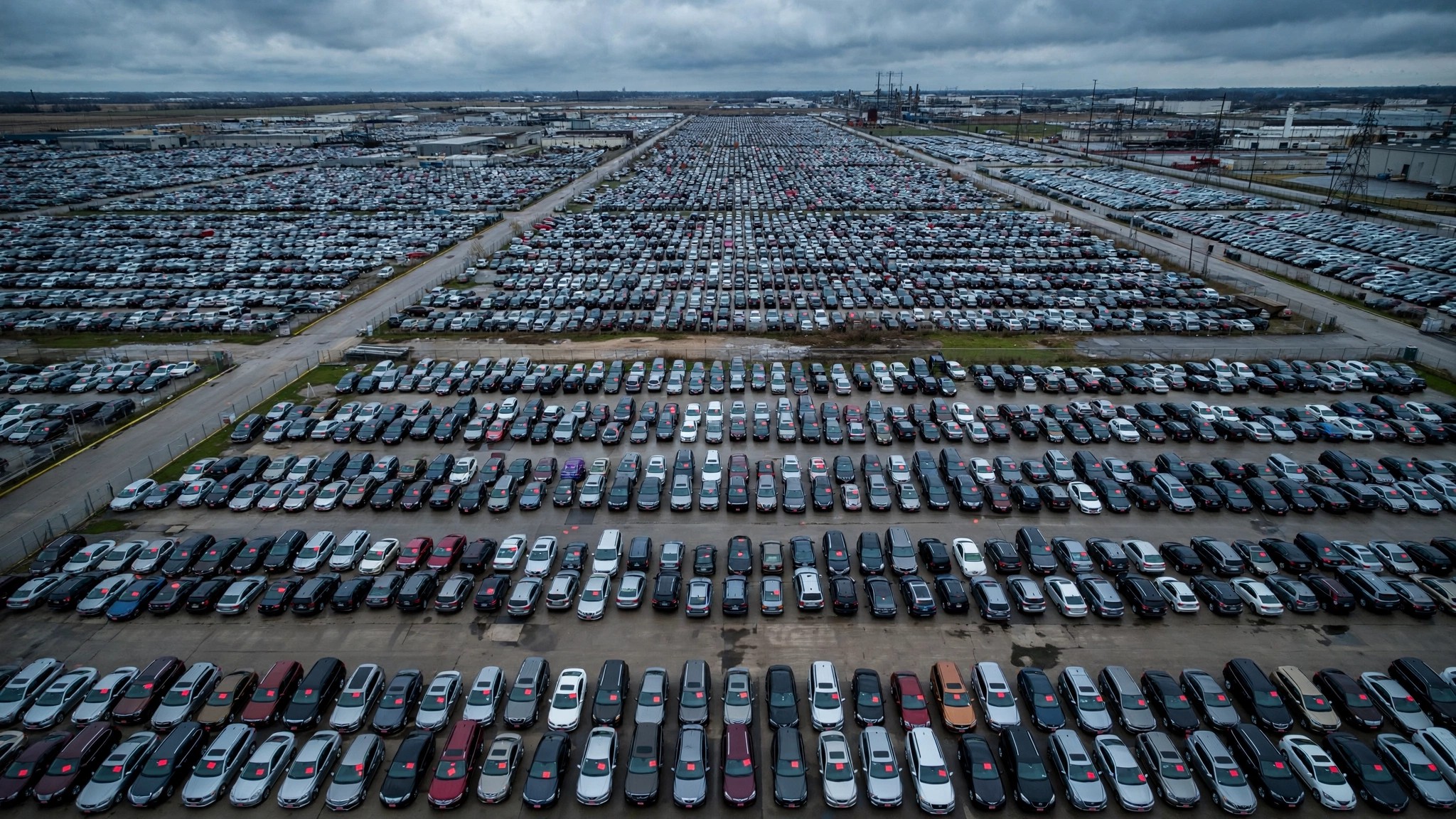
NHTSA logged 1,073 safety recalls covering 29.3 million vehicles in 2024, a near-record haul that touched every major automaker and spanned everything from wiring harnesses catching fire to headrests that spontaneously detach in crashes.[1] That same year, Wards Intelligence counted 15.9 million new vehicles sold across every dealership in the country, the industry's best showing since 2019 and a number that executives celebrated as proof of resilient consumer demand despite rising interest rates and a cooling EV market.[2] Divide the first number by the second and you land on a ratio that should unsettle anyone who owns a steering wheel.
Nearly two cars were recalled for every one that found a buyer, which is not a rounding error or a statistical artifact sitting at the margins of measurement uncertainty, but a structural overshoot where the defect pipeline now outproduces the sales pipeline by a comfortable margin that has been widening for years. Think about what that means in operational terms: the industry's quality-control apparatus identified almost twice as many cars needing emergency fixes as the entire continental sales machine managed to push out the door across twelve months of sustained effort, dealer incentives, and zero-percent financing campaigns.
A few caveats before the automaker PR teams start drafting their rebuttals, because the comparison deserves honest framing even when the conclusion is ugly. Recalls pull from the entire registered fleet rather than just the current model year, so a 2024 recall campaign can reach back to a 2018 Escape or a 2021 Bronco that rolled off the assembly line years before the defect was identified. Sales count only brand-new vehicles crossing dealer lots for the first time, which means the two numbers describe overlapping but fundamentally different populations, and comparing them directly overstates the problem for any individual buyer walking into a showroom this week. All of that is acknowledged, and none of it changes the underlying conclusion. As a thermometer for industry-wide manufacturing health, the ratio remains devastating: the United States has roughly 290 million registered vehicles on the road today, and recalling 29.3 million of them in a single calendar year means one in every ten cars got a federal defect notice before the champagne corks popped on New Year's Eve, a proportion that is climbing rather than stabilizing.
Q1 2026 made the prior year look restrained by comparison, because industry data pegged the quarter at 11.6 million vehicles recalled, with Ford's single 26C10 electrical-system campaign swallowing 4.3 million trucks and SUVs all by itself.[3] That one campaign accounted for 35 percent of every vehicle recalled in the entire quarter, a concentration of failure so extreme that removing Ford from the ledger would have made Q1 look almost normal. Against a quarterly sales pace of roughly four million units, the opening months of 2026 ran at something approaching a 3:1 recall-to-sales ratio, meaning three defect notices were generated for every fresh set of keys handed to a new owner somewhere in America.
Ford is the obvious headliner here, but reducing this to a single-manufacturer story would miss the structural rot underneath it, because the pattern extends across the entire industry in ways that Ford merely amplifies. Software and electronics defects dominated the 2024 and 2025 recall landscape, triggering 119 NHTSA campaigns covering 8.2 million vehicles in 2025 alone, while powertrain failures ran a close second at 87 campaigns and 8.0 million vehicles affected.[4] These are not isolated mechanical wear items being caught through proactive quality screening at factories with world-class Six Sigma programs. They are systemic architecture failures cascading across shared platforms that underpin dozens of nameplates simultaneously, the predictable consequence of an industry that replaced mechanical redundancy with centralized software modules to cut per-unit assembly costs and then discovered that digital fragility scales just as efficiently as digital convenience.
The industry's standard defense is that more recalls signal more transparency, that aggressive voluntary self-reporting reflects a maturing culture of safety accountability rather than a deteriorating product, and there is a genuine kernel of truth buried inside that corporate talking point. Over-the-air-remedied recalls climbed from under two million vehicles in 2021 to 6.8 million in 2024, with Tesla alone accounting for 5.1 million of those software-patched units in a single year.[5] OTA patches delivered over Wi-Fi genuinely reduce per-vehicle fix costs and accelerate completion timelines in ways that would have seemed fantastical a decade ago, when every recall meant a physical dealer visit and a loaner car. But when a single automaker can push five million over-the-air recalls in one calendar year and the broader industry still frames this trajectory as evidence of progress, the baseline for what constitutes acceptable manufacturing quality has moved so far downfield that "better" no longer inhabits the same time zone as "good."
If you own a car right now, there is roughly a one-in-ten chance it carries an open recall you have not addressed, and NHTSA's VIN lookup tool at nhtsa.gov/recalls takes thirty seconds of your time to check whether yours is one of the 29.3 million. Dealers fix all recall work at zero cost to the vehicle owner, with no appointment haggling, no parts markup, and no fine print buried in the service agreement. That number does not shrink by itself.
Sources & References
- NHTSA, “Consumer Alert: Check for Safety Recalls,” March 2026. nhtsa.gov
- Reuters, “US new car sales rose to five-year high in 2024, helped by hybrids,” January 3, 2025; data via Wards Intelligence. reuters.com
- CARBuzz, “‘Move Fast And Break Things’ – The Real Culprit Behind Nearly 30 Million Vehicle Recalls Last Year,” July 2026. carbuzz.com
- Recall Masters, “2025 Automotive Recall Report,” May 2026; key findings via WCIA. wcia.com
- NHTSA, “2025 Annual Recalls Report,” March 2026. nhtsa.gov