82.7% of the Cars Killing You Were Built Before 2015. No Recall Can Fix That.
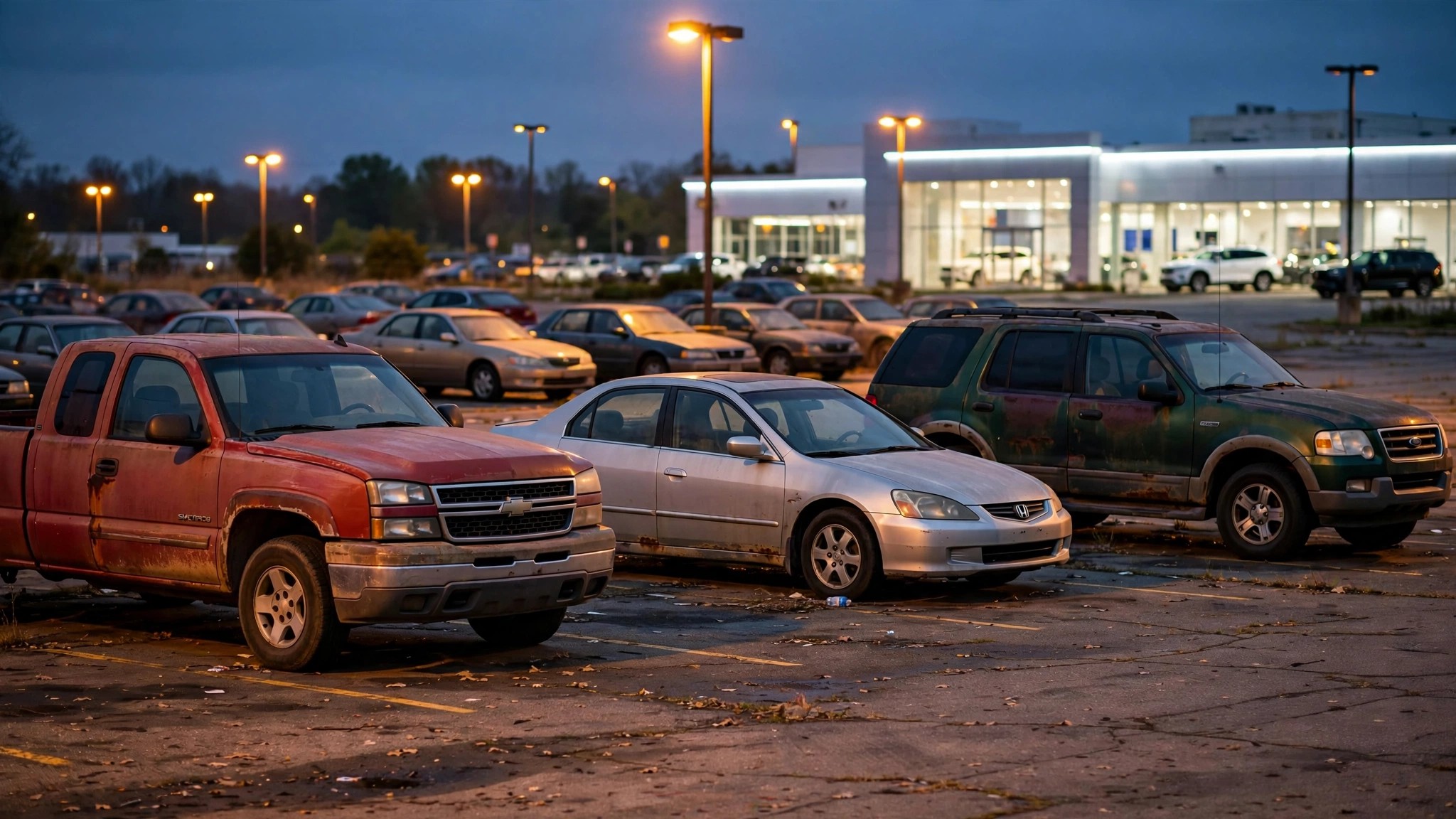
In July 2026, automakers recalled roughly 2.15 million vehicles. Ford yanked 676,225 Explorers and Aviators for seat switches that could tip passengers into traffic. Honda called back 880,514 SUVs and pickups with rear subframes rotting off the chassis. Subaru, Hyundai, Toyota filed their own papers. Safety's assembly line hummed along like it always does.
None of it will move the number that actually matters.
FARS model-year data covering 187,058 driver deaths across 323 tracked vehicle models reveals a structural divide that no recall campaign, no AEB mandate, and no IIHS rating redesign can bridge. Of those 187,058 deaths, 154,631 occurred in vehicles built before the 2015 model year. Cars a decade old at minimum during the 2014–2023 observation window. Cars that predate mandatory electronic stability control. Cars too cheap to bring in for recall repairs and too numerous for any regulatory fix.
Only 32,427 deaths remain, the 17.3% from 2015-and-newer vehicles, and those are the only ones the entire modern safety apparatus is built to address.
Break it down by class and the gap gets uglier. Pickups lead: 89.0% of pickup driver deaths come from pre-2015 model years. Vans follow at 86.6%. Sedans at 82.5%. Even SUVs, the darlings of the modern safety-feature arms race, clock 77.3% legacy. Every vehicle class has a body count dominated by steel that rolled off the line when George W. Bush was president.
Individual models tell the starkest story. The Chevrolet Trailblazer, discontinued in 2009, accounts for 2,457 driver deaths in the dataset. Of those, 2,426 come from pre-2015 model years. That is 99%. GM stopped making the Trailblazer seventeen years ago. It is still killing people at a rate of 2.83 per 100 million vehicle miles traveled, worse than most vehicles you can buy new today. Ford Ranger clocks 98% legacy. Dodge RAM, 95%. Chevrolet Cobalt: a perfect 100%, because every Cobalt ever built predates 2015.[1]
The peak death vintage for America's bestselling vehicle, the Ford F-150, is model year 2001. Not 2010. Not 2018. Two thousand and one. Average model year of F-150s killing their drivers is 2005. For the Silverado, it is also 2005. For the Honda Accord, 2005. Toyota Camry, 2007. America's deadliest cars were designed when flip phones were cutting-edge.[1]
Now consider what the safety establishment is doing about it. NHTSA finalized its automatic emergency braking mandate in April 2024. Compliance deadline: September 2029. Projected lives saved: 360 per year.[2] That is 0.9% of the roughly 39,000 Americans who die in traffic annually.[3] A real improvement. But FMVSS No. 127 applies exclusively to new vehicles. It will never touch the 154,631-death legacy fleet.
Recalls work the same way, only with a worse completion rate. NHTSA data shows roughly 25% of recalled older vehicles never receive their free repair. Owners moved. Cars changed hands. Notices went to the wrong address. For a 15-year-old Silverado with $3,000 in Blue Book value, driving to a dealer for a recall repair is an event that competes with groceries. Result: the vehicles most likely to kill their drivers are also the vehicles least likely to be fixed.
There is one genuine counterargument here, and it deserves its weight. The high pre-2015 death share partly reflects demographics. The 2014–2023 FARS window naturally captured more crashes from vehicles that had been on the road longer during that period. As those old vehicles rust, crash, and get scrapped, their share of the death toll will fall. Modern crash structures and ESC and curtain airbags are working exactly as designed. They just need time and attrition to propagate through the fleet.
Fine. But "wait for the old ones to die" is not a safety strategy. It is a confession that 154,631 deaths fell outside the reach of every tool the system has. And until the average age of the American vehicle fleet stops climbing (it hit 12.6 years in 2024, a record), the timeline for that attrition keeps stretching.[4]
If you drive a pre-2015 vehicle, check your VIN at nhtsa.gov/recalls. If you bought used, assume the recall was never done. If your vehicle predates 2012, it may lack electronic stability control, the single feature IIHS credits with the largest fatality reduction in modern automotive history.[5] And if you are shopping used: the 2015 model year is not an arbitrary cutoff. It is roughly where mandatory ESC, improved crash structures, and increasingly standard active safety features cross the threshold from "some cars have it" to "most do."
Sources & References
- NHTSA, Fatality Analysis Reporting System (FARS), 2014–2023. Cross-tabulation of FARS_MODEL_YEAR data across 323 tracked models, 187,058 total driver deaths. nhtsa.gov
- NHTSA, FMVSS No. 127: Automatic Emergency Braking for Light Vehicles, finalized April 29, 2024. Compliance deadline September 2029. Projected 360 lives saved annually. nhtsa.gov
- NHTSA, 2024 Traffic Fatality Annual Data. 39,254 deaths, fatality rate 1.20 per 100M VMT. nhtsa.gov
- S&P Global Mobility, Average Age of Light Vehicles in the U.S., 2024. Record 12.6 years. spglobal.com
- IIHS, Life-saving benefits of ESC continue to accrue, 2011. ESC reduces fatal single-vehicle crashes by 56% for cars and 49% for SUVs. iihs.org
Source: NHTSA FARS 2014–2023. Model-year death distribution reflects when vehicles were built, not when crashes occurred. Fleet composition during the observation period naturally weights toward older model years. Deaths are driver deaths only; passenger and other-road-user deaths are not included. See methodology for caveats.