1.2 Million Ram Trucks Got Their Recall Fix. The Trucks Still Roll Away.
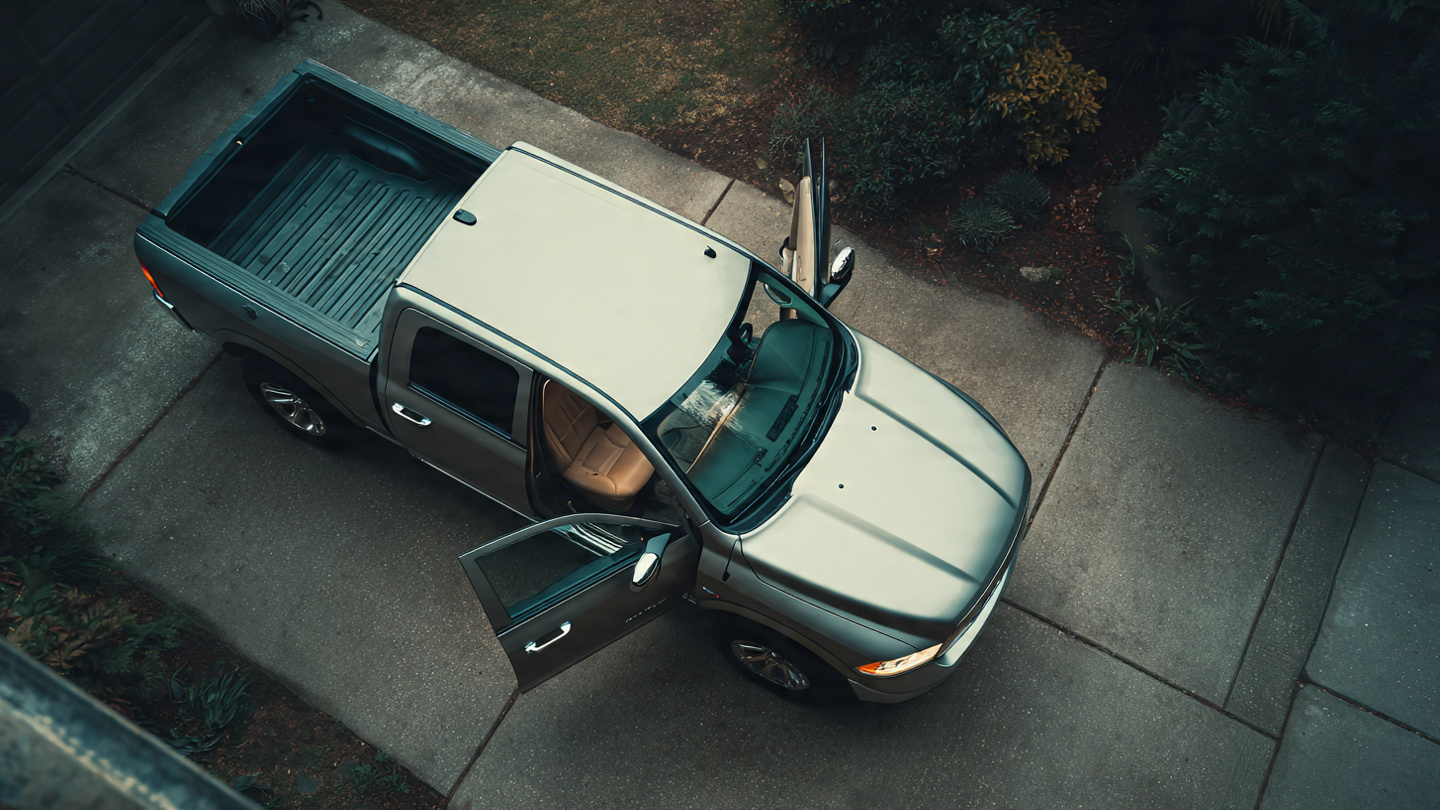
The brake transmission shift interlock on a Ram truck is supposed to do one thing: keep the column shifter locked in Park unless your foot is on the brake and the key is in the ignition. When the plastic housing around its solenoid swells from heat and the grease inside degrades, the locking pin sticks open. Without a functioning interlock, a truck can shift out of Park on its own, with nobody behind the wheel, and roll wherever gravity takes it.
FCA knew about this. In 2017, recall 17V-821 covered 1,482,874 Ram 1500s through 5500s with column-mounted shifters, model years 2009 through 2017. Dealers installed a bracket and replaced the solenoid. In 2018, recall 18V-100 extended coverage to another 180,462 trucks from the 2017 and 2018 model years, same defect, same fix. Owners showed up, got the repair, and drove home believing the problem was solved.
It wasn't.
On July 3, 2025, NHTSA's Office of Defects Investigation opened Recall Query RQ25003 after receiving 14 Vehicle Owner Questionnaires and 6 death-and-injury reports describing post-recall-remedy failures of the BTSI system in 2013 through 2018 Ram pickups.[1] Every single vehicle in those reports had already been repaired under 17V-821 or 18V-100. Seven people were injured in rollaway incidents involving trucks that had been through the recall process and supposedly fixed.[2]
Think about what that means for a second. After identifying a defect, the recall system has exactly one job: fix it. These owners did everything right, opening the letter, driving to the dealer, waiting in the service bay, and leaving with documentation confirming the repair was complete. That BTSI locking pin was still sticking.
NHTSA's 2018 Report to Congress on Vehicle Safety Recall Completion Rates reveals the architecture of the blind spot.[3] Every metric the agency tracks revolves around one number: the completion rate, defined as the percentage of recalled vehicles that received a remedy. Across major manufacturers from 2012 to 2016, that rate was 58.4% at the fifth-quarter mark. Vehicles three years old or newer hit 79.8%, while vehicles over ten years old cratered to 42.3% and power train recalls finished at 68%. Forty-plus pages of tables and models examine why people don't show up for free repairs.
Nowhere in those pages does the agency analyze whether the repair itself actually resolves the defect. Buried in the limitations section, the report explicitly acknowledges that "the Agency is unable to verify the numbers of remedied vehicles reported by manufacturers." Every number in the completion rate framework comes from manufacturer self-reporting with no independent audit of the remedy's effectiveness. NHTSA counts how many bodies walked through the dealership door. It does not count how many walked out with a working truck.
Ram's BTSI case exposes what this looks like in practice. ODI's investigation is now examining three questions: whether the original recall remedy was effective, what root cause is behind the additional rollaway incidents, and whether some other failure mode is degrading BTSI performance even after repair.[1] Those are extraordinary questions to be asking about a recall that covered nearly 1.5 million vehicles eight years ago. They're also the right questions, and it is remarkable that no systematic process existed to ask them sooner.
Scale is the strongest counterargument. Fourteen complaints out of 1.2 million trucks is a failure rate of roughly 0.001%, which sounds vanishingly small. But NHTSA's own data on complaint reporting suggests that VOQ submissions capture a fraction of actual field failures, because most owners of a truck that randomly rolls backward don't know the ODI complaint portal exists, and many who do can't prove the recall repair preceded the failure. Fourteen complaints that triggered this investigation are the tip of whatever the iceberg turns out to be. Seven injuries from vehicles that already received a recall remedy is seven injuries that the system was specifically designed to prevent and failed.
A DOT Office of Inspector General audit found NHTSA's recall management lacking "adequate processes and oversight," particularly around tracking whether recalled vehicles actually receive effective repairs.[4] Consumer Reports flagged similar gaps in Takata airbag repair tracking. Consistent pattern emerges: the recall system is a funnel that measures input volume and ignores output quality.
What would a remedy effectiveness rate look like? Start with the 58.4% of vehicles that got repaired, sample a statistically meaningful subset, and check whether the defect recurred within 12, 24, or 36 months. Publish the result alongside the completion rate. It would cost a rounding error of the $125 billion NHTSA says vehicle crashes cost the U.S. economy annually, and it would have caught the Ram BTSI failure years before seven people got hurt.
What you should do: If you own a 2013 through 2018 Ram 1500, 2500, 3500, 4500, or 5500 with a column-mounted shifter, check your recall status at nhtsa.gov/recalls using your VIN. If you had the BTSI recall performed and have experienced the shifter moving out of Park without your foot on the brake, file a complaint at nhtsa.gov/report-a-problem. Until the investigation concludes, always set your parking brake and do not trust the shift interlock alone.
Sources & References
- NHTSA Office of Defects Investigation, Recall Query RQ25003: Post Recall Remedy Brake Transmission Shift Interlock, opened July 3, 2025. nhtsa.gov
- Carscoops, “Over A Million Ram Trucks Under Investigation After Injuries Raise Alarms,” 2025. carscoops.com
- NHTSA, Report to Congress: Vehicle Safety Recall Completion Rates Report, December 2018. nhtsa.gov
- DOT Office of Inspector General, NHTSA’s Management of Light Passenger Vehicle Recalls Lacks Adequate Processes and Oversight. oig.dot.gov
- NHTSA Recall 17V-821: Ram Trucks BTSI Defect, 2017. nhtsa.gov/recalls
- NHTSA Recall 18V-100: Ram Trucks BTSI Defect (expansion), 2018. nhtsa.gov/recalls