Your Back Seat Is Stuck in 1996. IIHS Just Proved It by Failing the Corolla.
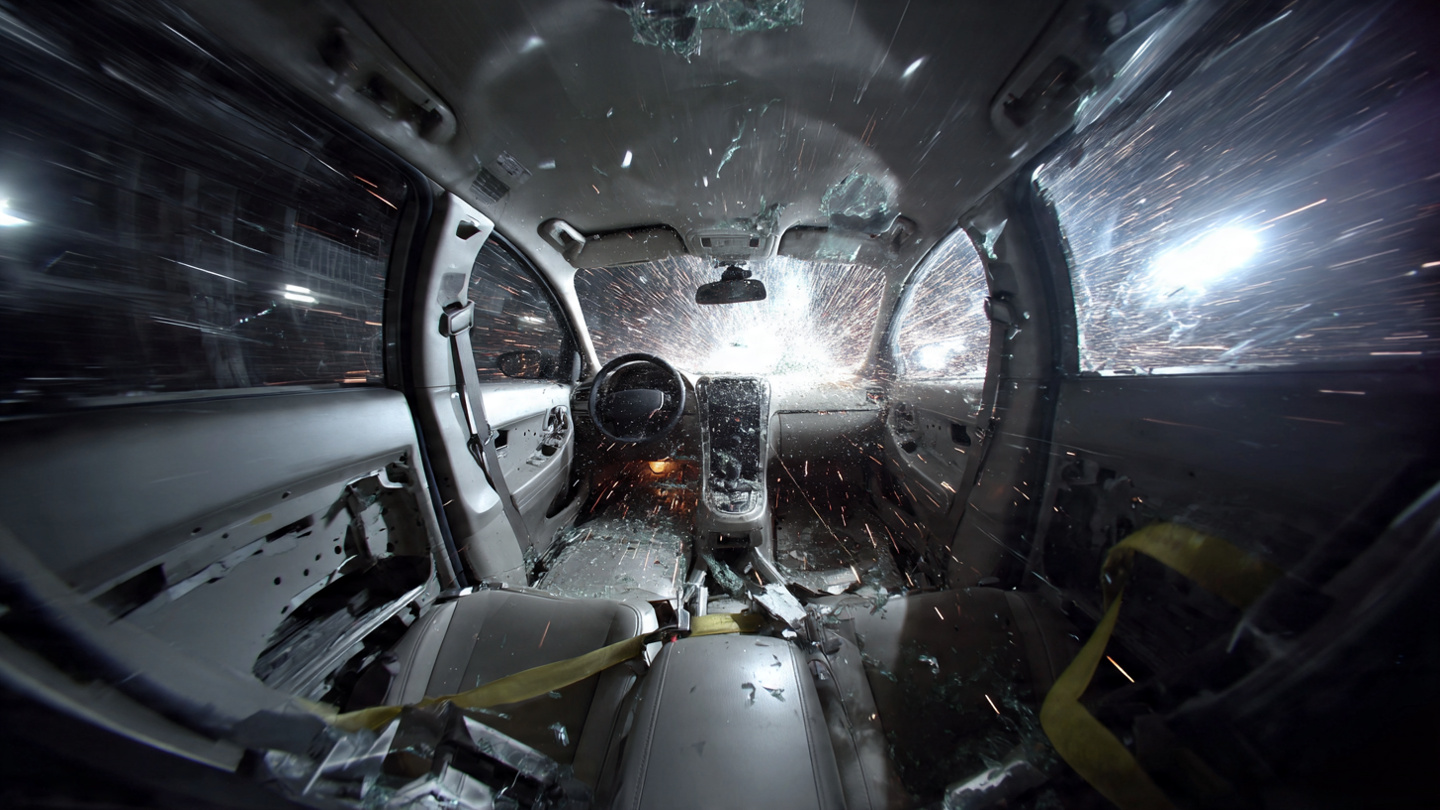
The Toyota Corolla is the best-selling car in human history. More than 50 million units across twelve generations, parked in driveways on every continent that has driveways. On May 19, 2026, the Insurance Institute for Highway Safety stripped it of its Top Safety Pick award because the back seat offers the same level of crash protection it did when Clinton was president.[1]
The Corolla wasn't alone. Honda's Ridgeline earned Poor ratings in three categories including rear-seat protection. BMW's 3 Series managed only Acceptable, dragged down by rear seatbelt performance that would have been unremarkable in 2003.[2] Three iconic nameplates, all undone by the same structural deficiency: they engineered the front seat for the 21st century while the back seat stayed frozen in the mid-1990s, and nobody noticed because nobody was testing it.
That last part deserves to sit with you for a moment. For nearly 30 years, the primary U.S. frontal crash test protocol placed a single instrumented dummy in the driver's seat. Automakers, being rational economic actors who optimize for what gets measured, poured billions into front-seat restraint systems. Pretensioners that cinch the seatbelt tight in the first 8 milliseconds of a collision. Load limiters that release webbing pressure before the belt itself fractures ribs. Knee airbags, side curtain airbags, airbags for the airbags. Results were staggering: drivers became nearly 50% less likely to die in frontal crashes than they were 25 years earlier.[3]
The rear seat got almost none of it. Less than half of new vehicles sold in the U.S. equip their rear positions with advanced restraint systems like pretensioners or load limiters, according to IIHS research published alongside the 2022 test expansion.[3] Most rear seatbelts are the same basic three-point design they were when the Ford Explorer was new and everyone thought SUVs were supposed to roll over. No rear-seat airbags in production, no rear pretensioners in most sedans. All of it exists, has existed for over a decade, and automakers chose not to install it in the seats where children are legally required to sit.
IIHS quantified the damage in a study that should have landed harder than it did. In vehicles from model year 2007 onward, belted rear-seat occupants face a 46% higher risk of fatal injury than belted front-seat occupants in the same crash.[3] Read that again and consider the implication: the back seat used to be the safest place in the car because compartment deformation absorbed energy equally for everyone inside. Modern engineering solved deformation for the front row and then walked away from the project. Nothing about the back seat got more dangerous in absolute terms. Front-seat engineering just got dramatically safer, and the gap that opened between them is now killing people at a measurable, statistically significant rate.
December 2022 brought the first real reckoning with this gap. IIHS added a rear-seat dummy to its moderate overlap frontal test for the first time, ran 15 small SUVs through the barrier, and watched 9 of them earn Poor ratings for rear-seat protection.[3] The Honda CR-V. Poor. Mazda CX-5. Poor. Hyundai Tucson, Jeep Compass, Chevrolet Equinox, all Poor. Only the Ford Escape and Volvo XC40 managed Good. Everyone else performed as if no one had considered that a human being might sit behind the driver during a frontal collision involving a vehicle specifically marketed to families.
For three years after that initial test, IIHS gave automakers runway. Rear-seat ratings existed but weren't mandatory for safety awards, a diplomatic grace period that allowed manufacturers to redesign restraint systems without losing their marketing stickers overnight. That grace period ended on March 24, 2026, when IIHS announced that a Good rating in the moderate overlap test, rear-seat performance included, would be required for any safety award going forward.[4]
The fallout was immediate and revealing. Sixty-three vehicles currently qualify for Top Safety Pick or Top Safety Pick+, up from 48 at the same point in 2025.[4] Progress, sure. But the exclusion list tells the real story. Zero minivans qualify: not the Pacifica, not the Sienna, not the Odyssey. A vehicle category that exists to haul children cannot earn a safety award in a system that now checks whether children would survive the crash. IIHS president David Harkey called this "disappointing." That word is doing a tremendous amount of heavy lifting.
No small pickups qualify either, and among large pickups, exactly two made the cut: the Tesla Cybertruck, a vehicle whose exterior resembles a geometry homework assignment, and the Toyota Tundra crew cab.[4] The F-150, the Silverado, the RAM 1500, the three best-selling vehicles in the country if you count them individually, all failed to provide adequate rear-seat protection in a test that has been public knowledge since 2022.
The Counterargument, at Full Strength
Automakers will point out, correctly, that the majority of fatal crash occupants are in front seats. Most trips involve one or two people, and those people sit up front. Engineering dollars allocated to front-seat safety have prevented more deaths in absolute numbers than equivalent investment in the rear ever could, because the denominator of front-seat exposure is vastly larger. That 46% relative risk increase sounds alarming, but the absolute count of rear-seat fatalities is a fraction of the front-seat total. On pure utilitarian math, they optimized for where the bodies were.
That argument has a child-sized hole in it. Every state except New Hampshire has a car seat or booster law. Children under a certain age are legally required to ride in the back. Children are the population most dependent on rear-seat protection and the population least able to advocate for its own safety, and the population whose parents specifically chose vehicles like the Odyssey and the Pacifica and the Sienna because they believed the back seat was where their kids would be safest. For 30 years, they were right for the wrong reasons. Now they are wrong, and the test that would have caught it didn't exist until three years ago.
Limitations
The 46% figure applies specifically to belted occupants in model year 2007 and newer vehicles. Unbelted occupant risk profiles are different and substantially worse regardless of seating position. FARS captures only fatal crashes, not the roughly 6.7 million annual U.S. crashes overall, meaning a vehicle with low rear-seat fatality rates could still have unacceptable injury rates that this data cannot see. The IIHS test uses a Hybrid III dummy representing a 5th-percentile female or a 12-year-old, not an infant in a rear-facing car seat or a 6-foot adult, so injury patterns for the actual population riding in back seats may diverge from test results. Fleet-weighted rear-seat occupancy rates are not publicly available, which makes absolute risk comparisons between front and rear impossible with current data.
What You Should Actually Do
If you are shopping for a family vehicle in 2026: check the IIHS rating for the specific model and model year you are considering, and look at the moderate overlap frontal rating breakdown, not just the headline award.[5] A Top Safety Pick means rear-seat protection passed. No award means it may not have passed. If your current vehicle is a minivan, a small pickup, or any model that predates the 2022 test expansion, the back seat likely has the same basic three-point belt system it shipped with, and no test was ever run to determine what happens to the person wearing it during a 40-mph offset frontal collision. Ask your dealer about rear pretensioners and load limiters by name. If the service advisor doesn't know what those words mean, that tells you something about how much attention the back seat has received.
Sources & References
- Autoblog, “Toyota Corolla, Honda Ridgeline lose IIHS safety awards,” May 19, 2026. autoblog.com
- Autoevolution, “BMW 3 Series IIHS rating update,” May 2026. autoevolution.com
- IIHS, “New crash test spotlights lagging protection for rear passengers,” December 2022. iihs.org
- IIHS, “IIHS pushes improvements in crash avoidance with 2026 awards,” March 24, 2026. iihs.org
- IIHS Vehicle Ratings. iihs.org/ratings
Source: IIHS moderate overlap frontal crash test data (2022–2026), IIHS rear-seat fatality risk study, FARS 2014–2023. The 46% relative risk figure applies to belted occupants in MY 2007+ vehicles in frontal crashes. Fleet-weighted rear-seat occupancy rates unavailable; absolute risk comparison not possible. See methodology for caveats.