NHTSA Took 15 Years to Move a Beep Three Feet
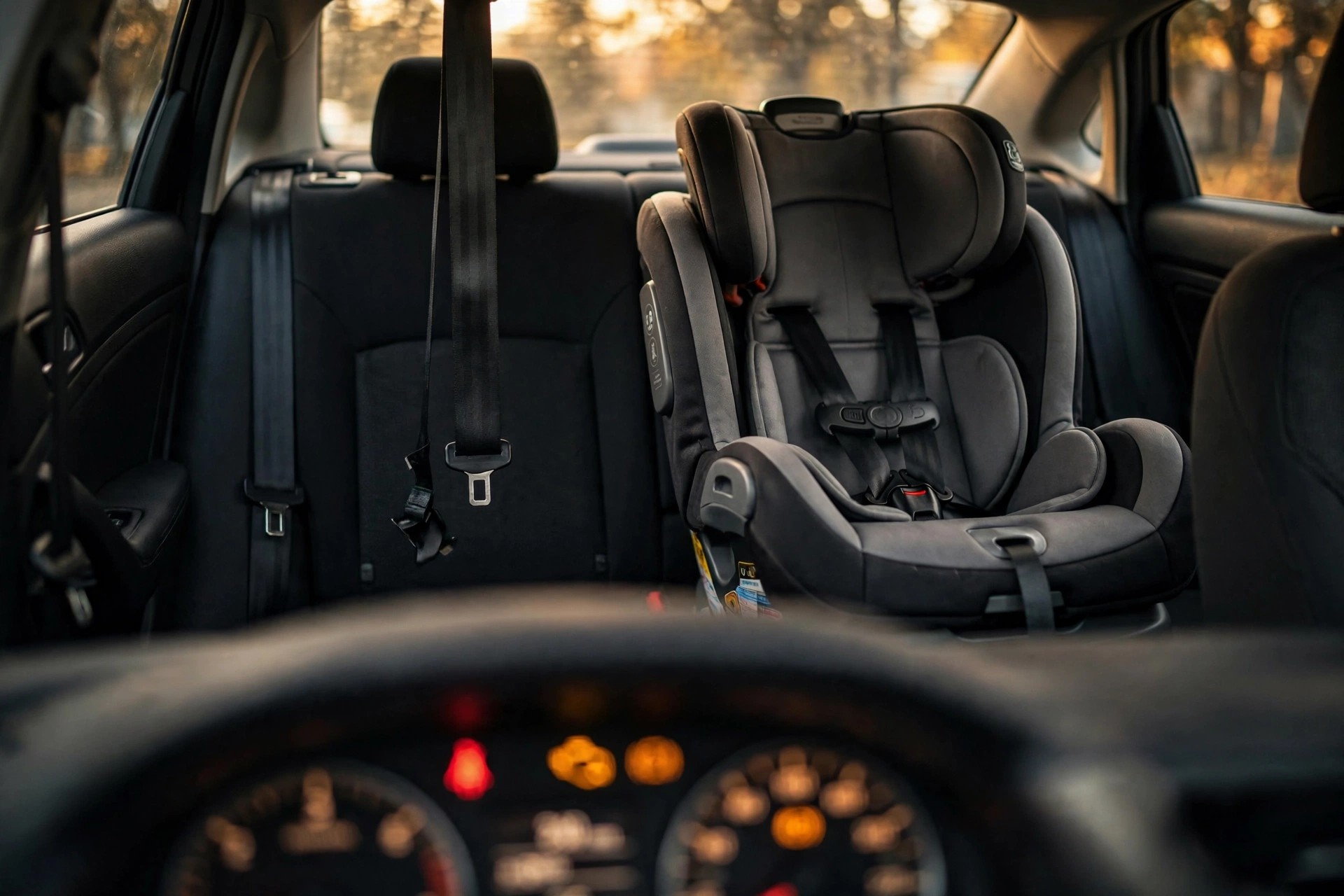
Your car has beeped at the driver about seat belts since 1972, when Federal Motor Vehicle Safety Standard 208 first required a warning chime for the driver's seat.[1] Next week, on September 1, enhanced front-seat warnings become mandatory under a finalized NHTSA rule, but rear seats do not get their beep until September 2027.[3]
Fifty-five years to move a chime three feet.
Congress told NHTSA to require rear seat belt reminders in 2012, buried in Section 31502 of MAP-21, the same sprawling transportation bill that funded highway repairs and bridge inspections.[2] NHTSA responded with the urgency of a DMV line: seven years crawled by before the agency published an advance notice of proposed rulemaking, and the final rule did not arrive until December 2024.[3] Full rear-seat compliance lands in September 2027, by which time a child born the year Congress issued the mandate will be old enough to drive.
During that wait, roughly 803 unbelted rear-seat passengers aged eight and older died in 2018 alone, and NHTSA's own analysis says more than 400 of those deaths were preventable with seat belt use.[4] Scale that annual toll across 15 years of regulatory silence, starting from the day Congress told NHTSA to act, and you land somewhere north of 6,000 funerals that might have gone differently if someone's car had been equipped with a federally mandated beep reminding the person in the back seat to buckle up.
Front-seat belt usage sits at 91.6%; rear trails at 81.7%.[3] Ten points. Among adults aged 20 to 54 the rear-seat rate drops to just 70%, with the most common excuse being that the back seat feels safer.[5] It does not. University at Buffalo researchers analyzed 300,000 fatal crashes and found that an unbelted rear passenger triples their own odds of death and doubles the belted driver's, because an unrestrained body in a frontal collision becomes a 150-pound projectile aimed at the headrest in front of it.[6]
NHTSA estimates the completed rule saves 50 lives per year, a modest number partly because most automakers already install rear-seat reminders voluntarily after a 2019 industry pledge to make them standard by the 2025 model year.[3][7] At 95% rear-seat belt usage, researchers project 800 lives saved and 65,000 injuries prevented annually, worth $3.8 billion in societal savings.[6] The federal rule is less a catalyst than a mop-up operation for the stragglers.
Every component already exists in the vehicle, so what cost something was the 15-year wait while NHTSA turned a one-page mandate into a 200-page docket.
What to do: Buckle up in the back. Insist your passengers do the same. If your car predates the 2025 model year, it almost certainly will not remind you, and your best rear-seat warning system is the person behind the steering wheel saying the words out loud before pulling out of the driveway.
Sources & References
- NHTSA, Federal Motor Vehicle Safety Standard No. 208, “Occupant Crash Protection,” originally adopted 1972. nhtsa.gov
- Moving Ahead for Progress in the 21st Century Act (MAP-21), Public Law 112-141, Section 31502 (2012). congress.gov
- NHTSA, “Seat Belt Reminder Rule — Final Rule,” Docket No. NHTSA-2024-0071, December 2024. nhtsa.gov
- Advocates for Highway and Auto Safety, seat belt fact sheet citing NHTSA data (2018 fatality figures). saferoads.org
- IIHS/CHOP study, Jermakian & Weast (2018), rear-seat belt usage rates by age group. iihs.org
- University at Buffalo Center for Transportation Injury Research (CenTIR), “Unbelted Passengers Become Backseat Bullets.” newswise.com
- Alliance of Automobile Manufacturers & Association of Global Automakers, voluntary rear-seat reminder commitment (2019). consumerreports.org
Data sourced from NHTSA FARS, IIHS, published research, and federal rulemaking documents. The Crash Report is an independent publication and is not affiliated with any government agency or automaker.