47,749 Hyundai Konas Have a Seatbelt That Might Not Work. It’s in the Seat Nobody Tests.
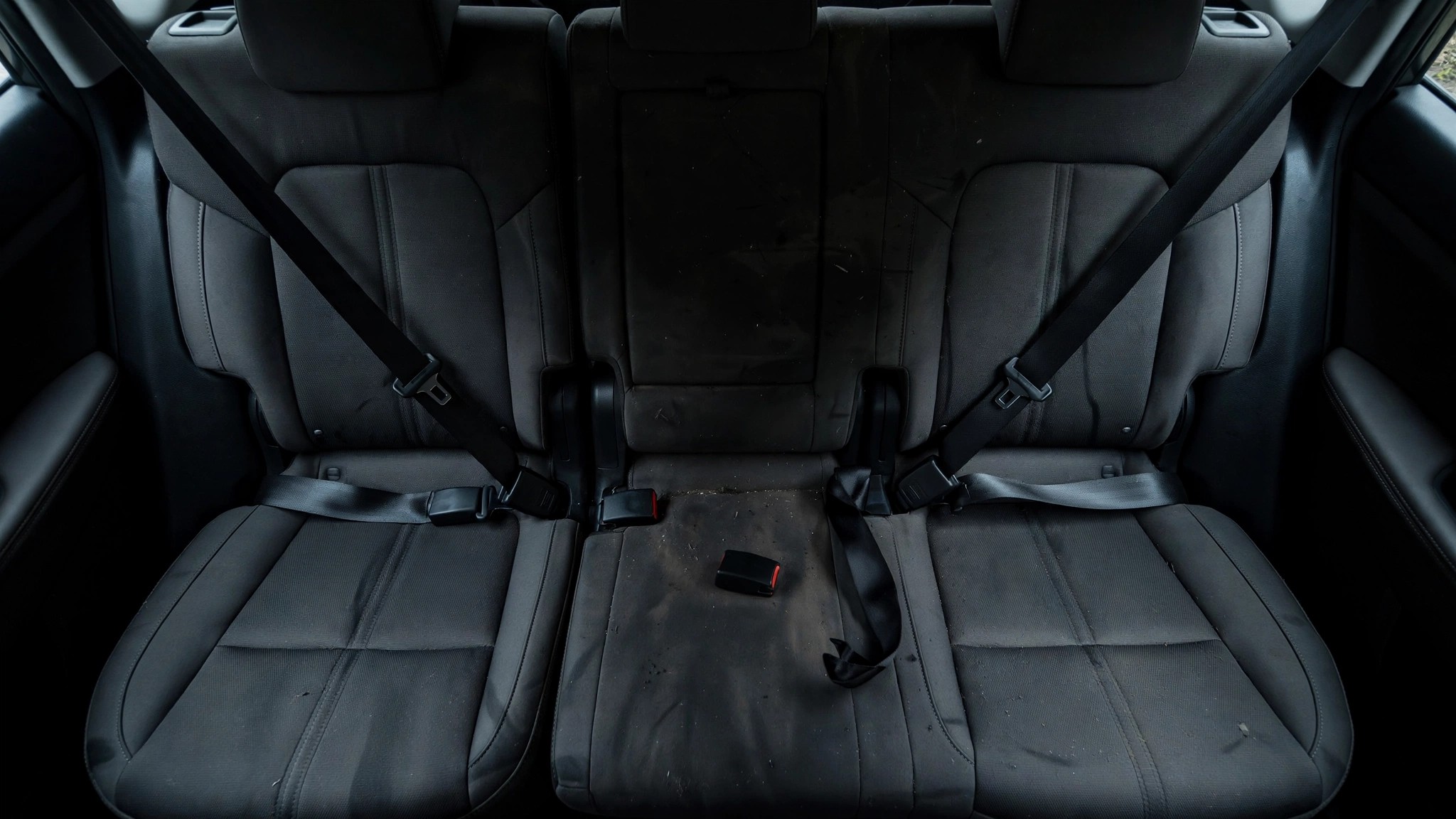
Hyundai is telling owners of 47,749 Kona SUVs to stop using their rear center seat. Not because of a structural flaw, not because of an airbag issue, but because the seatbelt buckle in that position might not hold you in place during a crash.[1] The company traced the defect to Joyson Safety Systems, a Korean supplier that informed Hyundai back in February that a stamping die used to cut the buckle components had been kept in service past its lifespan. Wear on the die meant the metal parts it produced were out of spec. Nobody caught it until Joyson ran a test and the buckle failed.
That supplier name should sound familiar: Joyson acquired Key Safety Systems, which acquired Takata, the company whose ruptured airbag inflators killed at least 27 people worldwide and triggered the largest automotive recall in history.[2] Same corporate lineage, different component, same quality control theme: inspection processes that allow defective safety equipment to reach production vehicles.
But the recall itself is almost beside the point. What matters is the seat it happened to. The rear center position is the orphan of automotive safety engineering, a seat that exists in virtually every five-passenger vehicle sold in America and is systematically excluded from every standardized evaluation designed to protect the people sitting in it.
No crash test in any country places a dummy in the rear center seat. Not NHTSA's frontal barrier test, and not IIHS's updated moderate overlap test, which launched specifically to address rear-seat safety by positioning a 5th-percentile female Hybrid III dummy in the second row, a stand-in for a small woman or a twelve-year-old child.[3] That dummy sits behind the driver, in the outboard position. Euro NCAP has tested rear occupants since 2015, also in the outboard position. The center position is, in the language of crash test methodology, a seat that does not exist.
And it does exist for your family, where the engineering it receives reflects its testing status, which is to say: almost none. No production vehicle offers a center rear airbag. In older vehicles, the center rear often provided only a lap belt, not the three-point lap-and-shoulder configuration that NHTSA research shows reduces fatal injury risk by 58% in cars and 75% in SUVs.[4] Modern vehicles typically provide three-point belts in the center, but frequently without the pretensioners and force limiters that front-seat occupants have enjoyed for over a decade. A pretensioner cinches the belt tight the instant a crash begins, eliminating slack that lets the body build momentum before the belt catches. A force limiter then carefully spools out webbing to reduce chest loading. Without both working together, the belt either arrives too late or holds too tight. The rear center gets neither in most vehicles.
Belt geometry compounds the problem further. Rear outboard seats anchor their seatbelts to the B-pillar or C-pillar, solid vertical structure that provides a high shoulder-belt attachment point and favorable belt angle across the chest. The center belt typically anchors to the seat frame itself or the floor, producing a flatter angle that makes submarining more likely, the failure mode where the lap belt slides off the strong bones of the pelvis and rides up into the soft tissue of the abdomen during a frontal impact. IIHS has documented submarining across multiple vehicle classes in its updated tests, from the Cadillac XT6 (rated poor) to the Audi Q5 and Lexus RX (both marginal).[5] Those results came from the outboard rear position, which at least gets tested. The center seat, with its compromised geometry, is flying blind.
Historically, this was the opposite. In the 1960s and 1970s, NHTSA research found the rear center seat was 37% safer than the front seat, and the rear outboard positions were 26% safer.[6] That advantage was purely structural: sitting in the middle of the car, surrounded by the maximum amount of crush space in every direction, meant the physics of impact dissipation worked in your favor. Then the front seat got pretensioners, force limiters, frontal airbags, side airbags, curtain airbags, knee airbags, and seat-position-adaptive restraint algorithms. The rear center seat got nothing except, eventually, a three-point belt where there used to be a lap belt. IIHS senior vice president Jessica Jermakian has noted that the enormous front-rear safety disparity of previous decades has "nearly evaporated" for adult passengers, not because the rear improved, but because the front caught up and then surpassed it.[6]
The rear center seat also has a behavioral problem that no engineering can fix alone. Rear seatbelt use in the United States runs at roughly 74%, compared with 91% in the front seat, according to a 2017 IIHS study.[7] Unbelted rear occupants are eight times more likely to be injured and twice as likely to die as belted ones. And here is the number that should terrify every driver: an unbelted rear-seat passenger sitting behind a belted driver increases the driver's risk of death by 137%.[7] In a frontal crash, the unrestrained body behind you becomes a projectile moving at whatever speed the car was traveling. Your headrest was not designed for that load.
The strongest case for the status quo: children, who should always ride in the rear, are still safer there because of airbag inflation risks in the front seat. NHTSA explicitly recommends the rear for children under 13. That is correct, important, and beside the point. Nothing in the rear-seat engineering gap changes the fact that the back seat remains the right place for a child in a properly installed car seat. The center rear in particular eliminates side-impact exposure entirely.
But that argument only underscores the neglect. If the rear center seat is where children are supposed to sit, and it has no crash test dummy, no airbag, and a seatbelt system with compromised geometry and no advanced restraint features, then the seat designated for the most vulnerable occupants is receiving the least engineering investment. That is not an edge case. That is a design philosophy.
What you can do right now: if you own a 2025 Kona Electric or 2026 Kona, check your VIN at nhtsa.gov/recalls and stop using the rear center seat until the buckle is replaced. For every vehicle: make sure every rear-seat passenger buckles up on every trip. When shopping for your next car, look for rear-seat pretensioners and force limiters in the specifications, features that Consumer Reports and IIHS now specifically track. Ask the dealer which restraint technologies are in the rear center, not just the outboard positions. And if the answer is "the same belt we've always put there," that tells you where you and your family fall in the engineering priority list.
Sources & References
- NHTSA recall 26V452; Hyundai recall number 306. “Rear center seat belt buckle may fail to properly restrain an occupant.” July 17, 2026. nhtsa.gov
- NHTSA, Takata airbag recall documentation. Joyson Safety Systems (formerly Key Safety Systems) acquired Takata’s assets. nhtsa.gov
- IIHS, “New crash test spotlights lagging protection for rear passengers.” Updated moderate overlap frontal test methodology. iihs.org
- Kahane, C.J. (2017), “Lives saved by vehicle safety technologies and associated Federal Motor Vehicle Safety Standards, 1960 to 2012.” NHTSA Report No. DOT HS 812 069. nhtsa.gov
- IIHS, “Rear passenger protection falls short in most midsize SUVs” and “IIHS Crash Tests Show Which Luxury SUVs Protect Rear Passengers,” Consumer Reports. iihs.org
- NHTSA (2017), rear-seat occupant protection analysis. As reported by Jalopnik, “Is Your Car’s Rear Middle Seat Still Its Safest?” citing IIHS VP Jessica Jermakian. iihs.org
- IIHS, seat belt usage statistics (2017 study); Bose, D. et al. (2013), “Interaction of unbelted rear-seat passengers with front-seat occupants.” iihs.org