NHTSA Says Its New Belt Rule Will Save 50 Lives a Year. Its Own Research Says 1,600.
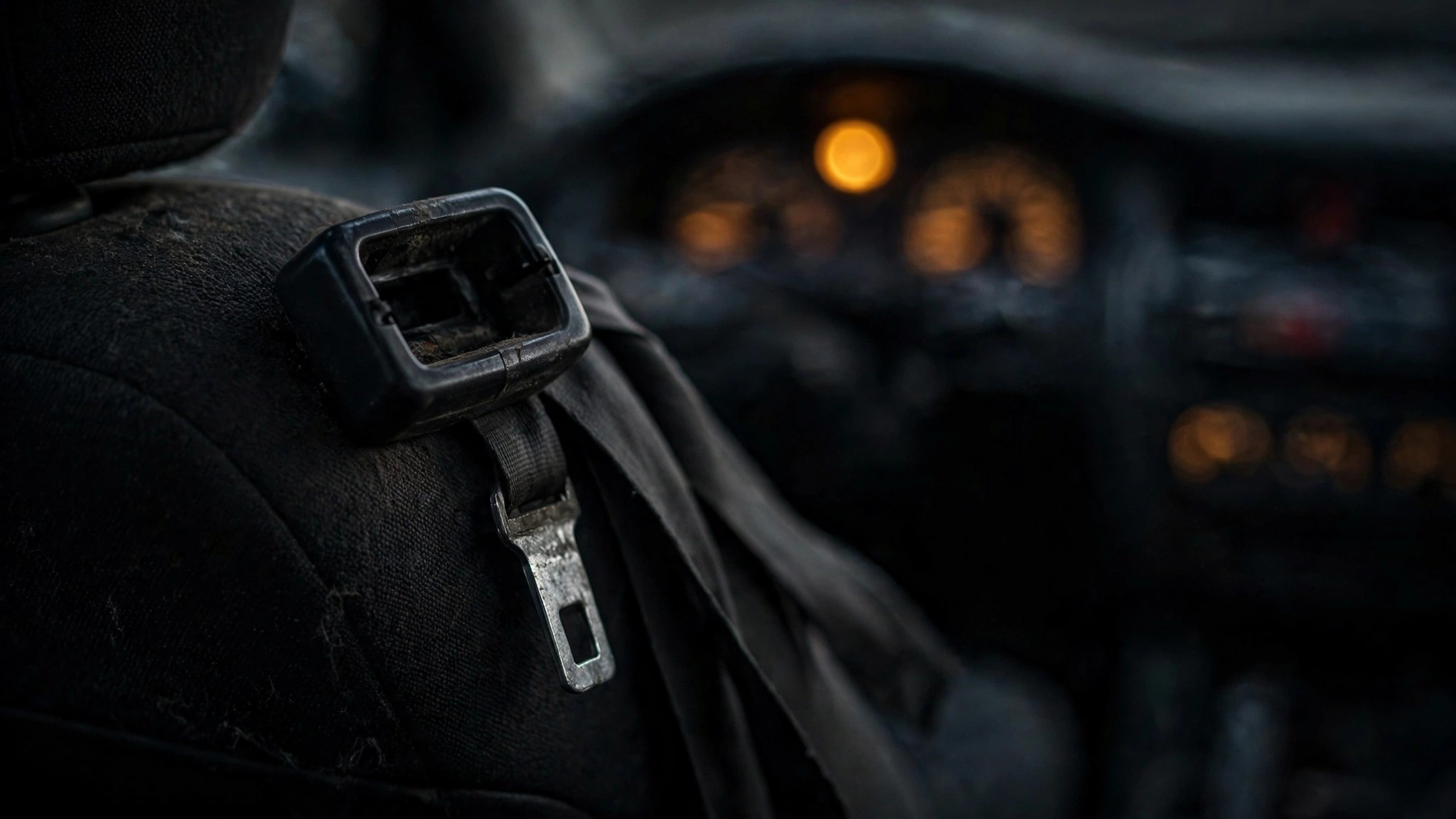
Thirty days from now, every new car sold in America will need a better seat belt chime for front occupants. One year after that, the back seat gets one too. NHTSA calls this a "significant action." The agency estimates it will prevent 50 deaths per year.[1]
Fifty lives. In a country where 48.4% of all vehicle occupant deaths involve unrestrained people, NHTSA looked at the full scope of the problem, did the math, and concluded that a beeping sound in the back seat could rescue fifty of them annually.[2] The agency's own supporting research, published in the journal Traffic Injury Prevention, reached a starkly different conclusion: persistent audible reminders lasting at least 90 seconds at every seating position could save approximately 1,600 lives per year, not fifty, because the intervention the research evaluated was fundamentally more aggressive than what NHTSA chose to require.[3]
The difference isn't a rounding error or a methodological disagreement between research teams working with different datasets; it's a policy choice baked into how the agency defined the minimum acceptable reminder.
NHTSA's final rule amends Federal Motor Vehicle Safety Standard No. 208 to require enhanced front seat warnings by September 1, 2026, and rear seat warnings by September 1, 2027. What matters is the rear seat requirement, because it's genuinely new: until this rule, FMVSS 208 required a belt warning only for the driver's seat, meaning your kids riding in the back enjoyed zero federal protection against forgetting to buckle up, while the driver got an annoying chime that most manufacturers engineered to last exactly as long as the minimum regulation demanded and not one second more.[1]
Rear belt use sits at 80%, according to the most recent NOPUS observation data from 2023, compared with 91% for front seat occupants. That 11-point gap sounds manageable until you look at who dies. Among rear-seat occupants killed in crashes in 2023, only 32% were wearing belts.[4] Put another way: the back seat selects for people who don't buckle up, and those people die at catastrophic rates, because unbuckled rear passengers face roughly eight times the injury risk of their belted counterparts while simultaneously becoming 150-pound projectiles aimed at the front seats.[5]
So why did the agency that commissioned this research settle on fifty lives instead of sixteen hundred?
Because NHTSA specified a mild reminder rather than the persistent, 90-second-plus audible alarms that the European Union, Japan, and Australia have mandated for years, countries that moved to aggressive chime standards a decade or more ago after reading essentially the same body of evidence NHTSA cites. The research is explicit: a "continuous, long-lasting audible signal" increases belt use by 30% among people who don't routinely buckle up, boosting rear belt use from 80% to an estimated 85.9% and front use from 90.3% to 93.2%.[3] NHTSA chose something quieter.
The reason traces to a single year: 1973. NHTSA mandated seat belt interlocks that year, requiring your car to literally refuse to start if you didn't buckle up, and the public revolt was immediate, visceral, and politically devastating for the agency. Congress passed the 1974 Motor Vehicle and Schoolbus Safety Amendments, which explicitly prohibited NHTSA from ever again requiring interlocks, and fifty-two years later, that political scar still dictates how aggressively the agency will annoy American drivers into not dying on their own roads.
Washington State illustrates the paradox: front belt use exceeds 94%, enforcement is strong, and cultural norms are solid, yet unrestrained fatalities still increased 60% between 2019 and 2023 while unrestrained serious injuries rose 91%.[6] High compliance coexists with rising deaths among the non-compliant, because the people who refuse belts also tend to speed, drive impaired, and crash at hours when enforcement is thin.
FARS confirms the demographic pattern: ages 21 to 34 see 60% of occupant fatalities with no belt, nighttime belt use runs 18 percentage points lower than daytime, and the unbuckled dead are overwhelmingly young men driving at night who were already deep into other high-risk behaviors well before they decided that seat belts were optional.[2][4]
A seat belt chime is fighting a behavioral cluster, not a knowledge gap. Nobody in 2026 is unaware that belts save lives; the question is whether a soft beep can change the mind of someone who has already chosen to drive impaired at 2 AM without a seatbelt. The research says a persistent, impossible-to-ignore alarm moves the needle by 30% among these holdouts, because it shifts the calculus from "I know I should" to "this noise is unbearable." NHTSA decided that level of annoyance was politically untenable.
Fifty lives per year. At that rate, NHTSA's rule would need 32 years to save as many people as one year of the intervention its own research recommends, and over the 54 years since the interlock ban, a persistent-reminder mandate implemented even in 2010 would have saved an estimated 25,000 additional lives, deaths that aren't manufacturing defects or design flaws but the direct, calculable output of choosing a quiet car over a living passenger.
What you should do
Buckle your back seat passengers. Every trip. Check your vehicle's settings for rear seat belt reminders, which many modern cars already offer as a toggle buried in the infotainment menu. If you're shopping for a new car, ask the dealer to demonstrate the rear belt warning system. Starting September 2027, it'll be mandatory. Until then, your car probably won't say a word if someone in the second row decides their life isn't worth a click.
Sources & References
- NHTSA, “NHTSA Finalizes Seat Belt Reminder Rule to Increase Seat Belt Use, Improve Occupant Safety,” press release, 2024. nhtsa.gov
- National Safety Council, “Seat Belts — Injury Facts,” 2025. NSC analysis of NHTSA FARS data. injuryfacts.nsc.org
- Werth et al., “Increasing seat belt use in the United States by promoting and requiring more effective seat belt reminder systems,” Traffic Injury Prevention, 2023. PubMed 37267012
- IIHS, “Seat belts,” research topic page, updated 2025. iihs.org
- Consumer Reports / IIHS, “Passengers Failing to Buckle Up in Rear Seats,” 2017. consumerreports.org
- Washington Traffic Safety Commission, “2024 Seat Belt Use Report,” February 2025. wtsc.wa.gov