The Ford Ranger Is Nearly 3× Deadlier Than the F-150. Small Trucks Are a Lie.
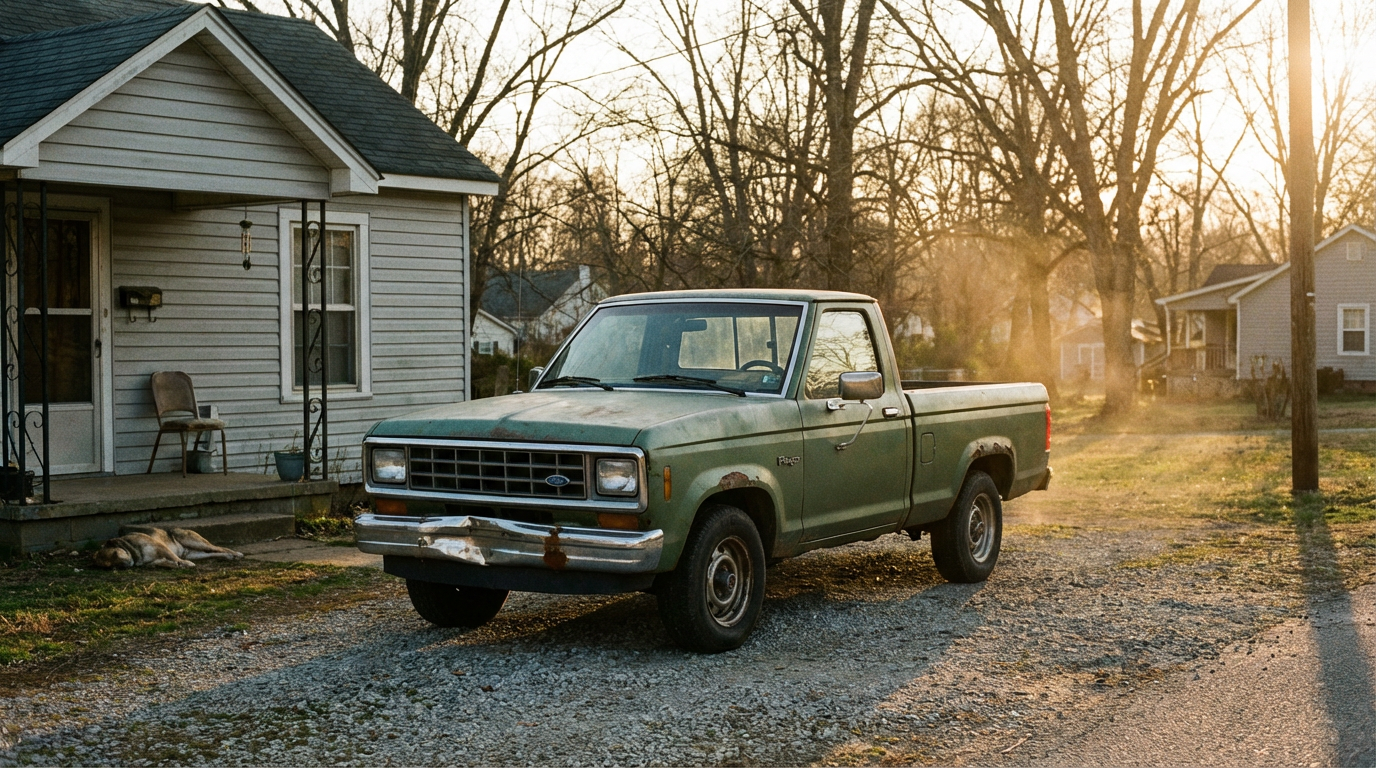
Before you sign that lease, you might want to see this. The Ford Ranger — America’s best-selling compact pickup, the “sensible” truck, the one you buy because a full-size feels like too much — has a per-mile fatality rate of 2.91 deaths per 100 million vehicle miles traveled. The F-150, its big brother from the same factory? 1.04.
And it’s not just a Ford problem. The entire compact and mid-size truck class is a graveyard masquerading as a practical choice. The Chevy S-10 sits at 4.83 deaths per 100M VMT — nearly 4× the Silverado’s 1.25. The Dodge Dakota? 2.62, more than triple the Ram’s 0.78. The GMC Sonoma clocks 2.13 versus the Sierra’s 1.01.
The pattern is absolute. Every single compact or mid-size truck in the FARS database has a higher per-mile death rate than its full-size counterpart from the same manufacturer. Every one. No exceptions.
The Ranger alone accounts for 3,089 fatalities from 2014–2023, from a fleet of roughly 787,500 vehicles. That’s 309 deaths a year from a truck most buyers chose specifically because they thought smaller meant safer. The F-150, with a fleet 8.3× larger (6.56 million), generates 919 deaths per year — on an enormously larger base.
Why? Physics is unkind to small trucks. You get a pickup’s high center of gravity and rollover risk without a full-size truck’s crumple zones, mass, and structural rigidity. You get body-on-frame construction without the frame weight that absorbs energy. You get a work vehicle’s seating position without a modern full-size’s crash engineering. And compact trucks, especially aging Rangers and S-10s, went years without stability control or side-curtain airbags that were standard on F-150s.
The impairment numbers are average — 20.1% of Ranger drivers in fatal crashes tested positive, right at the fleet median. This isn’t a drunk-driving problem. It’s an engineering problem sold as a fuel-economy advantage.
The Honda Ridgeline (0.24 per 100M VMT), Toyota Tacoma (0.80), and Chevy Colorado (0.28) prove that modern mid-size trucks can be safe. The difference? Unibody construction, modern crash structures, and standard safety tech. The old-generation compact trucks — Ranger, S-10, Dakota — were designed in an era when “truck tough” meant rigid frames that transferred all the crash energy directly to the occupant.
If you’re truck shopping on a budget, the data says something counterintuitive: buy the bigger truck. A used F-150 will likely cost the same as a used Ranger and is statistically almost 3× safer per mile driven. Sometimes bigger really is better.