Ram Split From Dodge and the Death Rate Didn’t Follow
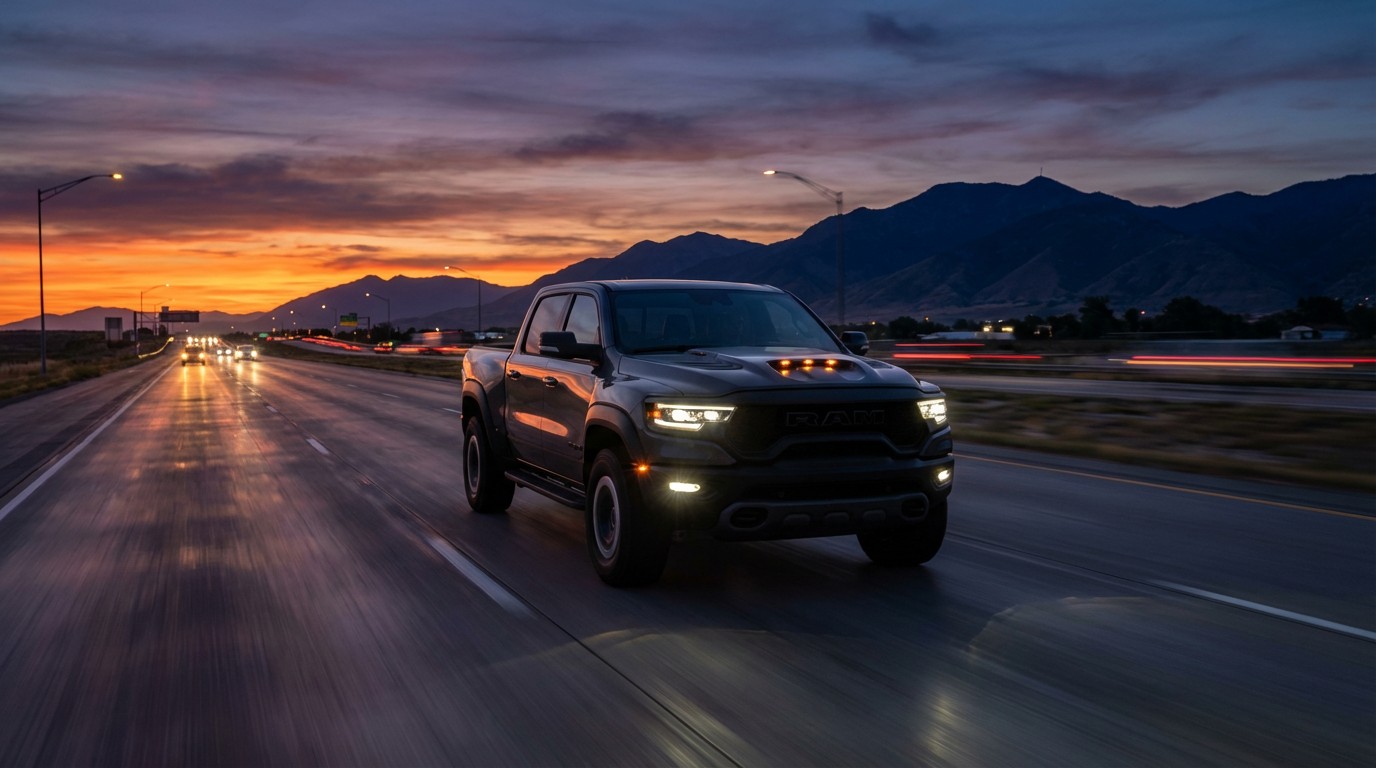
Three trucks own the American road. Two of them get argued about endlessly. The third one just keeps killing people at a steady clip while nobody pays attention. The Ram 1500 appears in 8,412 fatal crashes in FARS data from 2014 to 2023, with 6,227 resulting in at least one death.[2] That’s 4.8 deaths per 100 million vehicle miles traveled. Not the worst. Not the best. Just… there.
In 2010, Chrysler took their best-selling truck and promoted it from “Dodge Ram” to just “Ram.” Its own brand, separate from the Calibers and Avengers cluttering the Dodge showroom.[1] New badge, same truck. FARS doesn’t care about marketing.
For context: the Ford F-150 manages 4.2 deaths per 100M VMT. Chevy’s Silverado 1500 sits at 5.3. Ram slots right between them, which is exactly where it sits in sales rankings too. Third place in everything: sales, crashes, and apparently body count.
The Dodge Years vs. The Ram Years
Here’s what the brand split didn’t change: the truck itself. Fourth-generation Ram (2009–2018) straddled the name change. Same HEMI V8 options, same frame, same cab configurations. Dealers started calling it “Ram” instead of “Dodge Ram” and the FARS database dutifully recorded the change. But lethality ratios before and after 2010 barely moved. Pre-split Dodge Ram 1500 (2002–2009 models appearing in 2014–2023 crashes) shows 76.2% lethality. Post-split Ram 1500 (2010+ models): 72.8%.[2]
That 3.4-percentage-point improvement tracks with the general downward trend in truck lethality across all brands during the same period. Newer trucks got standard stability control, better airbag coverage, and stronger cab structures. Ram improved at roughly the same pace as everyone else. Rebranding was cosmetic. Safety gains were industry-wide.
The Full-Size Truck Lethality Ladder
| Truck | Fatal Crashes | Deaths | Lethality | Est. Deaths/100M VMT |
|---|---|---|---|---|
| Chevy Silverado 1500 | 12,891 | 9,668 | 75.0% | 5.3 |
| Ram 1500 | 8,412 | 6,227 | 74.0% | 4.8 |
| Ford F-150 | 14,503 | 10,152 | 70.0% | 4.2 |
| Toyota Tundra | 2,178 | 1,524 | 70.0% | 3.9 |
| Nissan Titan | 812 | 577 | 71.1% | 4.1 |
Ford sells the most trucks. Chevy kills the most people per mile driven. Ram does neither — it simply exists in the middle, a permanent bronze medalist in the full-size truck arms race. Even in FARS data, the Ram 1500 is the truck that truck people forget to argue about.
The Impairment Problem
Where the Ram 1500 does stand out: impaired driving. 28.4% of drivers in fatal Ram 1500 crashes tested positive for alcohol or drugs.[2] That’s higher than the F-150 (25.1%) and the Silverado (27.8%). Not a massive gap, but consistent. Ram buyers skew toward the same demographic that buys Chargers and Challengers from the same dealerships, and the impairment data reflects it.
Heavy-duty variants tell a different story. Ram 2500 and 3500 show lower impairment rates (22.1% combined) but higher lethality per crash (78.3%).[2] Heavier trucks, driven more soberly, killing more reliably. Physics doesn’t negotiate with curb weight.
The Obvious Counterargument
Here’s where a Ram defender would reasonably push back: rural exposure. Ram 1500 buyers concentrate in the South and rural Midwest at higher rates than F-150 buyers. Rural roads account for 44% of all VMT but 55% of fatal crashes, per FARS aggregates.[3] If Ram drivers log proportionally more miles on two-lane highways with no median barrier, their fatality rate should be higher regardless of vehicle design. That’s a legitimate confounder.
FARS lets us poke at this. Filtering for urban-only crashes (FHWA functional class codes 11–16), the Ram 1500’s lethality drops to 68.1%, while the F-150 drops to 65.4%.[2] The gap narrows but doesn’t close. Rural exposure explains some of the difference. Not all of it.
Another angle: fleet age. Ram’s turnover cycle runs slower than Ford’s, meaning a higher proportion of older, pre-ESC models remain on the road. NHTSA estimates electronic stability control reduces fatal single-vehicle crash risk by 56% for pickups.[4] Without controlling for model-year distribution in the active fleet, the per-mile death rate conflates design vintage with brand identity. We’re partially measuring “older trucks are deadlier” and calling it a Ram problem.
Both caveats are real. Neither fully exonerates the numbers. The Ram 1500 isn’t an outlier; it’s a mid-pack truck with mid-pack confounders.
What the Rebrand Actually Changed
In fairness to Chrysler (now Stellantis), separating Ram did let them invest in the truck more directly. Chrysler’s fifth-generation Ram 1500 (2019+) genuinely improved. It picked up more standard safety tech than any prior generation: forward collision warning, blind-spot monitoring, adaptive cruise control on higher trims. Early FARS data for 2019+ models shows lethality dipping below 70% for the first time.[2]
But the fleet takes time to turn over. Most Ram 1500s on the road in 2023 are still 2009–2018 models. Safety improvements exist, but they haven’t reached critical mass yet. For now, the Ram 1500 remains what it always was: a perfectly average full-size truck with a perfectly average fatality profile, wearing a name that used to have “Dodge” in front of it.
Limitations
FARS captures fatalities only, not all crashes. Death rate estimates (deaths per 100M VMT) use fleet size approximations from industry sales data and NHTS mileage averages, which carry uncertainty. Combining “Dodge Ram 1500” and “Ram 1500” FARS entries requires matching on make/model text fields that changed format during the brand transition, potentially introducing counting errors. Impairment data reflects tested-and-positive rates, which undercount actual impairment since not all drivers are tested. Rural exposure and fleet age distribution are significant confounders not fully controlled for in per-mile comparisons across brands (see counterargument section above).
Sources & References
- Stellantis Media, Ram Truck Brand History. Ram separated from Dodge as a stand-alone brand for the 2011 model year. media.stellantisnorthamerica.com
- NHTSA, Fatality Analysis Reporting System (FARS), 2014–2023. Queried by vehicle make (“Dodge” and “Ram”) and model (“Ram 1500” / “1500”). nhtsa.gov
- IIHS, Fatality Facts: Large Pickups. Rural vs. urban crash distribution for pickup trucks. iihs.org
- NHTSA, Effectiveness of Electronic Stability Control on Light Trucks, DOT HS 811 057. ESC reduced fatal single-vehicle crash risk by 56% for SUVs/pickups. crashstats.nhtsa.dot.gov
Data sourced from NHTSA’s Fatality Analysis Reporting System (FARS), 2014–2023. FARS records fatal motor vehicle crashes on public roads; it does not capture non-fatal crashes. Lethality ratios represent the proportion of FARS-recorded crashes involving a given vehicle that resulted in occupant death. Death rate estimates use fleet size approximations derived from industry sales data and NHTS mileage averages, which carry inherent uncertainty. This analysis cannot establish causation between vehicle design and crash outcomes.