It Took 11 Years to Require Electric Cars to Make Noise. Three Automakers Still Can’t Manage It.
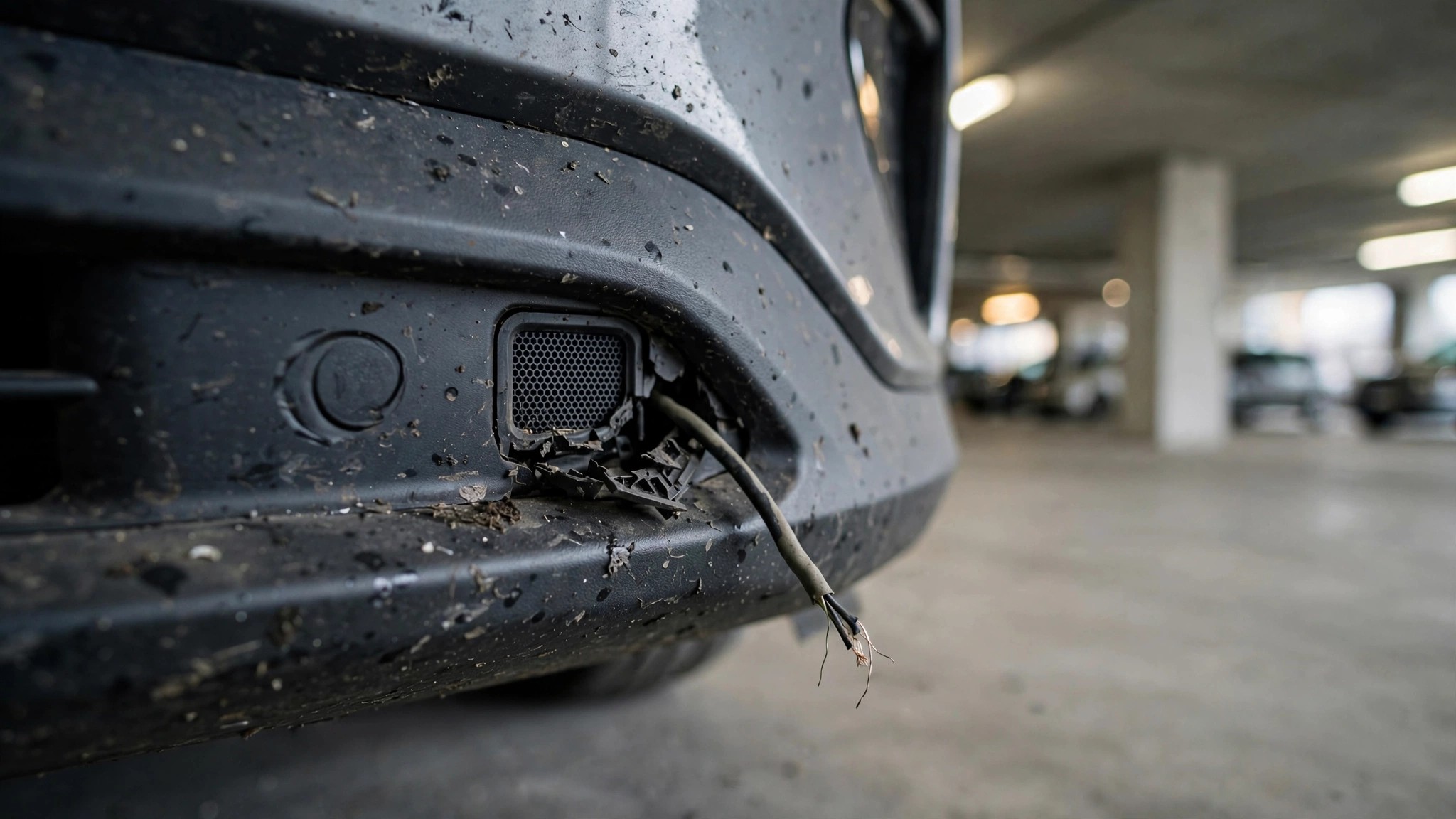
The engineering challenge was a speaker. Not a crash structure, not an autonomous driving algorithm, not a battery chemistry breakthrough. Just a speaker that plays a noise when the car moves slowly, so blind people don’t get hit. Since 2021, Ford, General Motors, and Mercedes-Benz have recalled more than 155,000 electric and hybrid vehicles because they couldn’t get that speaker working.[1][2][3]
The requirement itself has a history that should embarrass everyone involved, and it stretches back eleven years. Congress passed the Pedestrian Safety Enhancement Act in January 2011, responding to data showing that hybrid vehicles were twice as likely to strike pedestrians in low-speed maneuvers as conventional cars.[4] NHTSA published its proposed rule in January 2013, and the final standard, Federal Motor Vehicle Safety Standard No. 141, landed in November 2016, specifying that every new EV and hybrid must emit a sound detectable by pedestrians at speeds below roughly 19 mph.[5] Full compliance was originally set for September 2019 but was extended to March 1, 2021, bringing total elapsed time from legislation to enforcement to eleven years to mandate a sound from a car that doesn’t make one naturally.
Five years past that deadline, the recalls keep coming: three automakers, three different failures, and zero reported injuries or deaths linked to the sound system malfunctions. In December 2025, GM recalled 81,177 Chevrolet Equinox EVs from the 2025 and 2026 model years after internal testing revealed the pedestrian alert was calibrated too quietly between standstill and 6.2 mph. That is the exact speed range where a silent two-ton vehicle is most dangerous to someone crossing a parking lot. Silently.[2] Mercedes-Benz recalled 94 EQE and EQS sedans because the acoustic vehicle alerting system played the wrong reversing sound, which sounds like a punchline until you consider that a legally noncompliant backing tone could leave someone standing behind a 5,300-pound sedan with zero audible warning.[3]
Then, in July 2026, Ford expanded a previous recall to cover 66,383 Explorer Hybrid and Lincoln Nautilus Hybrid SUVs from model years 2024 through 2027. A software fault in the digital signal processor module, part of the audio system, can prevent the vehicles from emitting any pedestrian warning sound at all while running on electric power.[1] This is not a volume calibration problem or a wrong-tone glitch; these vehicles can go completely silent, with no warning whatsoever. Ford had already recalled a smaller population under recall number 25V691 last year; the expansion means the first fix didn’t capture every affected vehicle. Of the 66,383 units, 18,242 are Ford Explorer Police Interceptor Hybrids: law enforcement vehicles operating in urban environments where the distinction between an audible and inaudible hybrid is the difference between a pedestrian stepping off the curb or staying put.
The recalled vehicles, at least, were built to have the system, but an estimated 9.1 million electric and hybrid vehicles manufactured before March 2021 were never required to emit any pedestrian alert at all.[6] In July 2022, a petitioner asked NHTSA to declare those vehicles safety-defective and apply FMVSS 141 retroactively, but the petition, DP 22-005, remains open for evaluation as of this writing, which is NHTSA’s way of saying they’re still thinking about it four years later while 9.1 million silent vehicles share the road with pedestrians who have every reason to expect modern cars make noise.
Two independent studies, drawing on different datasets and different methodologies, suggest the sound actually matters. A study published in the Journal of Epidemiology and Community Health in 2024 analyzed British road data from 2013 to 2017, before AVAS mandates took full effect, and found that electric and hybrid vehicles were 2.15 times more likely to be involved in a pedestrian collision than combustion vehicles. In urban environments, that ratio climbed to nearly three.[7] A subsequent study from Leeds University, covering 2014 to 2023, found that post-2019 EVs equipped with functioning AVAS showed no significant pedestrian risk difference from combustion vehicles, which amounts to peer-reviewed evidence that the speaker works when the speaker works.[8] The implication for the 155,000 recalled vehicles with broken speakers, and the 9.1 million with no speakers at all, writes itself.
The Strongest Counterargument
Tire noise begins dominating above 20 mph, and AVAS is designed only for the low-speed regime, so the overwhelming majority of fatal pedestrian crashes happen outside the window where the sound would matter. GHSA data shows 77% of pedestrian fatalities happen on arterials with speed limits of 40 mph or above, where the warning sound is irrelevant because the vehicle is already loud.[9] These recalls are noncompliance events, not body-count events: none of the three automakers reported injuries or deaths linked to the sound system failures. It’s plausible that the real-world pedestrian safety benefit of AVAS is marginal for sighted pedestrians and primarily protective for the visually impaired, whose share of total pedestrian fatalities is not separately tracked in FARS.
What This Means for You
If you drive a 2025 or 2026 Chevrolet Equinox EV, check whether GM’s over-the-air software update has been applied. If you own a 2024–2027 Lincoln Nautilus Hybrid or a 2025–2027 Ford Explorer Hybrid, watch for your recall notice from Ford and schedule a dealer visit, as some Explorer remedies are still under development. If you own any electric or hybrid vehicle manufactured before 2021, your car has no federally mandated pedestrian sound at all. That’s legal. Whether it should be is a question NHTSA has been not-answering since 2022. Enter your VIN at nhtsa.gov/recalls to check your specific vehicle.
Limitations
FARS does not separately code whether a striking vehicle was operating in electric mode at the time of a pedestrian crash, making it impossible to directly quantify how many U.S. pedestrian fatalities involved silent EVs or hybrids. The UK studies cited used different national crash databases with different coding schemes, and the 9.1 million pre-2021 fleet estimate comes from NHTSA’s defect petition documents and may include vehicles already retired from the road. Recall counts reflect reported noncompliance, not confirmed pedestrian injuries. A causal chain from “no sound” to “pedestrian struck” is plausible but not proven in these specific cases.
Sources & References
- Ford Motor Company, NHTSA Recall 26S51 (expanding 25V691), July 2026. 66,383 Explorer Hybrid and Lincoln Nautilus Hybrid vehicles. nhtsa.gov
- General Motors, NHTSA Recall 24V-925, December 2025. 81,177 Chevrolet Equinox EV vehicles. nhtsa.gov
- Mercedes-Benz USA, NHTSA Recall 25V-366. 94 EQE/EQS vehicles. nhtsa.gov
- Pedestrian Safety Enhancement Act of 2010, Pub. L. 111-373, enacted January 4, 2011.
- U.S. Department of Transportation, “NHTSA Sets ‘Quiet Car’ Safety Standard to Protect Pedestrians,” November 14, 2016. transportation.gov
- NHTSA Office of Defects Investigation, Defect Petition DP 22-005, filed July 18, 2022. Estimated population: 9.1 million vehicles. nhtsa.gov
- P. Edwards et al., “Pedestrian safety on the road to net zero: cross-sectional study of collisions with electric and hybrid-electric cars in Great Britain,” Journal of Epidemiology and Community Health, 2024. PubMed 38772699
- Z. Wadud et al., “Comparing pedestrian safety between electric and internal combustion engine vehicles,” Nature Communications, 2024. nature.com
- Governors Highway Safety Association, “Pedestrian Traffic Fatalities by State: 2025 Preliminary Data (January–June),” March 2026. ghsa.org