The Toyota Prius Is the Safest Sedan in America. Its Drivers Are the Soberest, Too.
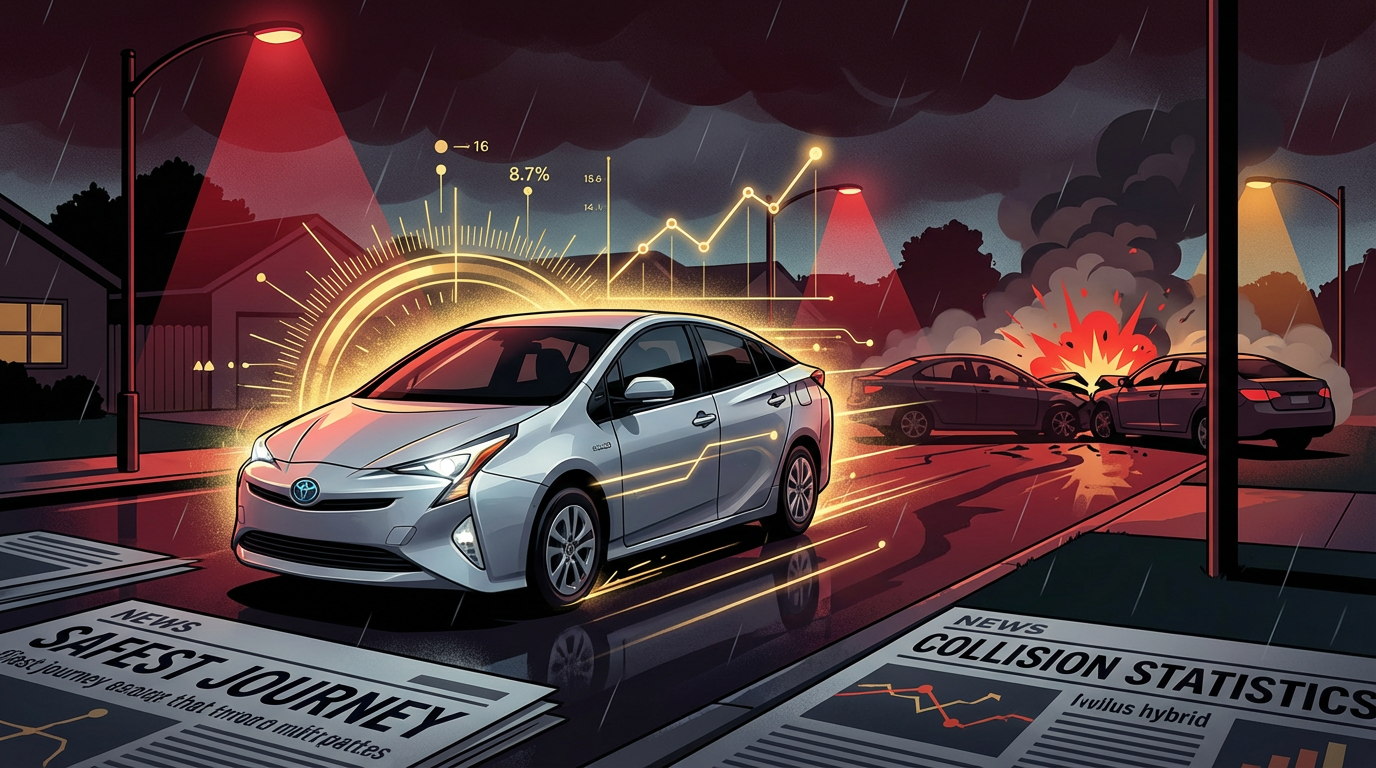
Here’s a fun fact that will ruin your morning commute. The Toyota Prius — the car that gave the world “Smugrius” bumper stickers, South Park episodes, and a generation of tailgating road rage — turns out to be the safest sedan in the FARS database. Not per dollar. Not adjusted for driver sanctimony. Per mile driven, the Prius is statistically the least likely sedan to kill you. And the people driving them? Soberest sedan drivers in the country.
The Prius’s fatality rate is 0.55 per 100 million vehicle miles traveled. That’s 495 deaths from a fleet of 787,500 vehicles driving an estimated 9 billion miles per year over the 2014–2023 FARS window. To put that number in context:
The Sedan Death Ladder
| Vehicle | Deaths | Rate per 100M VMT | Impairment |
|---|---|---|---|
| Honda Accord | 7,102 | 3.07 🔴 | 20.0% |
| Ford Focus | 3,046 | 2.52 🔴 | 19.4% |
| Honda Civic | 6,553 | 2.25 | 20.4% |
| Nissan Sentra | 2,571 | 2.13 | 20.0% |
| Toyota Camry | 6,328 | 2.03 | 19.2% |
| Toyota Corolla | 4,945 | 1.85 | 19.2% |
| Chevrolet Cruze | 638 | 0.63 🟢 | 20.2% |
| Toyota Prius | 495 | 0.55 🟢 | 16.0% |
The Accord kills at 5.6× the Prius’s rate. The Civic at 4.1×. The Corolla — the Prius’s own stablemate, built by the same company, sold in the same showrooms — at 3.4×. Same badge. Same dealership. Radically different odds of dying.
The Sobriety Effect
The Prius’s 16.0% impairment rate is the lowest of any high-volume sedan in the database. The national average hovers around 20%. Every competitor in the comparison table sits between 19% and 21%. Prius drivers are 4 percentage points more sober than the field — which doesn’t sound like much until you realize that’s a 20% relative reduction in impaired driving.
But sobriety alone doesn’t explain a 3–5× safety gap. The Chevy Cruze has a higher impairment rate (20.2%) and still manages a 0.63 rate. The Prius’s advantage is a combination of engineering and demographics working in the same direction for once.
Why the Prius Is So Hard to Die In
Weight distribution. The battery pack sits low in the chassis, giving the Prius a lower center of gravity than almost any comparable sedan. Low CoG means fewer rollovers. Fewer rollovers means fewer fatalities — rollovers account for a disproportionate share of fatal crashes relative to their frequency.
Speed profile. The Prius’s CVT and 121-hp powertrain actively discourage aggressive driving. You can floor it. You’ll just hear a noise like an angry vacuum cleaner and not much will happen. The car self-selects for drivers who aren’t in a hurry, and speed is the single biggest variable in crash fatality outcomes.
Demographics. Prius buyers skew older, higher-income, and suburban. That’s a demographics triple play for lower crash risk: more experienced drivers, better-maintained vehicles, and fewer miles on high-speed rural roads where fatality rates spike.
The Paradox Nobody Talks About
Every car enthusiast has a Prius joke. Too slow. Too boring. Too virtuous. And yet the car everyone mocks is the one that’s least likely to kill its occupants. The Honda Accord — universally recommended by every car-buying guide as a “smart, safe choice” — kills at 5.6 times the rate.
The Prius has 495 bodies in the FARS database. That’s not nothing. That’s roughly 50 people per year who will never arrive wherever they were efficiently, soberly, and smugly headed. But per mile driven, per dollar spent, per unit of driver sanctimony generated, it is the safest bet on four wheels. The data doesn’t care about your bumper sticker.
The numbers don’t lie. But they do occasionally drive 5 under in the left lane.