The Government Mandated a Braking System That Prevents 24,000 Injuries a Year. It Also Causes Crashes in 4 Million Cars.
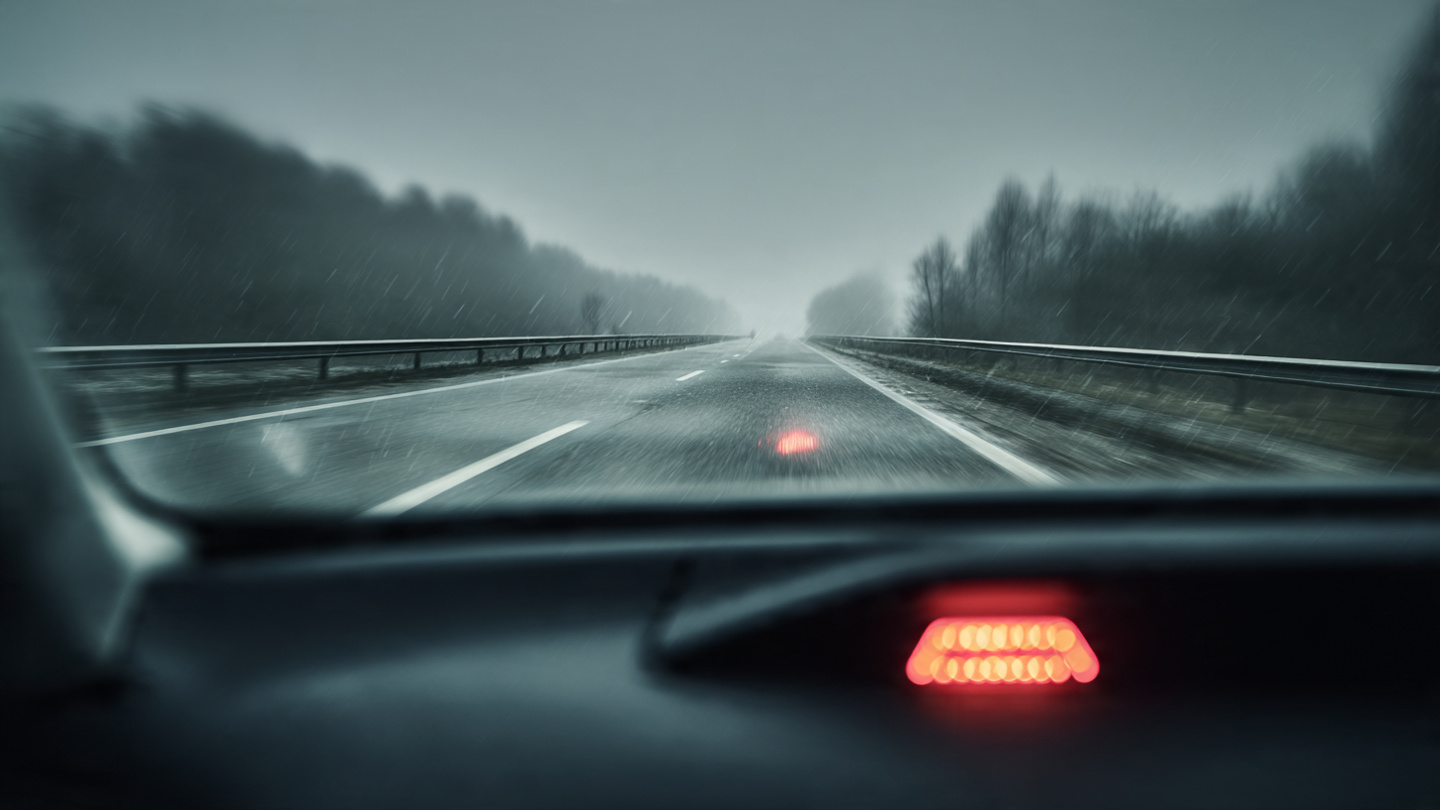
Automatic Emergency Braking stops your car when you won't. It watches the road through cameras and radar, calculates closing speed, and slams the brakes harder than most humans ever would, fast enough to turn a fatal 40-mph rear-ender into a fender tap. IIHS research shows AEB cuts front-to-rear crashes by 50% and injury crashes by 56%.[1] In 2024, NHTSA finalized a rule making AEB mandatory on every new passenger car and light truck sold in America by September 2029, projecting the technology would save 360 lives and prevent 24,000 injuries every single year.[2]
There is a problem with a system designed to decide, in fractions of a second, whether to override the driver and apply maximum braking force. Sometimes it decides wrong.
Six days ago, Hyundai recalled 421,078 Tucson SUVs and Santa Cruz pickups because their forward collision-avoidance cameras see threats that aren't there.[3] A software error causes the system to activate prematurely, slamming the brakes on open highway with no obstacle ahead. Between October 2024 and April 2026, Hyundai received 376 complaints. Four drivers got rear-ended by the cars behind them, and four people were injured in exactly the type of crash AEB is engineered to prevent in the cars following behind them.
Hyundai is not special, merely the most recent entry in a ledger that now spans nearly every major manufacturer.
Honda, with nearly three million vehicles under federal scrutiny, holds the largest exposure. NHTSA's Office of Defects Investigation opened a probe in February 2022 into the Collision Mitigation Braking System on 2017-2019 CR-Vs and Accords after owners reported full emergency stops triggered by empty road, parked cars in adjacent lanes, overhead signs, and shadows under bridges. By April 2024, the agency had expanded its investigation to cover 2017 through 2022 model years, bringing the total population to 2,997,604 vehicles.[4] Nearly three million cars, forty-seven crashes, ninety-three injuries. Honda's response to affected owners was instructive: dealerships told drivers what they experienced was the normal operation of the system. A federal jury, in a trial that concluded earlier this year, agreed with Honda and ruled the CMBS was not defective.[5] Ninety-three people were injured by normal operation.
Nissan's chapter involves geography. The 2017-2018 Rogue's AEB system developed a specific, almost poetic failure mode: it was triggered by bridges and railroad tracks.[6] The radar read overhead structures as imminent frontal obstacles and executed full emergency stops on vehicles traveling at highway speed. NHTSA investigated 553,000 Rogues after 800-plus owner reports, 129 confirmed false activations, and 14 accidents that injured five people. Nissan issued a software update, but a separate class-action lawsuit expanded the complaint to the 2019-2021 Maxima and 2020-2021 Sentra, alleging the company knew about the defect and kept selling the cars.[7]
Tesla's phantom braking complaints reached 750 and counting before NHTSA opened its investigation into Model 3 and Model Y vehicles using Autopilot.[8] The company recalled 11,688 vehicles running Full Self-Driving Beta software for the same issue. Volkswagen's 2018-2019 Atlas generated 59 complaints and five injuries, earning its own preliminary evaluation.[9] Each manufacturer uses different hardware suppliers, different software stacks, different sensor fusion strategies. Every failure mode is identical: the car sees a collision that does not exist, and it acts.
Add it up across five manufacturers. Hyundai: 421,078. Honda: 2,997,604. Nissan: 553,000-plus. Tesla: investigation scope undisclosed but covers the two highest-volume models in the lineup. Volkswagen: roughly 60,000 Atlas SUVs. Conservative total: north of four million vehicles that a federal safety regulator has either recalled or is actively investigating because the braking system designed to prevent crashes is causing them.
NHTSA is aware of this tension, and comfortable with it. That same Office of Defects Investigation that opened every one of those probes also published the final rule mandating AEB on all new vehicles, projecting net safety benefits that dwarf the phantom braking harm by orders of magnitude. Mathematically, it is not close: 24,000 injuries prevented per year against 68-plus crashes caused across a decade of complaints. Even if complaint rates represent only 1-5% of actual incidents, the mandate still wins on raw utilitarian arithmetic. AEB saves far more people than it hurts.
That arithmetic is correct and also completely beside the point for the driver whose Tucson just emergency-stopped on a freeway on-ramp because the camera interpreted a shadow as a Peterbilt. Those 24,000 annual injuries prevented are statistical, distributed invisibly across millions of avoided collisions that never make the news and never generate a complaint. But the four Hyundai drivers who got rear-ended are specific people with specific injuries who experienced a specific betrayal: a safety system that attacked them.
What this means for you
If you drive a 2025-2026 Hyundai Tucson or Santa Cruz, check your VIN at nhtsa.gov/recalls and schedule the free software update. If you drive a 2017-2022 Honda CR-V or Accord and have experienced unexpected braking, file a complaint at nhtsa.gov/report-a-problem; Honda's investigation remains open despite the jury verdict, and complaint volume is the single strongest input NHTSA uses to decide whether to escalate from investigation to recall. If your car has AEB and a dashboard option to adjust sensitivity, learn where it is before you need it at seventy miles per hour. And if the car behind you is following too closely, the irony is that AEB might save you from them while simultaneously putting you at risk from yourself.
Limitations
This analysis aggregates recalls and investigations that span different manufacturers, sensor technologies, software revisions, and time periods. "Phantom braking" covers a spectrum from mild nuisance deceleration to full emergency stops. NHTSA complaint data systematically underreports actual incident rates; the agency's own estimates suggest only 1-5% of safety-relevant events are formally reported. FARS captures fatalities, not injuries; no fatality has been attributed to phantom braking. The four-million-vehicle figure counts investigation populations, not confirmed defective vehicles. Honda's jury verdict suggests the legal system may not classify all phantom braking events as defects.
Sources & References
- IIHS, “Real-world benefits of crash avoidance technologies.” iihs.org
- NHTSA, “NHTSA Finalizes Rule on Automatic Emergency Braking,” 2024. nhtsa.gov
- NHTSA Recall Report, May 19, 2026. Hyundai 421,078 vehicles, 2025-2026 Tucson/Santa Cruz. nhtsa.gov
- Carscoops, “NHTSA Gets Serious About Phantom Braking Issue Now Affecting 3 Million Hondas,” April 2024. carscoops.com
- CarBuzz, “Honda’s Phantom Braking Legal Battle Is Finally Over After Nearly A Decade,” 2026. carbuzz.com
- Autoblog, “Bridges, railroad tracks can trigger Nissan Rogue’s automatic emergency braking system.” autoblog.com
- The Brake Report, “Nissan Sued Over Alleged Phantom Braking.” thebrakereport.com
- Consumer Reports, “Federal Regulators Investigate Tesla Phantom Braking Reports.” consumerreports.org
- Carscoops, “Feds Investigate 2018-2019 VW Atlas For Phantom Braking Issue.” carscoops.com