4.4 Million Vehicles Have a Safety Feature That Causes the Exact Crash It Was Designed to Prevent
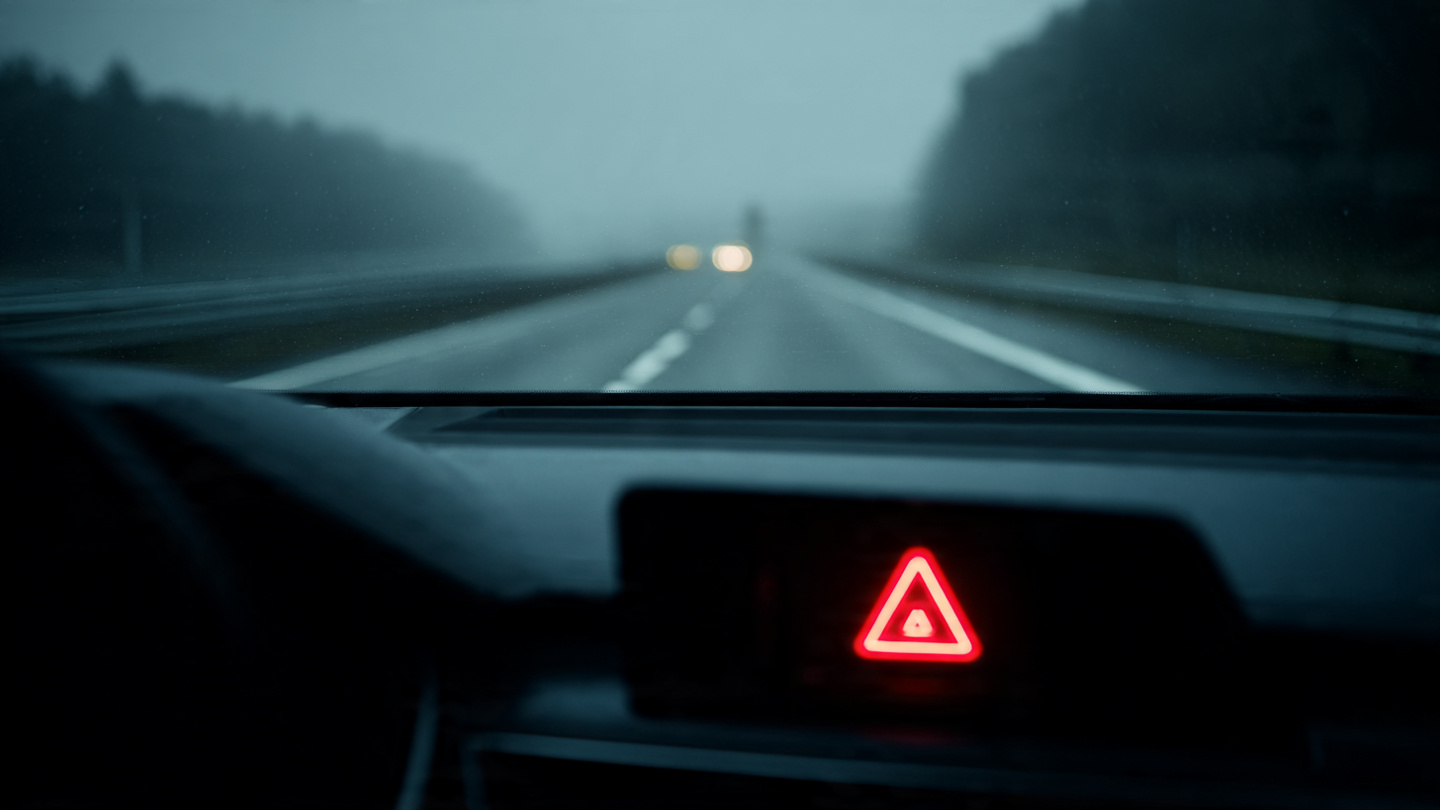
On May 19, Hyundai recalled 421,078 vehicles because their Forward Collision-Avoidance system was slamming the brakes without warning.[1] Not in response to an obstacle. Not because a pedestrian stepped off a curb. Front camera software just decided to panic, and four drivers got rear-ended by the cars behind them because of it.
Hyundai isn't alone. Not remotely.
We tallied every active NHTSA recall and investigation involving automatic emergency braking that activates without an actual threat. Our cross-manufacturer total: 4.4 million vehicles from four brands, linked to at least 54 crashes and 97 injuries that regulators have confirmed so far.[2][3][4]
Honda sits at the top with nearly 3 million CR-Vs and Accords under an NHTSA Engineering Analysis that's been grinding since February 2022, escalated after 47 crashes and 93 injuries from phantom activation of their Collision Mitigation Braking System.[2] Honda's response to the feds was instructive: some customers, they argued, simply didn't understand how the system worked. Dealerships couldn't reproduce the problem, so they told owners what they'd experienced was normal operation while those owners were getting rear-ended at highway speed.
Nissan had 553,000 Rogues investigated after 129 reports of the AEB firing at nothing.[3] Tesla racked up 2,292 phantom braking complaints in NHTSA's database, a rate of 17.12% of all Tesla complaints, which is eleven times higher than any other manufacturer.[5] That spike maps precisely to Tesla's 2021-2022 decision to ditch radar for camera-only sensing: complaints jumped 1,279% in a single year.
Same pattern across all four: AEB detects a collision that doesn't exist, the car brakes hard, and a driver behind, following at normal distance, plows into the back of it. A system engineered to prevent front-end crashes is manufacturing rear-end ones instead.
This is the technology NHTSA mandated for every new passenger vehicle in America by September 2029.[6] The projected benefit: 360 lives saved and 24,000 injuries prevented per year. Those projections are almost certainly accurate over the long run, and that's the strongest argument for the mandate. AEB, when it works correctly, cuts rear-end crashes by 50% according to IIHS data.[7] The net math favors the technology, and nobody credible disputes that.
But the current generation has a false-positive problem that regulators are cataloging in real time, and 4.4 million vehicles worth of evidence suggests the industry hasn't solved it yet. NHTSA's own complaint data shows AEB-related reports generated 953 crashes, 643 injuries, and 9 deaths since 2019.[5] The mandate doesn't include a maximum false-activation rate. There's no federal standard for how often the system is allowed to brake when nothing is there.
What to do: If you own a 2025-2026 Hyundai Tucson or Santa Cruz, schedule a dealer visit for the free software update before July 17. If you drive a 2017-2022 Honda CR-V or Accord, there is no recall yet, but report any phantom braking at nhtsa.gov. For everyone else, run your VIN through NHTSA's recall lookup and learn where your car's AEB disable button lives. You shouldn't have to use it, but right now, 4.4 million owners would tell you otherwise.
Limitations: This tally combines active recalls with open investigations at different stages. Honda's 3 million vehicles haven't been formally recalled; NHTSA may narrow that number. Tesla's complaint count is high partly because its owners are more likely to file NHTSA reports. Complaint rates don't equal defect rates. The 4.4 million figure represents regulatory exposure, not confirmed defects in every vehicle.
Sources & References
- NHTSA / Reuters, “Hyundai to recall over 421,000 US vehicles over software brake issue,” May 19, 2026. reuters.com
- NHTSA ODI Engineering Analysis EA22-002, Honda CMBS phantom activation. Expanded April 2024 to cover 2017-2022 CR-V and Accord (~2,997,604 vehicles). 47 crashes, 93 injuries. nhtsa.gov
- NHTSA investigation of 553,000 Nissan Rogue SUVs for unintended AEB activation. 129 reports, 3 crash complaints. nhtsa.gov
- NHTSA Preliminary Evaluation PE22-004, Tesla Model 3/Y phantom braking. 416,000 vehicles, 354 initial complaints. nhtsa.gov
- Analysis of 2,154,334 NHTSA safety complaints (2015-2025). Phantom braking complaint data, manufacturer rates, crash/injury tallies. cardog.app
- NHTSA, FMVSS No. 127 Final Rule: Automatic Emergency Braking. All passenger cars and light trucks by September 2029. nhtsa.gov
- IIHS, “Effectiveness of forward collision warning and autonomous emergency braking systems in reducing front-to-rear crash rates,” 2016. FCW with AEB reduced rear-end crash rates by 50%. iihs.org
Source: NHTSA recall database, NHTSA ODI investigations, and analysis of 2.15M NHTSA complaints (2015–2025). The 4.4M vehicle count aggregates active recalls and open investigations; not all vehicles may have the defect. See methodology for caveats.