The Safest Minivan in America Has Been Recalled for Fire Three Times
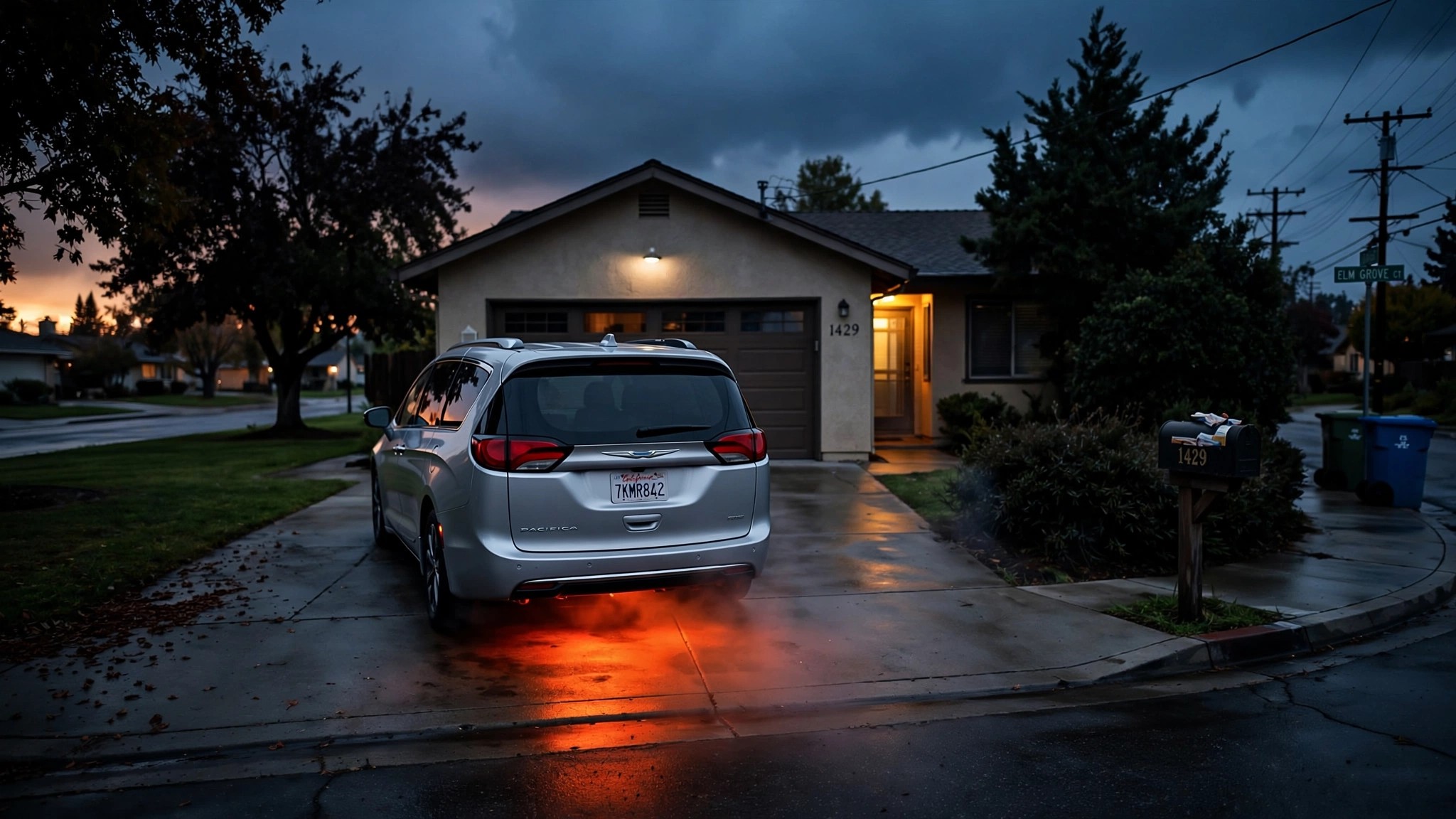
Chrysler's Pacifica plug-in hybrid records 0.19 deaths per 100 million vehicle miles traveled in FARS data. That puts it 83% below the light-vehicle average. In a crash, this minivan is statistically brilliant. Parked in your garage, it is something else entirely.
On June 4, 2026, NHTSA published campaign 26V362 covering 17,277 Pacifica PHEVs from model years 2020 through 2022. Battery cells manufactured on an "alternative assembly line" at LG Energy Solution can fail internally, triggering thermal runaway, with four fires confirmed so far. Chrysler's advice: don't charge it, park outside, wait for a software update and possible battery pack replacement.[1]
If you've read this before, you have. In February 2022, campaign 22V077 recalled 16,741 Pacifica PHEVs from model years 2017 and 2018 for the same basic outcome: battery catches fire while parked and off.[2] Chrysler issued a software update and replaced some packs. Problem solved.
It was not solved. In July 2024, campaigns 24V536 and 24V538 recalled another 19,516 Pacifica PHEVs from 2017 through 2021, explicitly including vehicles that had already received the 22V077 fix. Root cause this time: "a folded or torn anode tab, along with a second unidentified factor." Seven fires. Four smoke-inhalation injuries.[3]
So the fix for recall one failed badly enough to require recall two. And now recall three covers a new batch of model years with cells from a different production line at the same supplier. Total Pacifica PHEV recall instances since 2022 exceed 53,000 vehicles. Total fires across all three campaigns: at least 15. Total root causes definitively identified by Chrysler or LG: zero. As of the June 2026 filing, "neither company is totally sure of the cause."[4]
LG Energy Solution is not an unfamiliar name in battery fire litigation. LG's cells also powered the Chevrolet Bolt, which GM recalled across all 142,000 units built from 2017 to 2022 after a nearly identical failure pattern: manufacturing defects in LG cells causing internal shorts and thermal runaway when parked. GM's Bolt recall cost $1.8 billion; LG reimbursed $1.2 billion and settled a $150 million class action with owners in 2024.[5] The Bolt defect was eventually traced to a torn anode and folded separator. Chrysler's 2024 recall cited a "folded or torn anode tab," the same language, the same supplier, a different automaker buying the same problem.
Meanwhile, the recall landed on the same day Stellantis recalled 1.08 million Jeep Wranglers and Gladiators for an unrelated fire defect in the power steering pump wiring, bringing the company's one-week fire recall total to roughly 1.1 million U.S. vehicles across two brands and two completely different ignition mechanisms.[6]
The counterargument: Chrysler estimates only 1% of the 2026 recall population actually carries the defective cells. With 17,277 vehicles, that is roughly 173 minivans. The fire rate per vehicle is genuinely low. And the Pacifica's crash safety record is real: 160 fatalities across an estimated 700,000-unit fleet and 8.26 billion VMT is exceptional.[7]
But the 1% estimate appeared in the 2024 filing too. Before seven more fires. The argument that each individual recall is statistically rare stops working when the same platform generates a new campaign every two years, each one expanding the affected population and each one admitting the last fix didn't hold. A 1% defect rate across three overlapping campaigns is not three independent coin flips. It is a supplier quality system that keeps producing defective cells and an automaker that keeps accepting them.
Limitations: FARS captures fatal crashes only, and the Pacifica's 0.19 rate reflects occupant deaths in collisions, not fire-related incidents, which NHTSA tracks separately. Fire recalls involve property damage and injury risk that FARS does not measure. The 53,000+ recalled units span overlapping populations; some owners have been recalled multiple times for the same vehicle.
If you own a 2017 to 2022 Pacifica PHEV: Check your VIN at nhtsa.gov/recalls, do not charge the vehicle, and park it outside and away from structures. Do not wait for the mail notification, which Chrysler says will arrive June 23. If your vehicle was previously repaired under 22V077 or 24V536, you still need the new remedy. Call Chrysler at 800-853-1403.
Sources & References
- NHTSA Recall Campaign 26V362000, Chrysler Pacifica PHEV (2020-2022), filed June 4, 2026. nhtsa.gov
- NHTSA Recall Campaign 22V077000, Chrysler Pacifica PHEV (2017-2018), filed February 2022. nhtsa.gov
- Consumer Reports, “Chrysler Pacifica Plug-In Hybrid Minivans Recalled Again for Fire Risk,” 2024. NHTSA campaigns 24V536 and 24V538. consumerreports.org
- Carscoops, “After Four Fires, Chrysler Tells Pacifica Hybrid Owners To Stop Charging And Park Outside,” June 2026. carscoops.com
- Reuters, “GM, LG agree on $150 million relief for Chevy Bolt EV owners over faulty batteries,” May 2024. Bolt recall cost: GM 2021 Q3 earnings disclosure. LG reimbursement: Carscoops, October 2021. reuters.com
- Reuters, “Stellantis tells owners of 1.3 million Jeeps to park outside over fire concerns,” June 9, 2026. NHTSA filing: 72 fires, 1 injury. reuters.com
- NHTSA, Fatality Analysis Reporting System (FARS), 2014–2023. Chrysler Pacifica: 160 deaths, est. fleet 700,000, rate 0.19/100M VMT. nhtsa.gov