Honda Knew Its Odyssey Camera Fix Was Broken in 2021. It Just Got Around to Telling You.
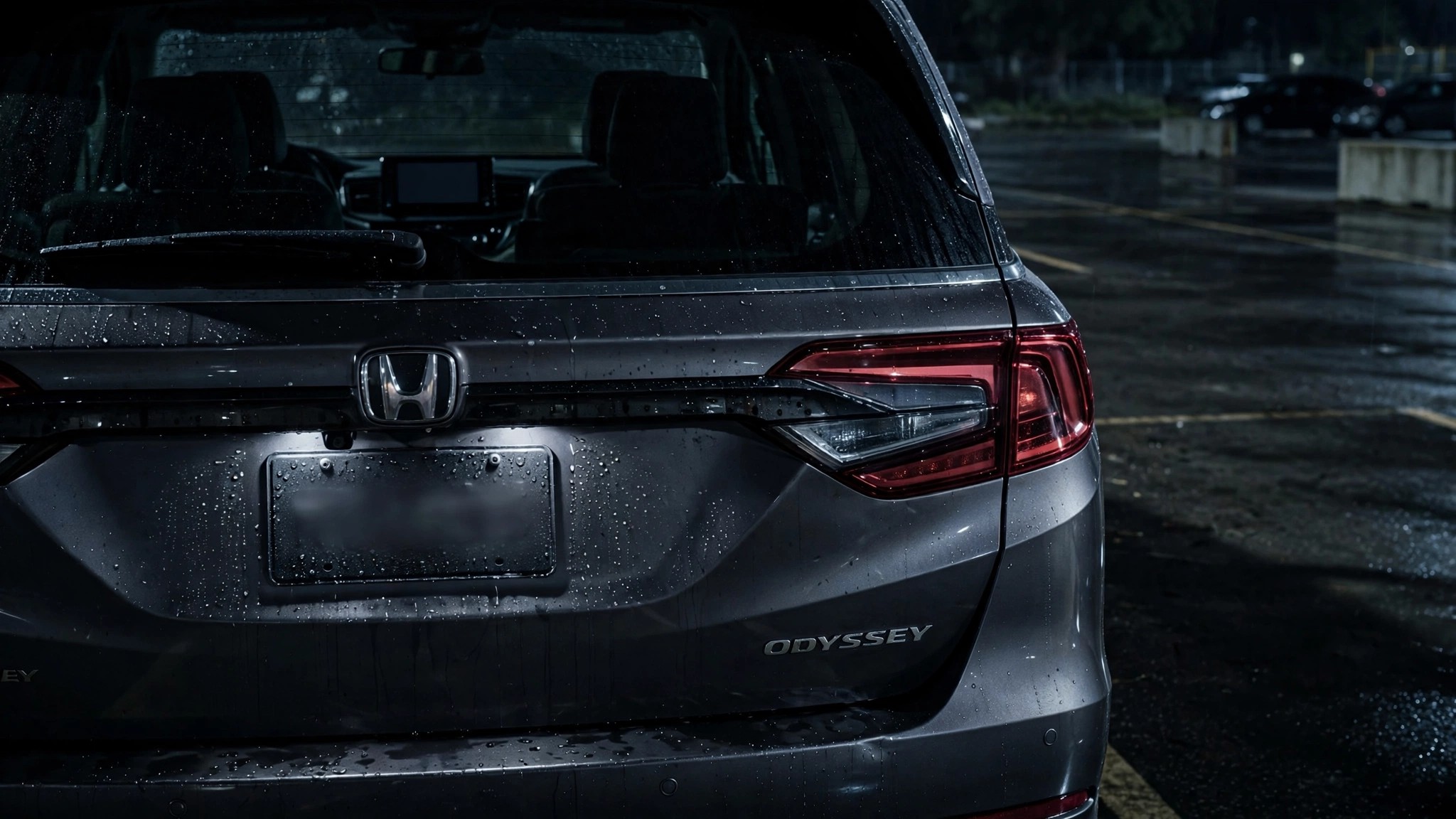
Federal law has required rearview cameras on every new car sold in America since May 2018, because backing over children and pedestrians was killing roughly 210 people a year.[1] So when Honda discovered that the cameras on 325,588 Odyssey minivans could fill with water and go black, you might expect urgency.
Honda first recalled 212,000 Odysseys in August 2020 for this exact problem: water intrusion killing the backup camera image. Dealers swapped cameras and Honda closed the file. Except in June 2021, Honda received a report that a repaired vehicle still had a dead screen.[2] A federally mandated safety device, already recalled once, failing again after the manufacturer's own remedy should have been a five-alarm event. Instead, Honda opened an internal investigation that would stall for years. By 2023, camera supplier Magna had abandoned its end of the probe entirely.[3] Honda continued alone, finally filing the expanded recall on July 1, 2026, backed by 1,648 warranty claims and a confession baked into the remedy itself: Magna cameras out, Sony cameras in.[4]
The NHTSA filing pins it on "a flawed manufacturing process and a design deficiency" in the housing that let water reach the printed circuit board, not a one-off quality escape but a flaw in the part itself. Replacing Magna cameras with identically designed Magna cameras was never going to hold, and Honda's own post-repair failure data should have made that obvious years before the recall scope expanded from 212,000 to 325,588 vehicles.[4]
The Odyssey occupies a particular niche in the FARS database. Only 15.4% of its fatal crashes involved an impaired driver, among the lowest rates recorded for any vehicle.[5] Families die in these things sober, attentive, and presumably relying on the safety equipment Honda told them was working. A broken backup camera won't cause a highway fatality, but it obliterates the safety margin during the low-speed maneuvers where minivans actually live: driveways, school parking lots, grocery store lanes. Exactly the environments FMVSS 111 was written to protect.
What should you do if you own a 2018 through 2020 Odyssey? Check your VIN at nhtsa.gov/recalls right now and do not wait for the notification letter Honda plans to send August 24. If your display goes blank in reverse, do not trust it and use your mirrors instead. And if you had the camera replaced under the 2020 recall and it still works, get it checked anyway. The engineering that was supposed to prevent failure already failed once.
Sources & References
- NHTSA, Federal Motor Vehicle Safety Standard No. 111: Rear Visibility. nhtsa.gov
- MotorSafety.org, Honda Recalls: 325,588 2018–2020 Odyssey, rearview camera water intrusion, July 2026. motorsafety.org
- CarBuzz, Recalled: Honda Has A Rearview Problem With Over 300,000 Minivans, July 2026. carbuzz.com
- NHTSA, Part 573 Safety Recall Report 26V423, July 1, 2026. static.nhtsa.gov
- NHTSA, Fatality Analysis Reporting System (FARS), 2014–2023. nhtsa.gov