NHTSA Has Written Five AV Rules in Six Months. The $3 Pedestrian Fix Has Taken Two Years and Counting.
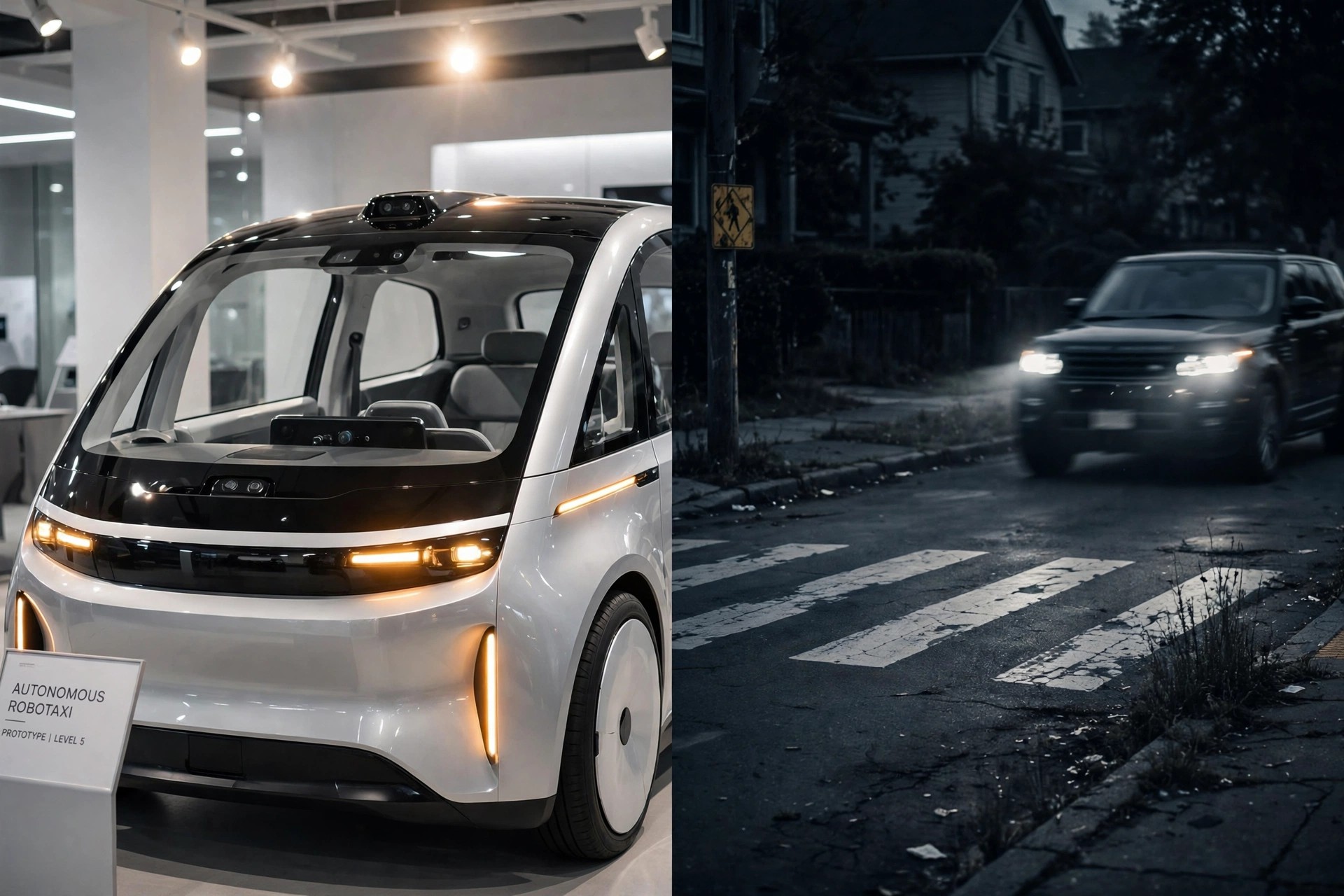
On June 26, 2026, NHTSA proposed removing the brake pedal requirement for autonomous vehicles. On the same day, the agency formally withdrew AV STEP, the voluntary transparency program that would have required AV developers to disclose safety data in exchange for regulatory exemptions.[1][2] One rule cleared a hardware barrier for robotaxis. The other cleared the reporting framework that would have tracked whether those robotaxis are safe. Both actions took a single business day.
Since March 2026, NHTSA has issued five separate rulemakings to accommodate vehicles with no human driver: transmission shift sequences, windshield defrosting and wiping, tire pressure placards, electronic stability control, and braking systems.[1] The agency announced plans for five more. Administrator Jonathan Morrison called it "the greatest technological revolution in vehicle technology since the innovation of the Model T." Meanwhile, a Congressionally mandated pedestrian head protection standard proposed in September 2024 sits exactly where the comment period left it in December of that year: nowhere.[3]
That pedestrian rule, FMVSS No. 228, would require hoods to absorb impact energy rather than transfer it directly to a pedestrian's skull. NHTSA's own analysis estimated it would save 67 lives per year at a compliance cost of roughly $3 per vehicle.[3] The European Union has tested for pedestrian head protection since 2009. Pedestrian fatalities in the United States rose 57% between 2013 and 2022, reaching 7,522 in a single year. GHSA's latest data shows the share of pedestrian crashes that result in a fatality doubled from 4% in 2015 to 10.1% in 2024.[4] Cars are not hitting more pedestrians. They are killing a larger share of the ones they hit.
Congress ordered the standard in the 2021 Bipartisan Infrastructure Law. NHTSA took three years to propose it. Eight months after the comment period closed, there is no final rule, no timeline, and no public explanation for the delay. In that same window, the agency found time to rewrite braking standards for a vehicle category that has logged fewer commercial miles than a single UPS route.
What to do: Check whether your vehicle has pedestrian automatic emergency braking, the one technology NHTSA currently rates in its updated NCAP program. If you drive a truck or SUV with a hood height above 40 inches, understand that IIHS research shows pedestrian fatality risk roughly doubles compared to vehicles with lower profiles. The standard that would have forced manufacturers to fix the hood geometry is stuck in a regulatory queue behind brake pedals for cars that do not exist yet.
Sources & References
- NHTSA, Trump’s Transportation Department Launches Commonsense Updates to Brake Pedal Requirements for AVs, June 26, 2026. nhtsa.gov
- NHTSA, Cutting Red Tape to Safely Fast Track Automated Vehicle, July 2026; AV STEP withdrawal details via Federal Register. nhtsa.gov
- NHTSA, Proposed New Vehicle Safety Standard to Protect Pedestrians (FMVSS No. 228), September 19, 2024. nhtsa.gov
- Governors Highway Safety Association, Pedestrian Traffic Fatalities by State: 2025 Preliminary Data, with 2024 national analysis. ghsa.org
Data sourced from NHTSA press releases, Federal Register filings, and GHSA pedestrian fatality analysis. The Crash Report is an independent publication and is not affiliated with any government agency or automaker.