Ford’s $325,000 Track Car Just Got Recalled Because Its Wipers Don’t Work
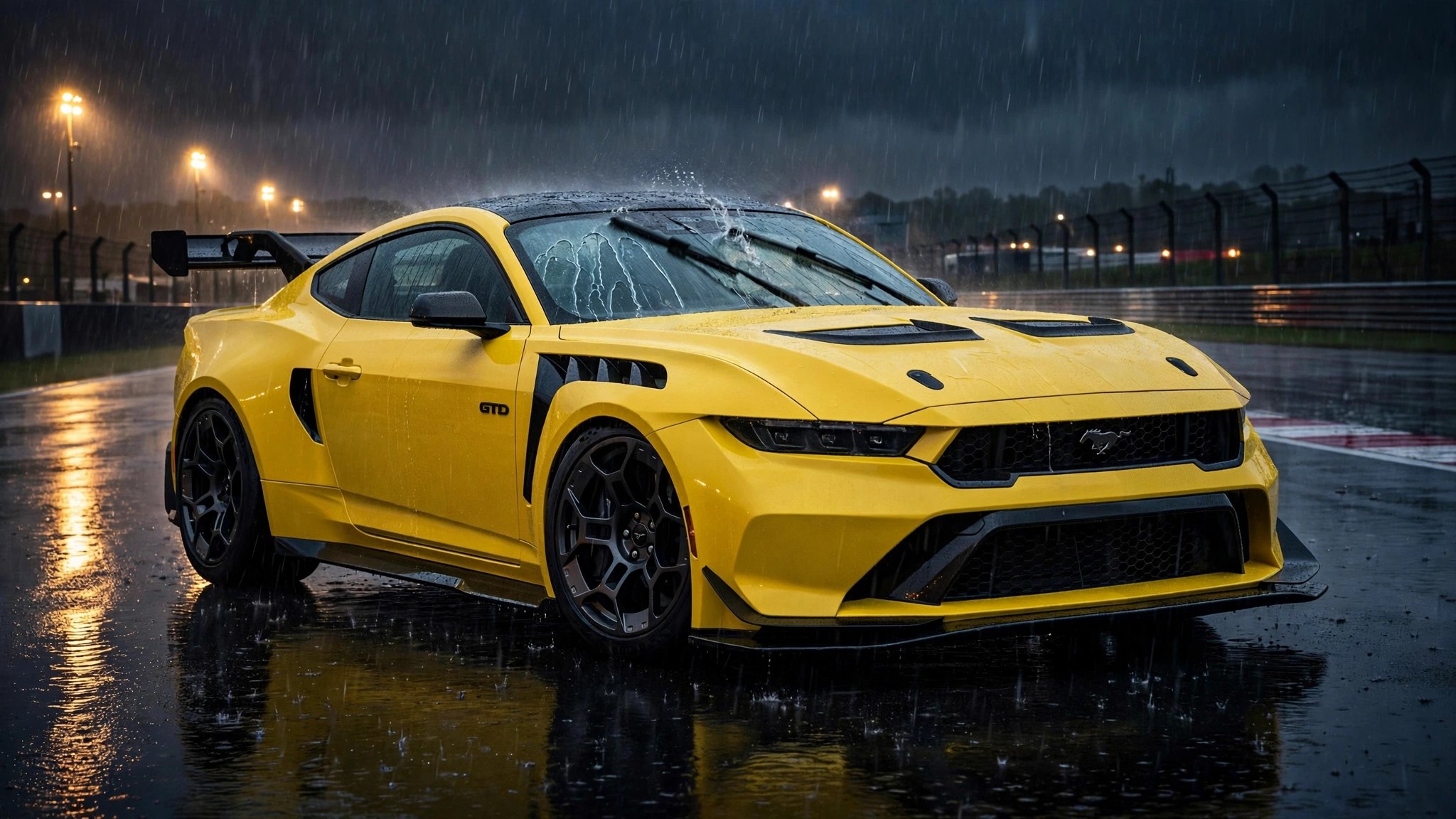
A hand-assembled, carbon-fiber-bodied, Nürburgring-record-holding Ford Mustang GTD costs more than most houses in rural America. On Tuesday, Ford recalled all 289 of them because their windshield wipers might not work when it’s cold outside.[1]
That wiper defect is shared identically with a $30,000 base Mustang, because even a $325K Ford still draws rain protection from parts-bin overflow. And this was just half of a 110,626-vehicle recall doubleheader: in a separate action, Ford flagged 42,784 Mustang Mach-E electric crossovers whose rear differential pinion shafts might snap, potentially sending a parked car rolling down a driveway or into an intersection without warning.[2] Three variants, two unrelated defects, one press release.
Wipers and pinion shafts are fixable, though, and what isn’t fixable is what FARS shows about this nameplate once you zoom out from Tuesday’s recall and look at the decade of crash data underneath it. Between 2014 and 2023, Mustangs killed 2,739 people at a rate of 6.02 deaths per 100 million vehicle miles traveled.[3] One model accounts for 44.7% of all tracked sports car fatalities in the FARS database, not a plurality but nearly half, with every Camaro, Challenger, Corvette, 911, 350Z, and MX-5 combined sharing the other 55.3%.
Per-mile comparisons border on satire: a Porsche 911, packing 500+ horsepower and a reputation as insurance adjusters’ worst nightmare, posts a FARS death rate of 0.69 against the Mustang’s 6.02, an 8.7× multiplier that means you could theoretically buy three 911s, drive them all in rotation, and remain statistically safer per mile than someone in one Mustang.
Impairment numbers offer a partial explanation: 21.9% of Mustang drivers in fatal crashes tested positive for alcohol or drugs,[3] but that barely clears a national vehicle average of 20%, and drunk driving alone doesn’t explain a 6.02 rate when accessibility does far more of the work. A 450-horsepower, solid-rear-axle (on pre-2015 models), affordable-enough-for-a-22-year-old car puts serious performance in the hands of demographics whose crash risk was already elevated before they turned the key, and that’s a dynamic no BAC reading captures.
Which makes Tuesday’s GTD recall almost poetic in its absurdity. Ford spent years engineering a supercar to dominate a German racetrack, then shipped it with a $14 wiper motor assembly identical to what sits in a rental-fleet EcoBoost. Multimatic DSSV dampers, carbon-fiber wheels, dry-sump V8 — none of it matters if you can’t see the road, and Ford charges $325,000 without guaranteeing that you will.
What to do
Own a 2024–2026 Mustang or Mustang GTD? Check your VIN at nhtsa.gov/recalls for recall 26V418000, where dealers will repair at no cost. Mach-E owners (MY2021–2023) should check 26V417000 for the pinion shaft issue, which is more urgent since a cracked differential can send a parked car rolling, and they should not rely on the parking brake alone until the repair is completed. If you’re shopping for a sports car, consider that a Dodge Challenger posts a death rate of 1.0 per 100M VMT, a Corvette hits 1.52, and a 911 sits at just 0.69; at 6.02, the Mustang isn’t in the same conversation.
Sources & References
- Reuters, “Ford to recall over 110,000 US vehicles over wiper, pinion shaft issues, NHTSA says,” July 7, 2026. reuters.com
- NHTSA Recalls 26V417000 (Mach-E differential) and 26V418000 (Mustang/GTD wipers), July 2026. nhtsa.gov
- NHTSA, Fatality Analysis Reporting System (FARS), 2014–2023. nhtsa.gov
Limitations
FARS captures only fatal crashes, not millions of non-fatal incidents. Mustang’s high death rate may partly reflect its buyer demographics (younger, less-experienced drivers) rather than pure vehicle design. Only 289 GTDs exist, far too few for meaningful FARS data; safety profiles are extrapolated from the broader platform. Porsche 911 buyers skew older and wealthier, which independently correlates with lower crash rates. VMT estimates carry ±15% uncertainty for low-volume models.
Counterargument
Ford could argue most GTDs will never see cold rain. Fair enough. But NHTSA doesn’t carve out exceptions for cars priced above median household income. A safety defect is a safety defect at any sticker. And the shared parts-bin reality is the real story: cost-optimization that puts an inadequate wiper motor in a $325K car is the same philosophy keeping Mustangs affordable, accessible, and disproportionately lethal for six decades.