Half the People Dying on American Roads Are Dying in Cars That Don’t Exist Anymore
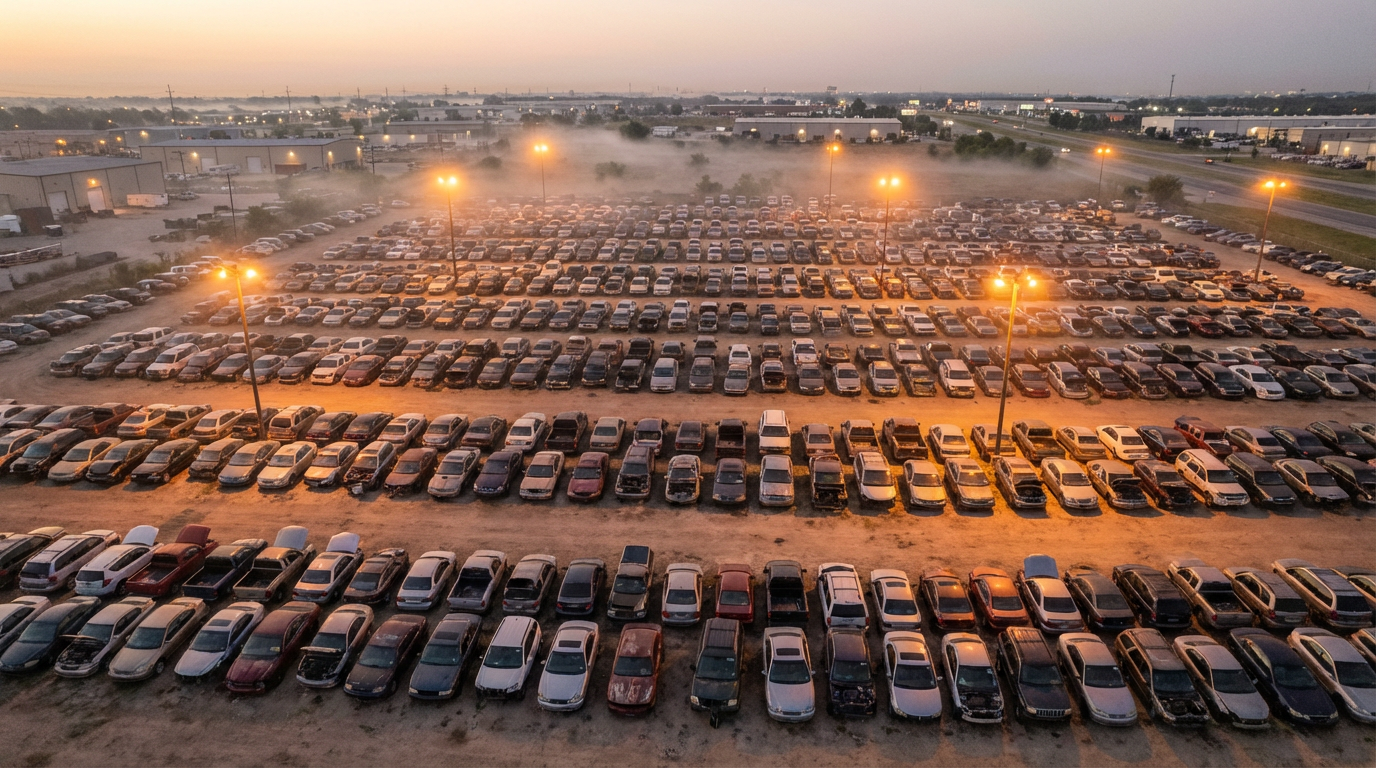
I sorted 187,058 fatalities by model year. Then I stared at the spreadsheet for a while.
That number should bother you. Nearly half of everyone who died on an American road in the last decade was riding in something a factory stopped building at least nine years earlier. Some of these cars haven’t been manufactured since the Clinton administration. Their engineering decisions — the crumple zones, the airbag calibrations, the frame geometry — are frozen in the early 2000s. The cars aged. The physics of a 40-mph offset collision did not.
Break it down by era and the shape of the problem becomes visible:
| Model Year Era | Deaths | Share |
|---|---|---|
| Pre-2000 | 28,036 | 15.0% |
| 2000–2005 | 59,284 | 31.7% |
| 2006–2010 | 41,206 | 22.0% |
| 2011–2015 | 32,760 | 17.5% |
| 2016+ | 25,772 | 13.8% |
The 2000–2005 vintage is the killing field. One-third of all fatalities. These are the cars that sold in enormous volume — Silverados, Explorers, Accords, Camrys — then cascaded through trade-ins and auction lots and buy-here-pay-here dealerships until they reached the people who had no other option.
The Ghost Fleet
Nine vehicles in the database have 100% of their fatalities from model years 2005 or earlier. Every single death. The cars were discontinued years before the observation window even opened, yet they kept killing through the entire decade:
| Vehicle | Deaths | Last Produced | Peak MY Deaths |
|---|---|---|---|
| Chevy S-10 | 1,419 | 2004 | MY2000: 178 |
| Buick LeSabre | 1,329 | 2005 | MY2004: 188 |
| Chevy Cavalier | 1,216 | 2005 | MY2004: 210 |
| GMC Envoy | 976 | 2009 | MY2004: 209 |
| Buick Century | 838 | 2005 | MY2003: 147 |
| Pontiac Grand Am | 707 | 2005 | MY2004: 148 |
| Chevy GMT-400 | 642 | 1998 | MY1998: 114 |
| Dodge Neon | 598 | 2005 | MY2005: 159 |
| Cadillac Seville | 371 | 2004 | MY2003: 44 |
The GMT-400 is the strangest one. Last built in 1998. Twenty-six years later it was still generating triple-digit annual fatalities during the observation window. A quarter-century of compounding miles on a truck platform designed when ABS was optional.
The Opposite End
Meanwhile, vehicles built after 2005 and tracked in FARS tell a different story. The Ford Fusion — 2,167 deaths, all from model years 2006 or later, zero from older vintages — exists entirely in the modern safety era. The Ram 1500’s post-2008 redesign, the Kia Forte, the Chevy Cruze: these are cars designed after electronic stability control became mandatory (2012) and after side-curtain airbags went from luxury option to standard equipment.
They still kill people. But at rates that are, in some cases, 5–10× lower per mile than their predecessors from the same manufacturer.
Why This Matters
There is no federal used-car safety standard. No inspection regime that removes dangerously obsolete vehicles from the road. Twenty states don’t require any vehicle safety inspection at all. The market decides when a car dies, and the market’s answer is: when the transmission falls out, not when the crumple zones are two decades behind current crash standards.
Eighty-seven thousand people. That’s what the ghost fleet has cost. Cars that no manufacturer will defend, no dealer will recall, no regulator will pull from the road. They just keep circulating — down through income brackets, through increasingly desperate buyers, through Craigslist listings that say “runs great” and don’t mention the three-star NCAP rating from 2003.
I ran the numbers. They didn’t get better the second time either.