Nissan Called the Maxima a “Four-Door Sports Car.” It Kills at 2.5× the Camry’s Rate.
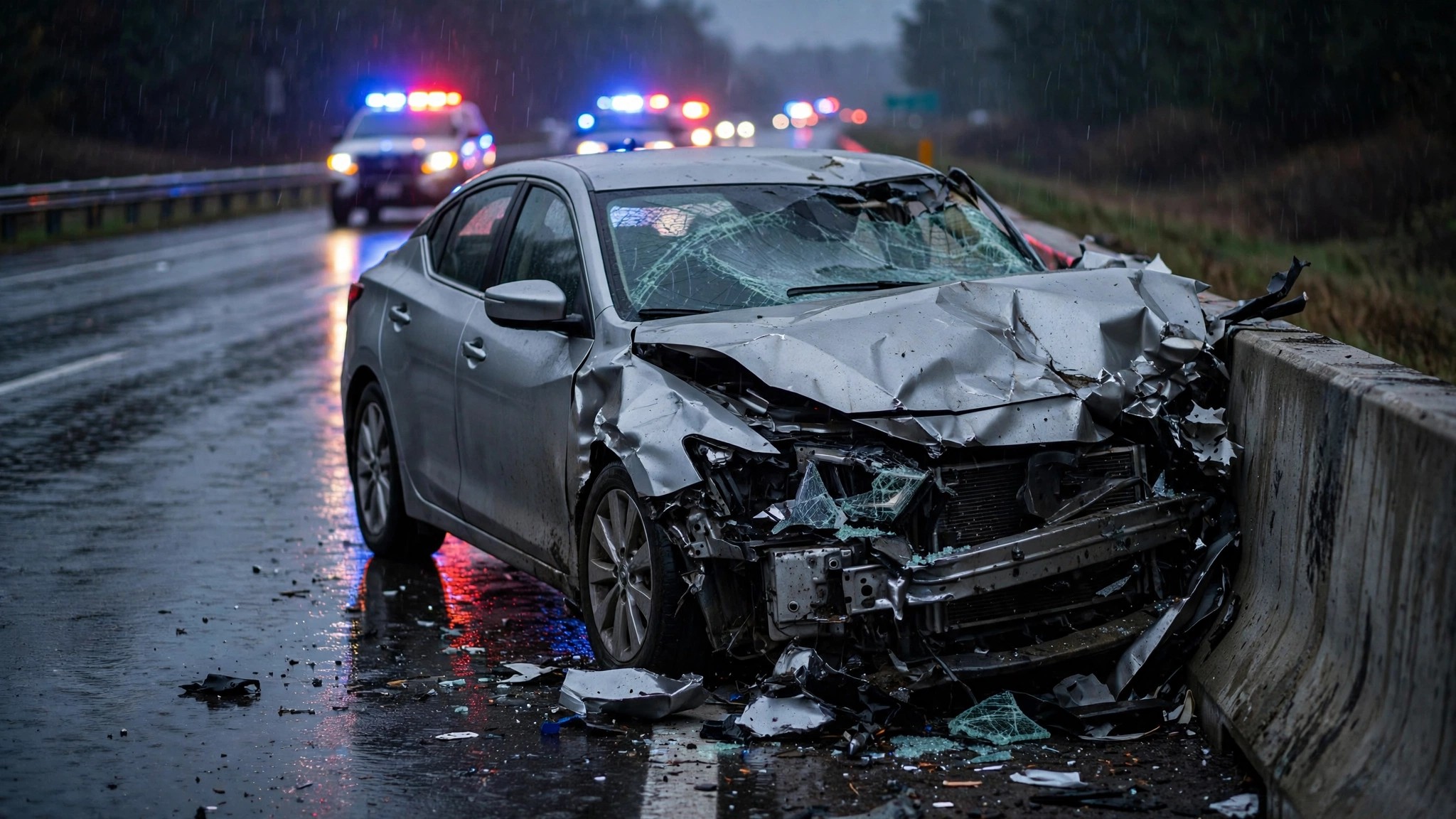
Nissan spent three decades marketing the Maxima as a “four-door sports car.” A V6 in a sedan wrapper. Sportier than the Altima, quicker than the Camry, marketed to buyers who wanted performance without giving up rear doors. FARS data shows 1,544 Maxima occupants died in fatal crashes between 2014 and 2023, a rate of 5.11 per 100 million VMT across a fleet of roughly 262,500 vehicles.
That 5.11 rate puts the Maxima in the company of the Honda Accord (3.07) and the Nissan Altima (2.88), but well above both. It is 2.5 times the Camry. It is 4.2 times the Fusion. It is 8.8 times the Kia Optima. These are all midsize sedans sold to the same demographic in the same decade. Not a different class. A different casualty bracket.
Nissan's own lineup makes the case. The Altima kills at 2.88, the Sentra at 2.13. The Maxima, the flagship, the one with the VQ-series V6 and the sport-tuned suspension, kills at 5.11. Each step up in Nissan's performance branding corresponds to a measurable increase in occupant death rate. Marketing created the expectations. The crash data measured the consequences.
Lethality seals it. In 66.2% of the Maxima's fatal crash involvements, the person who dies is sitting inside the Maxima. The Camry's lethality is 59.3%. The Fusion's is 55.1%. When a Maxima is in a fatal crash, two out of three times it kills its own occupant. That is not a speed problem alone. That is a structural protection gap in a car Nissan told buyers was sporty enough to justify a $40,000 sticker.
Impairment does not explain the gap. Of 2,570 Maxima drivers in fatal crashes, 20.9% tested positive for alcohol or drugs. That is unremarkable for the sedan class. Maxima drivers are not measurably drunker than Camry drivers. They are measurably more dead.[1]
The model year data shows a clear peak at the 5th generation, the 2004-2008 run built on a 265-horsepower VQ35DE. Model year 2004 alone accounts for 137 deaths. But even the newer 8th generation (2016-2023) contributes 191 deaths across a smaller fleet. Newer engineering did not fix it. It got smaller because Nissan sold fewer of them.[2]
Nissan discontinued the Maxima after the 2023 model year. No replacement is planned. The fleet will now age without new units entering the pool, the same trajectory that turned the Xterra into a ghost vehicle killing 46 people a year from a discontinued platform. At 154 annual deaths and a shrinking parts supply, the Maxima's worst years as a used car are likely ahead of it.
If you are shopping for a used midsize sedan: The FARS data ranks the Fusion (1.23), Sonata (1.56), and Camry (2.03) as measurably safer per mile than the Maxima (5.11). The Kia Optima at 0.58 is the safest in the class by a wide margin. A V6 badge and a sport suspension do not compensate for a 2.5-to-8.8 times higher death rate. Check your VIN at nhtsa.gov/recalls regardless of what you drive.
Sources & References
- NHTSA, Fatality Analysis Reporting System (FARS), 2014–2023 data. Impairment defined as BAC > 0 or drug-positive toxicology in fatal crash drivers. nhtsa.gov
- NHTSA FARS model year breakdown, 2014–2023. Deaths by vehicle model year across all fatal crash involvements. cdan.dot.gov
- Nissan discontinued the Maxima after the 2023 model year. No direct successor announced. iihs.org