Kia Recalled 21,290 EV9s Because Adjusting the Passenger Seat Can Disarm the Child Airbag Sensor
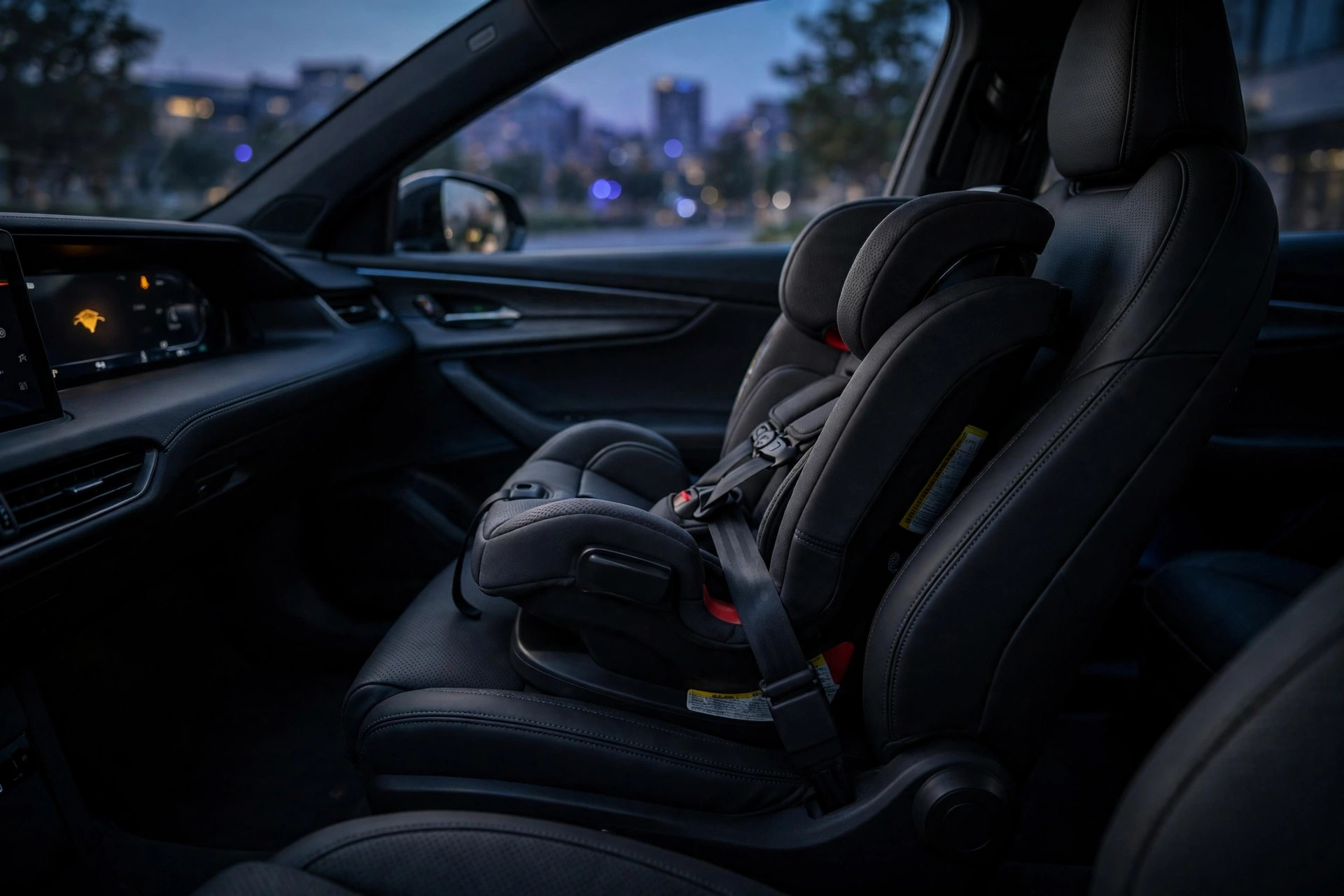
Kia gave the EV9 an Occupant Detection System with one job: notice a child in the front passenger seat and keep the airbag off. Kia has now told regulators that sliding that seat upward can break it. Not in a crash, not through misuse. 21,290 EV9s from the 2025 and 2026 model years are recalled under NHTSA campaign 26V545.[1]
Kia’s filing describes the mechanism plainly. A supplier misrouted the bladder tube for the ODS sensor mat under the front passenger cushion. At the seat’s highest position the tube gets pinched; enough adjustments damage it, and the system stops distinguishing a child seat from an adult. So the airbag stays armed, and the vehicle flunks the child-suppression requirement of FMVSS 208.[2][3] Only Georgia-built EV9s are affected. Korea-built 2025s are exempt, which points at one assembly line’s process, not the engineering office.
Who runs a passenger seat at maximum height? Shorter drivers, as a rule. Kia’s filing contains no demographic data, so this is not a finding, but the defect’s geometry selects for the seating position a parent uses with kids along. An irony worth sitting with.
Two tells give it away: an airbag warning light on the cluster and a seatbelt chime ringing for a visibly empty passenger seat. Either means the system has lost track of who sits where; until a dealer inspects it, treat that seat as unverified for kids.[1] Kia reports no injuries, and the math deserves calm: 6 percent of 21,290 is about 1,277 vehicles, so the recall population overstates the at-risk fleet roughly seventeen to one.
Now the defense, at full strength: it is a good one. Kia found this itself, reported it, and fixes it free, replacing the mat, bladder tube, and seat cover where the routing is wrong.[4] Zero injuries are on the board. And the manual already says children thirteen and under ride in the rear seat, where this defect cannot reach them. A household that follows that rule has an at-risk population of zero. This is the recall system working: a silent failure caught before it had to explain a loud one.
What to do: Own a 2025 or 2026 EV9? Run your VIN at nhtsa.gov/recalls now instead of waiting for the owner letter, which Kia does not expect to mail until October 20.[4] Treat an unexplained airbag light or phantom seatbelt chime as real: keep kids out of that seat until the dealer clears it. Keep under-thirteens in the rear seat regardless. Shopping used? Georgia-built 2025 and 2026 EV9s need recall SC379 on the service record first.
What this does not prove: Nobody has been hurt, so FARS has nothing to say and there is no body count to analyze. That 6 percent is Kia’s estimate, not an independent teardown count. The shorter-driver point is inference from seat geometry, not evidence from the defect population. And the Korea exemption narrows suspicion to a Georgia assembly process without proving what went wrong on that line.
Sources & References
- Joey Klender, “Kia is recalling over 21,000 EV9 SUVs over a faulty airbag issue,” Electrek, August 28, 2026. electrek.co
- Kristen Brown, “Kia Recalls 21,290 EV9s Because Airbags May Deploy With a Child Up Front,” Autoblog, August 27, 2026. autoblog.com
- “Kia’s Three-Row EV9 Recalled Over Airbag Issue,” Carscoops, August 2026. carscoops.com
- “Kia recalls 21,290 SUVs over airbag issue that could injure children,” Fox Business, August 2026. foxbusiness.com
- NHTSA, Recalls Database — VIN lookup for campaign 26V545. nhtsa.gov
Source: Kia’s Part 573 filing as reported via secondary coverage, August 2026, with defect-rate estimates manufacturer-reported; see methodology for caveats.