The Company That Killed 27 People With Exploding Airbags Got a New Name. It Didn't Get New Quality Control.
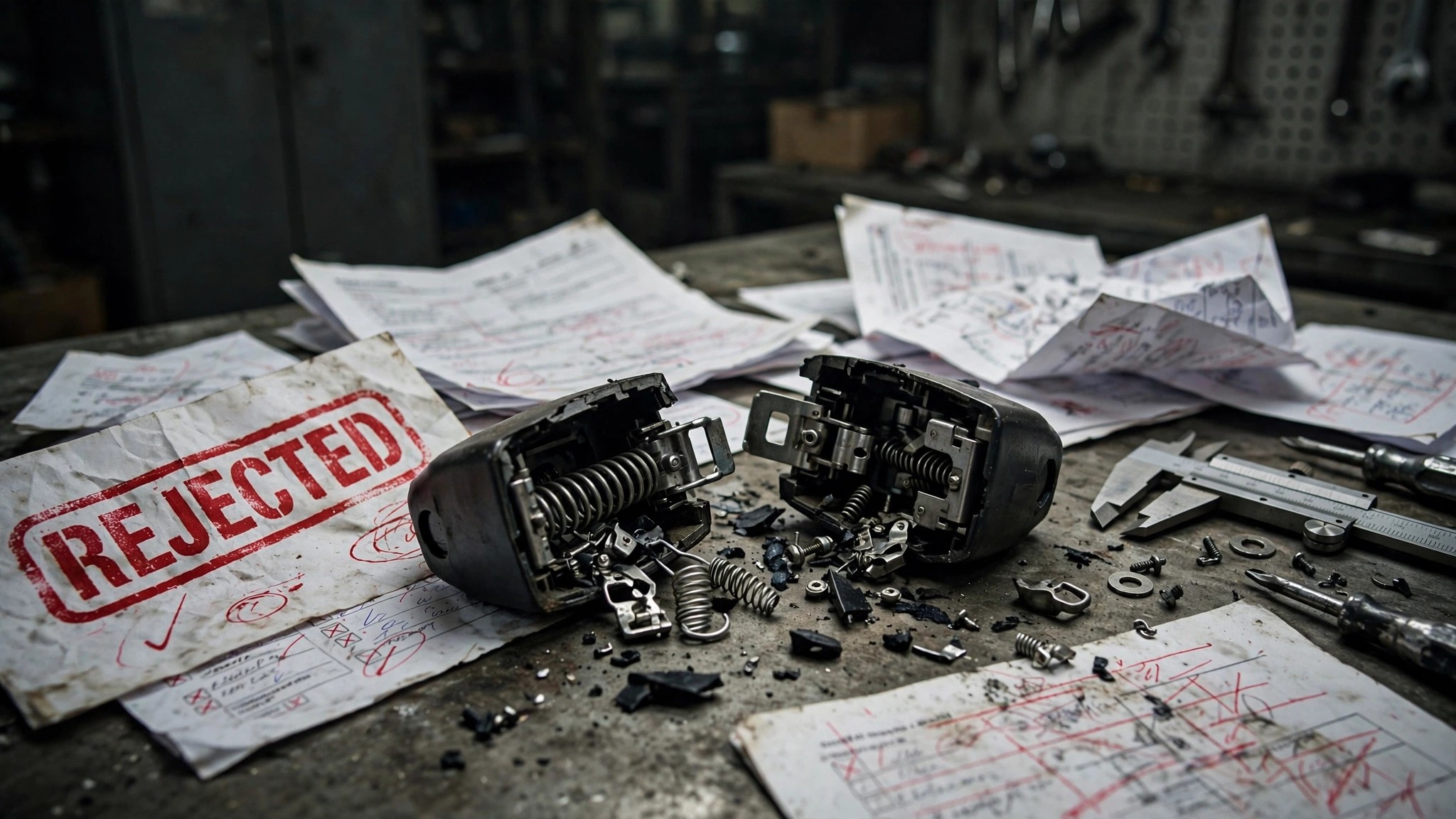
Last week, Hyundai recalled 47,749 Kona SUVs because the rear center seatbelt buckle might not actually hold you in place during a crash. The supplier behind the defective buckle is a company called Joyson Safety Systems, and if that name doesn't ring a bell, the old one might: Takata.
Takata, for anyone who blocked it out, was the Japanese safety components manufacturer whose ammonium nitrate airbag inflators had a tendency to explode with enough force to send metal shrapnel through dashboards and into people's faces. Twenty-seven confirmed deaths and hundreds of injuries across a recall campaign that eventually swallowed a hundred million inflators worldwide, making it the largest product recall in U.S. automotive history.[1] Takata pled guilty to criminal wrongdoing in 2017, specifically for fabricating inflator test results, and filed for Chapter 11 bankruptcy the same year.
Then a company called Key Safety Systems bought the wreckage and renamed itself Joyson Safety Systems. Fresh start, clean slate, except the Hikone seatbelt plant in Japan came included in the deal. And in 2020, Joyson announced it had found "inaccuracies" in belt webbing test data at that plant spanning twenty years.[2] By June 2021, investigators had uncovered over a thousand individual cases of data falsification across two plants, including one in the Philippines, with test results doctored to meet safety standards. Also affected: child safety seat belts.[3]
Joyson's official position: the falsification predated their acquisition. Which is technically true about the same way that buying a house full of mold and leaving it there for three years makes it the previous owner's mold.
The airbag side of the business isn't doing much better. In April 2025, Joyson filed an equipment recall (25E-030) for head side airbag inflators whose end caps could separate or whose sidewalls could split during deployment, propelling material into the cabin at speed.[4] The language in the filing is worth reading carefully: "The root cause has not been identified." An inflator housing that can fragment during deployment, manufactured by the corporate successor to a company that went bankrupt specifically because its inflator housings fragmented during deployment, and nobody can explain why it's happening again.
Active lawsuits allege a flaw in Joyson's 5AT propellant seal design lets moisture seep into the inflator housing, destabilizing the propellant. At least one known inflator rupture has already occurred during what should have been a minor event.[5]
Which brings us back to this month's Hyundai Kona recall. Joyson supplied the rear center seatbelt buckle assemblies, and the stated cause was "inadequate inspection controls" that allowed metal stamping dies to remain in service past their designed lifespan, producing worn and potentially defective parts.[6] Hyundai is telling owners not to let anyone sit in that rear center position until the recall repair is complete, and these are model year 2025 and 2026 vehicles that rolled off the lot defective.
The pattern across Takata and Joyson is worth laying out plainly. Takata falsified test data on inflators. Joyson inherited Takata and claimed the problems predated the acquisition. Joyson at the same plant: a thousand cases of falsified seatbelt data uncovered. Joyson's own inflator designs: housing failures with unknown root cause. Joyson's seatbelt buckles: inspection controls so lax that worn-out tooling stayed in production. The vocabulary changes every time, but the underlying failure does not.
Joyson holds approximately 30 percent of the global seatbelt market.[3] Nearly one in three seatbelts installed in new vehicles worldwide comes from this supply chain. When you buckle up tomorrow morning, you probably won't think about who made the buckle, and that's reasonable because it shouldn't matter. But right now, for roughly 48,000 Hyundai owners, it very much does.
What to do: If you own a 2025 Hyundai Kona Electric or 2026 Hyundai Kona, check nhtsa.gov/recalls with your VIN for recall 26V452. Do not let passengers use the rear center seat until the dealer replaces the buckle assembly, which is free. If you own any vehicle and want to know whether Joyson components are under recall in your car, run your VIN through the same tool. And the next time an automaker tells you a recall is just "an abundance of caution," ask who made the part and what else they've recalled.
Sources & References
- Wikipedia, Takata Corporation. en.wikipedia.org
- Reuters, “Joyson probes ‘inaccuracies’ in data at former Takata plant in Japan,” October 2020. reuters.com
- Reuters, “Joyson finds falsified seatbelt test data at former Takata plants,” June 2021. reuters.com
- NHTSA, Part 573 Safety Recall Report 25E-030, Key Safety Systems Inc. (DBA Joyson), April 2025. nhtsa.gov
- Motley Rice, “Joyson Airbag Lawsuit: Defective Inflators.” motleyrice.com
- NHTSA Recall 26V452: Hyundai Kona rear center seat belt buckle, July 2026. nhtsa.gov