The Volkswagen Jetta Promised German Engineering. It Delivered 1,375 Deaths.
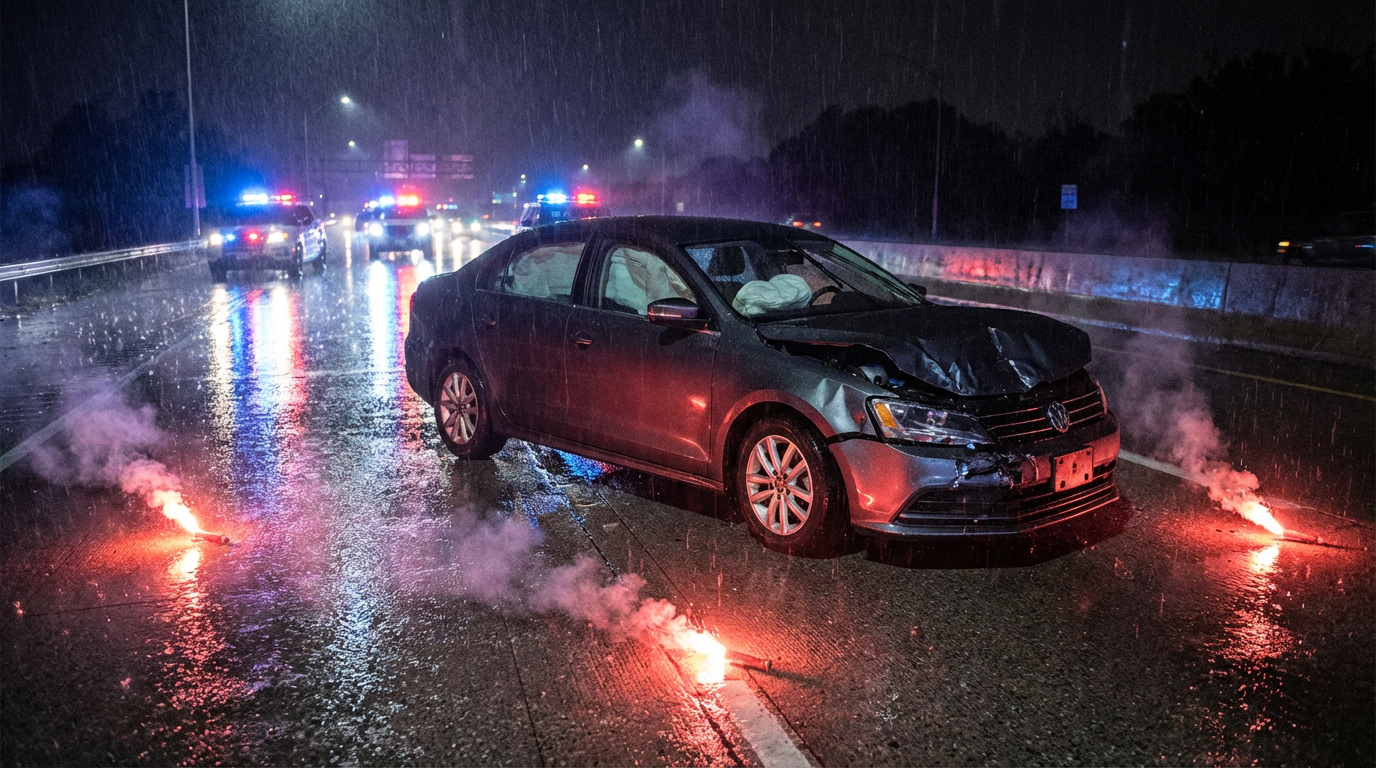
Here’s a fun fact that will ruin your morning commute. Volkswagen sells the Jetta with the implicit promise that you’re buying something better than the domestic and Japanese competition — tighter steering, Autobahn pedigree, the warm glow of “German engineering.” What you’re actually buying is a compact sedan with a death rate of 1.71 per 100 million vehicle miles traveled and a body count of 1,375 fatalities across the FARS window. That’s not engineering. That’s marketing with a body count.
The most damning comparison isn’t against Toyota or Honda. It’s against Volkswagen’s own lineup:
| VW Model | Deaths | Fleet | Rate |
|---|---|---|---|
| Jetta | 1,375 | 700K | 1.71 🔴 |
| Beetle | 152 | 131K | 1.01 |
| Passat | 237 | 263K | 0.79 |
| Golf | 55 | 263K | 0.18 🟢 |
| Tiguan | 126 | 744K | 0.14 🟢 |
| Atlas | 26 | 350K | 0.06 🟢 |
The Golf shares the Jetta’s MQB platform. Same engines, same transmissions, same electronics architecture. The hatchback version of fundamentally the same car kills at one-ninth the rate. Why? The Jetta is the cheap VW — the one that gets stripped down, sold on aggressive incentives to price-sensitive buyers, and aged on dealer lots as the entry point to the brand. The Golf, by contrast, skews toward enthusiasts who buy newer model years and maintain them. Same DNA, different customer lifecycle.
Now stack the Jetta against its actual compact sedan competition:
| Compact Sedan | Deaths | Rate | Impairment |
|---|---|---|---|
| Ford Focus | 3,046 | 2.52 | 19.4% |
| Honda Civic | 6,553 | 2.25 | 20.4% |
| Nissan Sentra | 2,571 | 2.13 | 20.0% |
| Toyota Corolla | 4,945 | 1.85 | 19.2% |
| VW Jetta | 1,375 | 1.71 | 19.9% |
| Hyundai Elantra | 2,407 | 1.50 | 18.6% |
| Chevy Cruze | 638 | 0.63 | 20.2% |
| Kia Forte | 604 | 0.40 | 20.1% |
The Jetta lands in the middle of the pack — safer than the Focus and Civic, deadlier than the Elantra and Cruze. At 19.9% impairment, its drivers behave identically to the segment average. This isn’t a drunk-driving story. It’s a story about a car that costs more than a Corolla, trades on “precision” and “German engineering,” and doesn’t actually protect you any better.
The model year data shows where the bodies pile up: the 2014 Jetta leads with 96 deaths, followed by 2003 with 87, and 2002 with 85. The MK4 generation (1999–2005) accounts for a massive share of the total — old Jettas cycling through second and third owners, losing value faster than they lose structural integrity. Meanwhile, the MK7 generation (2019+) shows early improvement: 64 deaths for MY 2019, dropping to 13–15 for 2020–2021 as the redesigned platform catches up to modern crash standards.
Volkswagen’s own data tells the real story. The Tiguan (0.14), Atlas (0.06), and Golf (0.18) are among the safest vehicles in FARS — legitimately excellent. The company knows how to build safe cars. It just doesn’t put that same effort into its volume sedan, the car that represents VW to most American driveways. The “Das Auto” that Americans actually drive is also the one most likely to kill them.