The IIHS Just Named the 10 Deadliest Cars in America. Half of Them Are Already Dead.
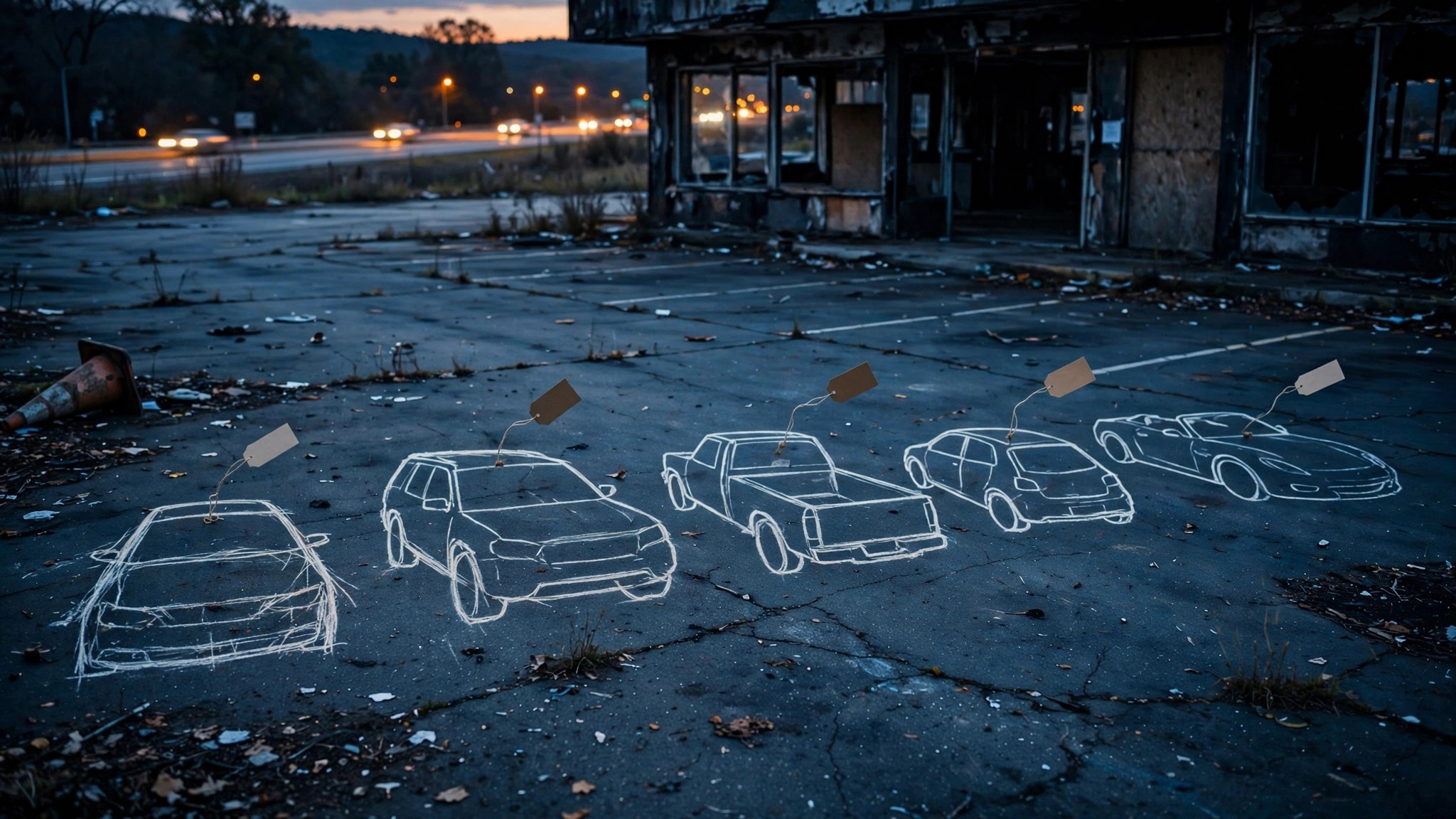
IIHS published its 2023 model year driver death rates this morning, and a $17,000 subcompact sits at the top. A Kia Rio driver faces 170 deaths per million registered vehicle years, which is the highest figure IIHS has measured for any mass-market car in its current series.[1] Kia discontinued the Rio after 2024, though nobody in Seoul cited safety as the reason.
Below it: Nissan Versa, Chrysler 300 at 132, Dodge Challenger at 127 (Hemi) and 125 (non-Hemi), Nissan Altima, Chevrolet Malibu at 116, Nissan Maxima, and several Hyundai models.[2] At least five of those vehicles no longer exist on any dealer lot in America. Chrysler ended the 300 with the 2023 model year and the Challenger followed immediately, while the Malibu bowed out in 2024, same as the Rio, same as the Maxima. Low margins and electrification timelines drove every cancellation, not the fact that these drivers were dying at rates two to four times the fleet average.
At the bottom of the table, six vehicles recorded zero driver deaths: Audi Q7, BMW X7, Chevrolet Tahoe 4WD, Mercedes-Benz GLB, Mercedes-Benz GLE, and Toyota Tundra CrewMax 4WD. Eighteen of the twenty safest vehicles are SUVs, and every zero-death model starts above $40,000, while a Kia Rio stickered at $16,750.[1]
Bad engineering isn't the explanation here. IIHS gave the Rio decent crashworthiness ratings for its class, and it met every federal safety standard on the books. What a 2,500-pound sedan can't do is survive contact with vehicles pushing 7,000 pounds, and this same IIHS report makes that brutally clear: a Ram 3500 Crew Cab carries the highest "other-driver death rate" at 204 per million, killing drivers of other vehicles at a rate that exceeds every other consumer vehicle on American roads. Stellantis vehicles hold seven of the top ten spots for killing occupants in the other car. IIHS President David Harkey was blunt about it: "Even the safest small cars don't fare well in crashes with large pickups and heavy SUVs."[2]
Cross-referencing the IIHS list with NHTSA's Fatality Analysis Reporting System turns up something worse. FARS data from 2014 through 2023 shows roughly 2.8 million of these discontinued models still circulating in the U.S. fleet: 218,750 Kia Rios, 350,000 Chrysler 300s, 481,250 Challengers, 1.49 million Malibus, and 262,500 Maximas.[3] FARS-derived fatality rates for these vehicles range from 1.00 to 5.11 deaths per 100 million vehicle miles traveled, and the Malibu alone has contributed 3,465 driver deaths in the dataset. Discontinued vehicles don't stop killing people when the factory stops building them, because the fleet grinds on for twelve to fifteen more years after production ends.
Consider the Rio's trajectory over time. In the IIHS 2011 model year study, its death rate was 149 per million; in the 2023 model year study published today, that number climbed to 170, a fourteen percent increase over twelve years of ostensible safety improvement.[4] During that same period, average new-vehicle curb weight rose by about 400 pounds, standard automatic emergency braking became widespread, and the overall fleet death rate declined. Somehow the Rio earned better crash-test scores while accumulating a worse survival record. Its occupants didn't get less safe in any measurable way. Everything else on the road got heavier, taller, and faster, and a 2,500-pound sedan absorbed the physics of that disparity without the mass to survive it.
So the market did what regulators never would: it killed the deadliest cars, though not intentionally. Stellantis canceled the 300 and Challenger because they were losing money, not lives, while Kia ended the Rio when subcompact margins collapsed and GM discontinued the Malibu to make room for the Equinox EV. Every cancellation was a financial decision that happened to subtract a statistically deadly vehicle from future production, and nobody celebrated this as a safety outcome because nobody framed it that way.
But the counterargument deserves its full weight. Every one of these cancelled vehicles was disproportionately affordable, and the Rio, Versa, and Malibu ranked among the cheapest new vehicles you could buy. Removing them from the market doesn't save the people who bought them because they couldn't afford a $45,000 Tahoe; it pushes them into used versions of the same cars, into older vehicles with worse safety tech, or out of new-car ownership entirely. A safety dividend that accrues only to people who can afford a Mercedes GLB isn't a safety system. Call it what it is: a wealth filter with airbags.
If you own a Kia Rio, a Chrysler 300, a Dodge Challenger, a Chevrolet Malibu, or a Nissan Maxima, check your VIN at nhtsa.gov/recalls, because all five have active recall campaigns. Then look at your insurance renewal and consider that IIHS just told your insurer exactly how much risk you represent. And if you are shopping for a replacement, know that the cheapest vehicle with a zero IIHS death rate costs more than twice what the Rio did.
Sources & References
- IIHS, Driver death rates by make and model (2023 model year), July 30, 2026. iihs.org
- Ian Wright, “Study: You Really Don't Want To Get Hit By A Ram Truck, Unless You're In A German SUV,” CarBuzz, July 30, 2026. carbuzz.com
- NHTSA, Fatality Analysis Reporting System (FARS), 2014–2023. nhtsa.gov
- IIHS, “Driver death rates remain high among small cars,” 2020. iihs.org
- NHTSA, 2025 Traffic Death Estimates & 2024 FARS. nhtsa.gov
Limitations
IIHS death rates use registered vehicle years as the denominator, not miles driven. A car driven 25,000 miles a year and one driven 5,000 miles a year count equally. The Rio's high death rate may partly reflect higher-mileage usage patterns among budget-car buyers. FARS data uses estimated VMT, introducing ±15% uncertainty for low-volume models. The "ghost car" fleet estimate uses registration snapshots and does not account for accelerated attrition of crashed or salvaged vehicles. The IIHS 2023 model year data covers calendar years 2021–2024; our FARS data covers 2014–2023, so the temporal overlap is partial.