Four Seatbelt Recalls, 916,000 Vehicles, One Brand
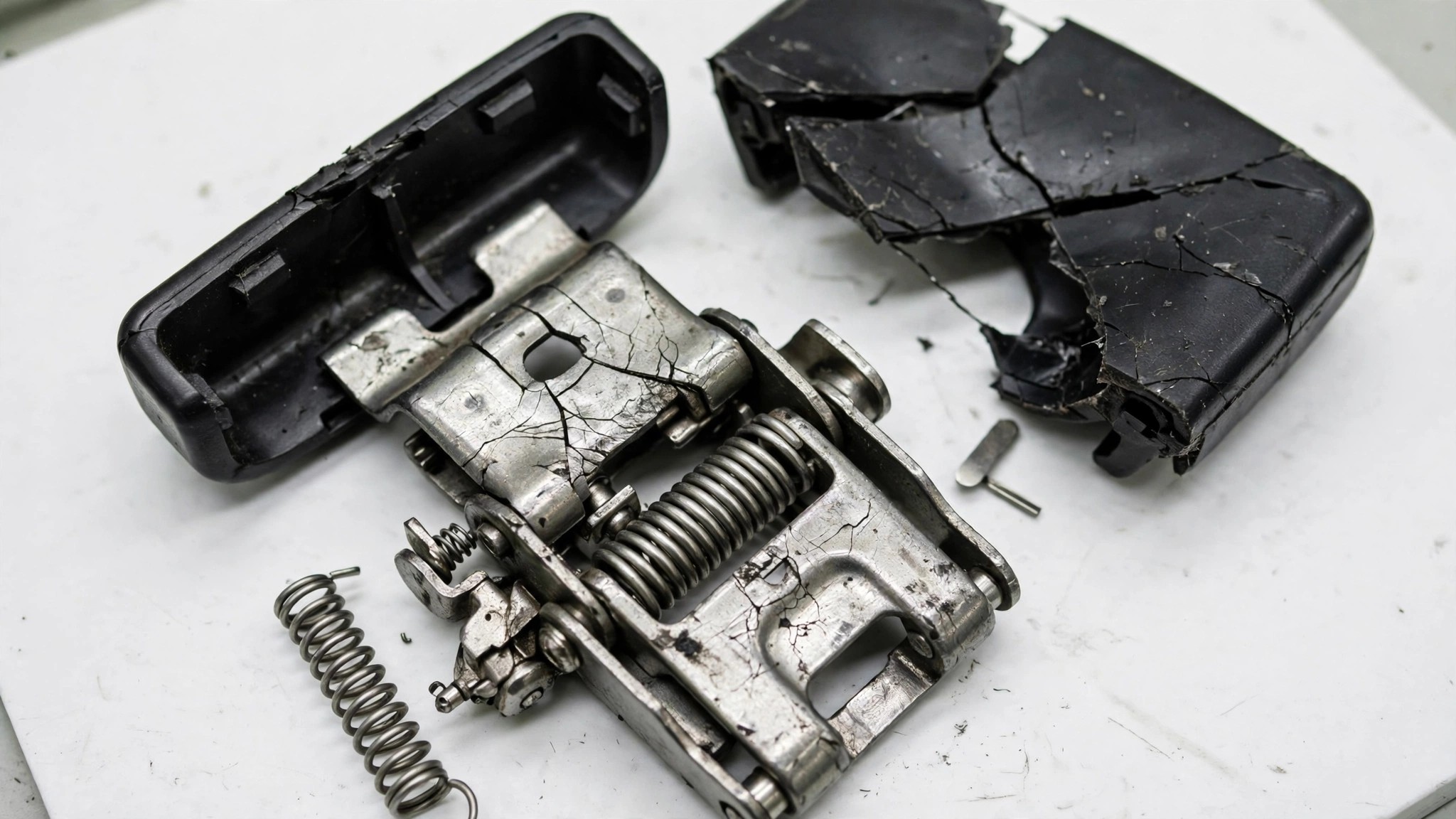
Hyundai Motor Group has recalled 916,721 vehicles for seatbelt defects since September 2025. Four separate recalls cover four different failure modes, at least three different suppliers, and six models that all hold or recently held an IIHS Top Safety Pick award: Palisade, Ioniq 6, Genesis G90, Santa Fe, Telluride, Kona.
One seatbelt recall is a manufacturing hiccup, a defective batch caught by a quality system doing its job. Two in a year suggests a supplier problem worth tracking. Four in twelve months, each involving a structurally different defect and a different root cause, is a quality-assurance system telling you something fundamental is broken at the organizational level, not at any single supplier's factory floor, but in the corporate process that decides when a seatbelt design has been validated well enough to ship in a vehicle that families trust with their lives.
Start in September 2025: Hyundai recalled 568,580 Palisades because seatbelt buckle assemblies contained out-of-specification components that increased friction in the latch channel, a defect worsened by cold temperatures. In April 2026, another 294,128 vehicles came back. Ioniq 6 sedans, Genesis G90 luxury flagships, Santa Fe crossovers: all needed their front seatbelt snap-on anchors inspected because the anchors could detach from the seat frame entirely during certain rear-end collisions. Hyundai's own investigation confirmed that neither user interaction nor assembly-line error caused the failure; a damaged anchor design only showed up under specific crash loads, and a redesigned part didn't enter production until March 2026.[1]
Two months after that, Kia recalled 6,264 brand-new 2027 Tellurides because its seatbelt supplier Samsong Mexico installed an incorrect vehicle sensor in the driver's retractor. When the retractor locked, the webbing couldn't extend at all, and the belt became physically impossible to put on: a straight violation of Federal Motor Vehicle Safety Standard 209, the regulation governing seatbelt performance since 1968.[2]
On July 22 came the Kona. Hyundai pulled 47,749 of its cheapest crossovers because the rear center seatbelt buckle was manufactured outside of specification by Joyson Safety Systems, the company that acquired Takata's assets after defective inflators killed 27 people worldwide and triggered the largest automotive recall in history. Joyson's stamping dies had worn past their intended lifespan because, per NHTSA filings, inspection controls failed to catch them in time.[3] Hyundai's advisory to owners was not a repair schedule but a behavioral instruction: do not use the rear center seat until further notice.
Pause on that advisory, because it reveals how the recall system fails at the margins. A restraint system is designed to work without occupants having to remember anything beyond pulling the strap and clicking the buckle; that's the whole point of passive safety engineering. When an automaker's best interim answer is to declare a seating position extinct, the process hasn't solved the problem but rather outsourced the risk to human memory. A family that forgets on the one long drive when all three back seats are needed, a rideshare passenger reaching for the center buckle without knowing about the recall, a grandparent who buckles a child in from decades of habit: every one of them is relying on hardware that may not hold when it counts.
FARS data quantifies what a failed seatbelt costs. Between 2014 and 2023, seatbelts saved roughly 15,000 lives per year in the United States.[4] Unbelted occupants made up approximately 47 percent of all crash fatalities despite representing a far smaller share of vehicle occupants overall, and that ratio has barely improved since the late 2010s. Rear center seat occupants already buckle up at roughly 55 to 60 percent compliance, far below front-seat rates above 90 percent, and when someone who tries to buckle up encounters hardware that doesn't work, that compliance gap widens in the worst possible direction: toward a crash where being restrained was the single variable between walking out and not.
An obvious counterargument exists, and it isn't wrong on its face: none of these four recalls has produced a confirmed crash fatality linked to the specific seatbelt defects. Hyundai identified each issue, filed with NHTSA, and is fixing vehicles at no charge, so by the narrowest reading of the system, it worked. But the system was not designed to absorb four consecutive hits on the same safety component from the same corporate group in a single calendar year, because that frequency reveals something individual recall reports don't: Hyundai Motor Group's supplier qualification and incoming-parts inspection process is either not catching seatbelt-related defects at the gate or is accepting risk tolerances wider than its competitors tolerate. Four different suppliers, four different manufacturing plants across South Korea, Alabama, and Mexico, four different failure mechanisms. What unites them is the purchasing and validation infrastructure that sits above all of those variables, and that infrastructure is Hyundai's alone.
Consider the IIHS dimension, which turns the irony into something close to absurdity. Hyundai's Palisade earned its 2026 Top Safety Pick+ in May, months after the buckle recall and specifically after Hyundai improved rear seatbelt hardware that triggered the earlier campaign.[5] At $25,500, the Kona was named the cheapest Top Safety Pick+ vehicle in America for 2026, an accolade that requires good seatbelt reminder ratings alongside crashworthiness scores. Telluride, G90, Ioniq 6, Santa Fe: all award winners built on the premise that every restraint in the cabin holds up under force. But IIHS does not test whether your seatbelt anchor will still be attached to the seat frame three years after the crash evaluation, or whether the buckle was stamped by a die that should have been replaced six months earlier. Crash tests assume that restraint systems work as designed across the full production run, and when that assumption fails, the award measures a vehicle that no longer exists in the configuration that earned it.
If you own a Palisade, Ioniq 6, G90, Santa Fe, Telluride, or Kona built during the affected production windows, check your VIN at nhtsa.gov/recalls before your next drive, not next month. In the 150 milliseconds between impact and peak deceleration, a functioning three-point harness determines whether you walk out of the wreck or get carried. Hyundai should understand this better than anyone by now. It has had four separate opportunities to learn it in twelve months, across nearly a million cars, and counting.
Sources & References
- Reuters, “Hyundai to recall over 294,000 US vehicles over seat belt anchor defect,” April 10, 2026. reuters.com
- USA Today, “Kia is recalling thousands of vehicles. See the affected models,” June 8, 2026. usatoday.com
- Fox Business, “Hyundai recalls nearly 48,000 SUVs over seat belt issue,” July 17, 2026. foxbusiness.com
- NHTSA, Fatality Analysis Reporting System (FARS), 2014–2023. nhtsa.gov
- IIHS, “Two additional models earn awards in latest IIHS ratings,” May 14, 2026. iihs.org