Hyundai Built a Safety System That Causes Crashes. It Knew for 16 Months. 421,078 Vehicles Just Got the Recall.
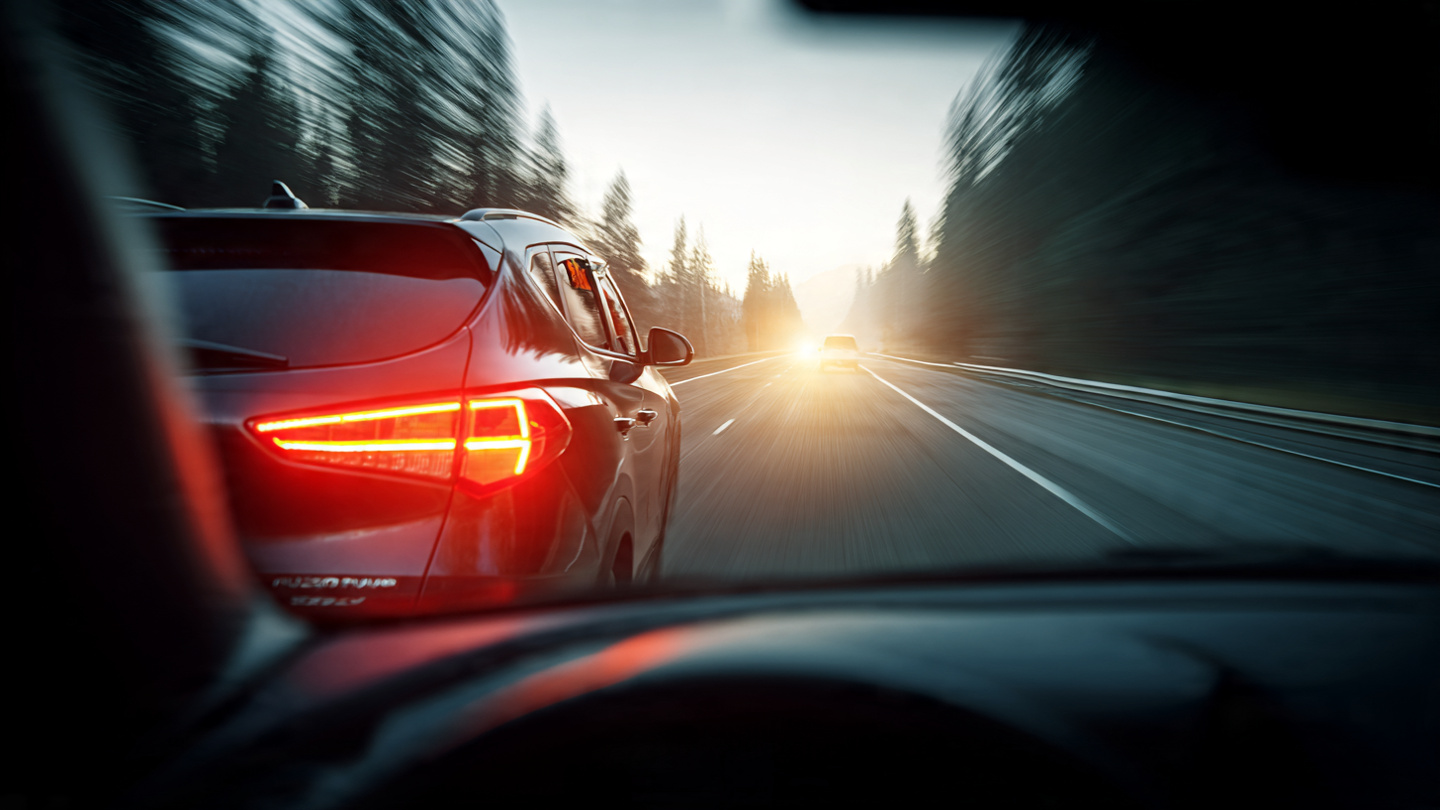
The Forward Collision-Avoidance system in your 2025 or 2026 Hyundai Tucson is supposed to stop you from rear-ending the car ahead. Instead, for 421,078 vehicles, the system is slamming the brakes when nothing is there, turning your car into a sudden, unpredictable wall for everyone behind you.
NHTSA recall 26V316, filed May 22, 2026, covers the Tucson (292,805 units), Tucson Hybrid (110,844), Tucson Plug-In Hybrid (4,347), and Santa Cruz pickup (13,082). The defect is brutally simple: the front camera software, supplied by Mobis, is calibrated too aggressively. It reads proximity to a forward object as an imminent collision when it isn't one, then fires the brakes hard and without warning, no alert, no graduated response, just sudden deceleration in live traffic while the driver behind you has precisely zero indication that your car has decided to panic. Between October 2024 and April 2026, Hyundai received 376 complaints.[1] Four drivers were rear-ended and four people injured, all in the specific crash configuration that Forward Collision Avoidance exists to prevent.
Hyundai's North American Safety Office opened its investigation in January 2025.[2] Engineers replicated the phantom braking during track testing by June 2025 and validated a prototype software fix at test tracks in South Korea. The recall did not arrive for another eleven months, and during that window complaints kept coming and crashes kept happening. The fix was a software recalibration that adjusts sensitivity thresholds in the front camera module, a procedure that takes a dealer technician less time than an oil change. Owners will not receive mail notifications until July 17, 2026, nearly two months after the recall filing, which means the full timeline from "we know this is broken" to "every affected owner has been formally told" stretches past eighteen months.
Sixteen months is not extraordinary by recall-investigation standards. Automakers investigate, replicate, root-cause, develop a fix, validate it across markets, and file, a process that commonly takes twelve to eighteen months. That is the strongest defense Hyundai has, and it is a real one. But the counterargument cuts both ways: if the industry-standard timeline for a known software defect in a safety-critical system is over a year, maybe the industry-standard timeline is the problem. Three hundred and seventy-six people reported their cars braking without cause, and four of them got hit from behind. The fix required recalibrating a camera, a task whose engineering complexity was negligible compared to the time consumed.
This recall does not exist in isolation. In March 2026, a two-year-old girl in Ohio was killed when a 2026 Palisade's power-folding rear seat crushed her because the system lacked adequate anti-pinch protection.[3] Hyundai recalled 61,093 Palisades and issued a global stop-sale; Kia added 568 Tellurides. The fix was software that added occupant detection and changed how the folding mechanism activates. In May 2026, a week before the Tucson recall, Hyundai recalled 54,000 Elantra Hybrids for a hybrid power system defect that could overheat and start a fire.[4] In February, Hyundai and Kia together recalled 84,328 vehicles for instrument panel displays going completely blank while driving.[5] Four recalls spanning four distinct failure modes across four different model lines, three of them involving software that either didn't detect what it should have (Palisade), detected too aggressively (Tucson), or stopped displaying altogether (instrument panels). The fourth was a thermal hardware failure. This is not a single-system problem but a quality-control pattern spreading across the lineup.
A lawsuit filed earlier in 2026 alleged that Hyundai used cheaper radar components and sensors in certain Tucson models, naming phantom braking as its central complaint.[6] The recall does not address those claims. But the fact that a recall now formally acknowledges the same failure mode across a much larger vehicle population is not going to make Hyundai's legal position more comfortable. The complaint rate across the recalled fleet is 0.089%, which sounds negligible until you remember that NHTSA considers 100 complaints on a specific defect to be a significant signal. Three hundred and seventy-six is almost four times that threshold. And NHTSA's own estimates suggest that formal complaints capture only one to five percent of actual incidents, which would put the real phantom-braking population somewhere between 7,500 and 37,600 drivers.
There is a grim irony embedded in this recall that the filing itself cannot articulate. Forward collision avoidance is one of the most effective crash-prevention technologies ever deployed. The Insurance Institute for Highway Safety found that vehicles with forward collision warning and automatic emergency braking reduce rear-end crashes by 50 percent.[7] When the system works correctly, it saves lives. When it is calibrated the way Mobis calibrated these Tucson cameras, it does the opposite: the car brakes into nothing, the car behind it brakes too late, and the system designed to prevent the crash becomes the mechanism that causes it. The driver of the Hyundai cannot predict when it will happen. The driver behind them has no idea it is about to. FCA becomes a randomized hazard generator on public roads.
If you own a 2025 or 2026 Tucson, Tucson Hybrid, Tucson PHEV, or Santa Cruz, look up your VIN at nhtsa.gov/recalls using recall number 26V316. Do not wait for the July letter. Schedule the software update at your nearest Hyundai dealer. It is free regardless of warranty status, and owners who already paid out of pocket for related repairs will be reimbursed. In the meantime, Hyundai advises extra caution in compressed-distance driving: wet roads, stop-and-go, highway merging. That is a polite way of saying your car might panic-brake in traffic and the company would prefer you not be surprised when it does.
Sources & References
- NHTSA, Safety Recall 26V316, filed May 22, 2026. nhtsa.gov
- Auto123, “Hyundai recalls 421,000 Vehicles in U.S. over braking issue,” May 2026. Investigation and replication timeline from Hyundai’s NHTSA filing chronology. auto123.com
- NHTSA / Edmunds, “Hyundai Palisade and Kia Telluride Officially Recalled Following Fatal Rear Seat Accident,” March 2026. Fatal incident: March 7, 2026, Ohio. edmunds.com
- Fox Business / NHTSA, Hyundai Elantra Hybrid fire risk recall, May 2026. 54,000 vehicles. foxbusiness.com
- NHTSA / CarBuzz, Hyundai recall number 293 and Kia recall SC361 for instrument panel software failures, February 2026. Combined 84,328 vehicles. carbuzz.com
- TopSpeed, “Hyundai’s Phantom Braking Problem Just Hit 421,000 Vehicles,” May 23, 2026. Lawsuit details. topspeed.com
- IIHS, “Effectiveness of forward collision warning and autonomous emergency braking systems in reducing front-to-rear crash rates.” iihs.org