30 Years Ago, Airbags Killed Children. The Fix Was One Sensor. Honda Just Recalled 99,000 of Them.
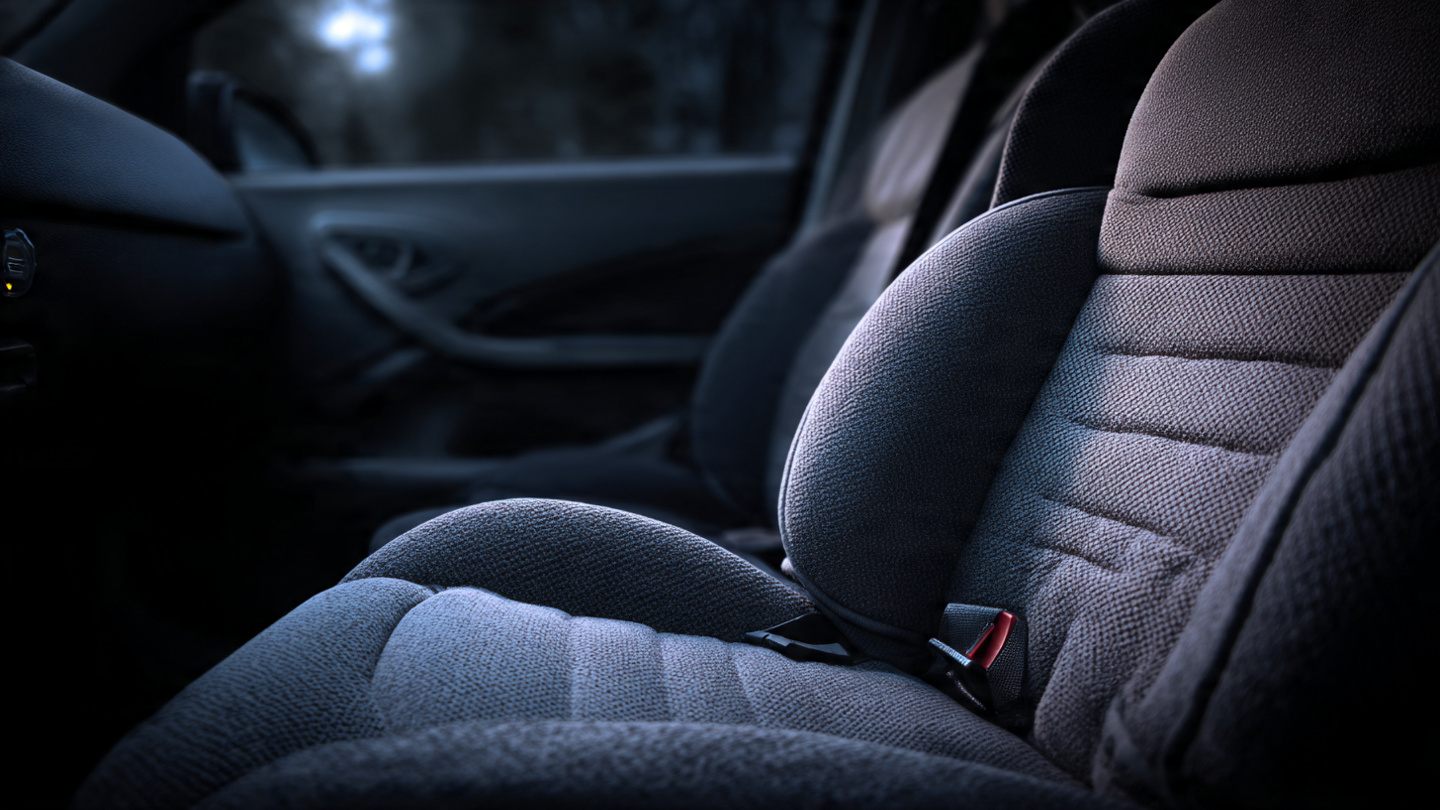
Between 1993 and 1996, passenger-side airbags killed 32 children in the United States.[1] The dead included infants in rear-facing car seats, toddlers sitting cross-legged on the passenger cushion, and kids small enough that a 200-mph nylon blast to the face was not survivable. Twenty-one of the thirty-two were unrestrained or improperly restrained, but that detail obscures the real lesson: the airbag could not tell the difference between a grown adult and a 30-pound child. A matched-cohort study later quantified the horror: first-generation airbags increased child fatalities by 66 percent.[2]
The federal government's answer was a regulation called the Advanced Airbag Rule, a 2003 amendment to FMVSS 208 that required every new passenger vehicle to include an Occupant Classification System.[3] Fancy name. Simple job. A weight sensor in the passenger seat measures how heavy the occupant is. If the reading falls below a threshold, typically around 65 pounds, the airbag suppresses. Child detected, deployment blocked, crisis solved in six words and one regulation's entire child-protection architecture balanced on a component thinner than a credit card.
On Friday, Honda admitted that sensor can crack in 98,892 of its vehicles.
NHTSA announced that 98,892 Honda and Acura vehicles across 17 model lines, from the Civic to the Odyssey to the Acura MDX, carry a front passenger seat weight sensor prone to fracturing and short-circuiting.[4] The affected models span 2016 through 2026 model years: a decade of production sharing a component that cannot survive humidity. When the sensor fails, it misreads the occupant weight. A 20-pound infant in a rear-facing car seat gets classified as an adult. Full-force deployment follows, slamming into the back of the child restraint, directly into the child's head and neck, at roughly 200 miles per hour. This is not a theoretical risk assessment but the exact mechanism that killed those 32 children three decades ago, before the weight sensor existed to prevent it.
Honda has been here before, and that history is what elevates this recall from routine to alarming. NHTSA records show a prior recall campaign targeting seat weight sensors in 2020–2022 Acura models, documented in a service bulletin from early 2024.[5] A cracking sensor is not a freak manufacturing defect but a known, recurring component failure in a system that has exactly zero redundancy: no backup sensor, no secondary check, no software plausibility gate that says, “Wait, the sensor reading just jumped from 18 pounds to 160 in a millisecond, so maybe don’t fire the airbag.” That weight sensor is the occupant classification system, the whole thing, and when it cracks, nothing else stands between the airbag and the child.
Context makes the math worse: on the same Friday Honda disclosed its sensor defect, Stellantis recalled 419,035 vehicles because their side airbags may not deploy at all.[6] Two manufacturers, two opposite failures, a combined 518,000 vehicles with airbag systems that either attack the wrong people or refuse to protect anyone. Airbags have saved more than 50,000 American lives since their introduction.[7] Nobody disputes that, and the 66-percent child fatality increase from first-gen bags dropped sharply after advanced airbags arrived, proving the technology works when it works. But the system that decides whether that airbag saves you or kills your child comes down to a single point of failure that a major automaker has now recalled for cracking twice in three years.
Honda's strongest defense is that no injuries have been reported from this specific defect, and that a cracked weight sensor does not guarantee airbag deployment on a child because other factors, including seat position and crash severity thresholds, participate in deployment logic. That defense is technically accurate and wildly beside the point: the OCS weight sensor is the primary child-detection gate, the first and most critical check in the suppression chain, and when it misreads, every downstream safeguard assumes an adult is sitting there. The recall also covers only three model lines, which could indicate an isolated supplier batch rather than a systemic Honda engineering flaw, and future sensor designs may incorporate redundancy that today’s do not.
Limitations are real and worth stating plainly: this recall covers a sensor defect, not a confirmed airbag-deployment-on-child event in these specific vehicles. NHTSA has not published injury or fatality data tied to this recall campaign, so the risk remains probabilistic rather than actuarial. That 32-child-fatality figure comes from the 1993–1996 pre-OCS era when no suppression system existed at all, making a direct comparison imperfect because today’s vehicles have additional safeguards, including the seat position sensor and the rear-door child-lock reminder systems that some manufacturers now include. Whether the sensor failure rate is one in a thousand or one in a hundred thousand remains unknown because Honda has not disclosed field-failure data, and NHTSA’s preliminary evaluation does not quantify it. We are connecting a component failure to a historical fatality pattern, not claiming the two have produced identical outcomes in 2026.
What to do: If you own a 2022 Accord, Accord Hybrid, or Acura TLX, check your VIN at nhtsa.gov/recalls immediately and schedule the free dealer repair without waiting for Honda’s mailed notification, which typically arrives weeks after the recall is announced. Until the sensor is replaced, do not put a child or child seat in the front passenger seat under any circumstances. This applies even if your vehicle’s airbag status light appears normal, because the sensor can fail intermittently without triggering the dashboard warning system. The sensor can read correctly 999 times and misread on the 1,000th, and you will not get a warning before the airbag fires. If you drive any other vehicle with a passenger airbag, remember that the rear seat is still the safest place for any child under 13, regardless of your car’s recall status.
Sources & References
- CDC, “Update: Fatal Air Bag-Related Injuries to Children — United States, 1993–1996,” MMWR. cdc.gov
- Braver et al., “Association of first- and second-generation air bags with front occupant death in car crashes: a matched cohort study,” 2006. pubmed.ncbi.nlm.nih.gov
- NHTSA, Federal Motor Vehicle Safety Standard No. 208, Advanced Airbag Rule (49 CFR § 571.208). law.cornell.edu
- NHTSA/Reuters, “Honda recalls nearly 99,000 US vehicles over airbag issues,” May 29, 2026. nhtsa.gov
- NHTSA, Acura Seat Weight Sensor Recall Campaign, 2024. nhtsa.gov/recalls
- Reuters, “Stellantis to recall over 419,000 US vehicles over improper side air bag deployment,” May 29, 2026. reuters.com
- NHTSA, Fatality Reduction by Air Bags, estimated 50,457 lives saved 1987–2017. nhtsa.gov