Honda Built the Safest Family SUVs in America. Their Subframes Were Painted Wrong.
Honda's Pilot carries a FARS fatality rate of 0.29 deaths per 100 million vehicle miles traveled. That's 54% below the SUV class average. Its luxury twin, the Acura MDX, sits at 0.30. Meanwhile the Ridgeline manages 0.24 as a pickup truck, placing it 78% below the pickup class average of 1.09. And the Passport? A rate of 0.10, which is barely a rounding error. By the cold accounting of who dies in what, Honda built four of the safest family haulers on American pavement.
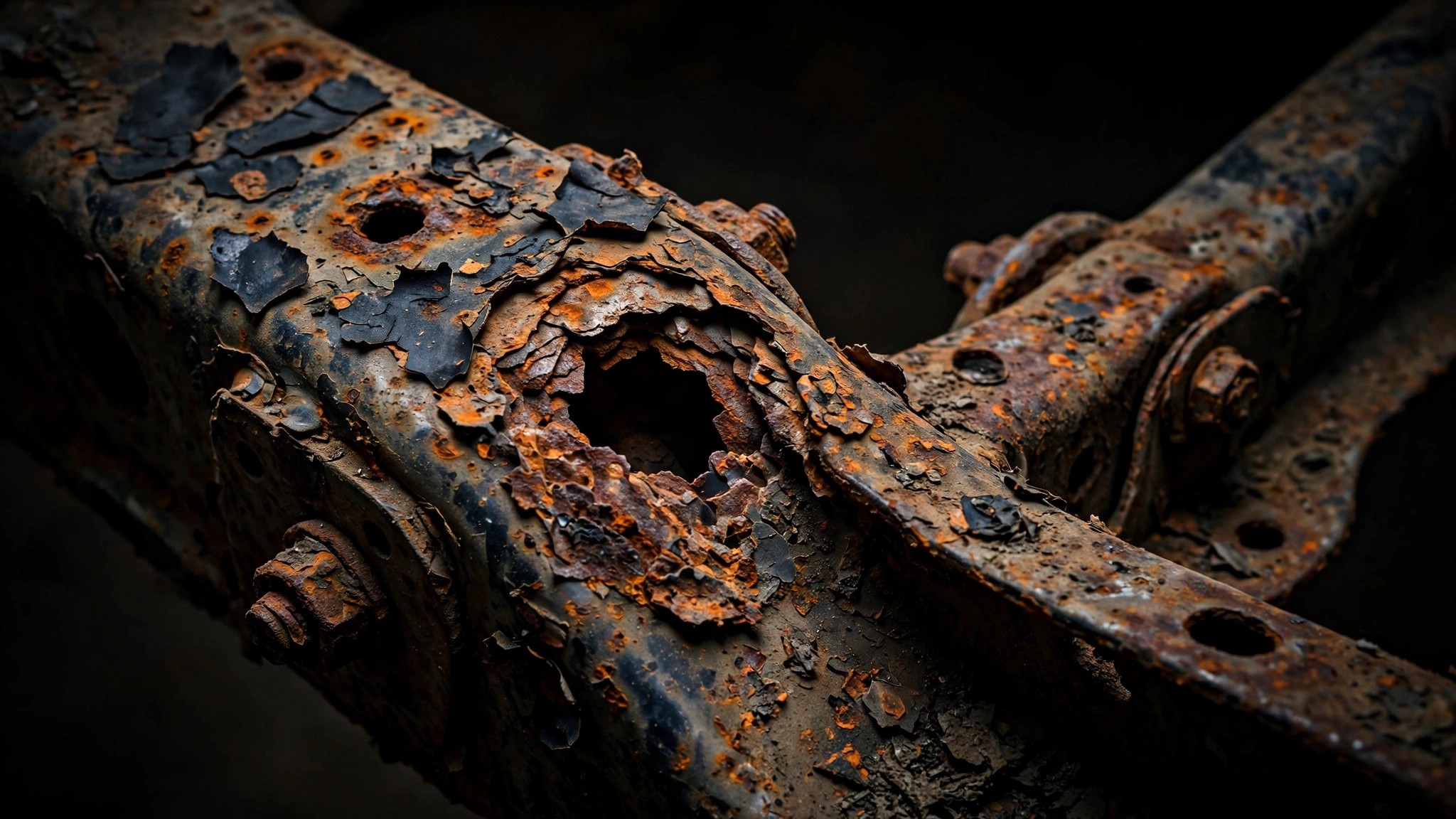
In June, NHTSA Recall 26V367000 landed. Rear subframes on every one of those models (2016–2022 Pilots, 2014–2020 MDXs, 2017–2023 Ridgelines, 2019–2023 Passports) were manufactured with "improper coating specifications," resulting in "insufficient paint adhesion and premature paint peeling near the arm bracket weld area."[1] In the 23 states that dump salt on winter roads, exposed metal corrodes, thins, and fractures. What holds the rear wheels to the vehicle disintegrates from the inside out.
IIHS gave the Pilot "Good" ratings across most crash tests.[2] NHTSA awarded it five stars. Acura's MDX has carried Top Safety Pick+ in multiple model years. All four models sit in the upper tier of every safety rating system designed to tell you whether your family vehicle will protect you in a crash.
None of those tests measure what road salt does to a subframe weld over eight Pennsylvania winters.
That is the gap. Crash-test ratings measure the ceiling: how a brand-new unit performs when it leaves the factory and hits an IIHS barrier at 40 mph. They cannot measure the floor, which is what happens after improper coatings fail, welds corrode, and the structure that earned those stars is no longer the structure you're driving. A Pilot that scored "Good" on roof strength in 2016 could, by 2024, have a rear subframe too thin to keep its wheels pointing in the same direction.
Honda's internal timeline makes the gap worse. Analysis began in December 2021, after engineers spotted the corrosion pattern. Between November 2022 and February 2023, they surveyed potentially affected vehicles and found "no unexpected corrosion progression." So they kept watching. It took a Canadian field report in September 2025 to trigger a deeper investigation, and another eight months before the recall went public.[3] Four and a half years from first awareness to action. In that span, hundreds of thousands of these vehicles logged more salt-belt winters.
Honda estimates only 1% of the recalled population, roughly 8,800 vehicles, actually have the defect. No injuries, no deaths, no warranty claims.[4] By traditional recall metrics, this is a success story. Honda caught it before anyone got hurt.
By structural engineering metrics, it's something else. A manufacturing defect. Not wear, not abuse, not an aggressive driver doing something unexpected. Paint. Specifically, insufficient paint adhesion at the factory near a weld. Engineers who designed the crumple zones and side-impact reinforcement and roof-strength geometry got their work right. Someone on the paint line didn't coat the subframe to spec. And because crash tests evaluate new cars, not aged ones, the defect sat invisible behind the best safety ratings money can buy.
For context: Ford's Explorer, Honda's closest competitor in the midsize family SUV segment, has a FARS fatality rate of 1.54 — more than five times the Pilot's 0.29. Nissan's Pathfinder sits at 0.93. Toyota's Highlander manages a respectable 0.42. Honda genuinely built safer vehicles. Its subframes just needed to outlast the paint job.
If you own a 2014–2023 Pilot, Ridgeline, Passport, or MDX registered in one of those 23 states, notification letters started mailing July 7. Dealers will inspect the rear subframe and install a reinforcement kit at no charge. If they find existing corrosion, they'll repair or replace the components. Honda customer service: 1-888-234-2138, recall numbers AOU and AOT.[5]
And if you're shopping for a used Pilot or MDX outside the salt belt, say California, Texas, or Florida, the corrosion risk is essentially zero. You're buying what the crash tests promised: one of the safest family vehicles in the country. Just make sure nobody salted the parking lot.
Sources & References
- NHTSA, Safety Recall 26V367000, June 10, 2026. nhtsa.gov/recalls
- IIHS, 2020 Honda Pilot Crash Test Ratings. iihs.org/ratings
- Autoblog, “Honda Recalls More Than 880,000 Vehicles Over Rear Suspension Failure Risk,” June 10, 2026. autoblog.com
- Associated Press, “Honda recalls more than 880,000 cars over concerns drivers may lose control of vehicles,” June 10, 2026.
- NHTSA, Fatality Analysis Reporting System (FARS), 2014–2023. nhtsa.gov
Source: NHTSA FARS 2014–2023 for fatality rates; NHTSA Recall 26V367000 for recall details. FARS captures only fatal crashes. Fatality rates are estimated using fleet size and average annual VMT, introducing ±15% uncertainty for models with smaller fleet populations. Passport's small FARS sample (33 deaths) carries higher statistical uncertainty than Pilot's (514 deaths). See methodology for caveats.