60% of Drivers Fear Headlight Glare. It Shows Up in 0.1% of Crash Reports.
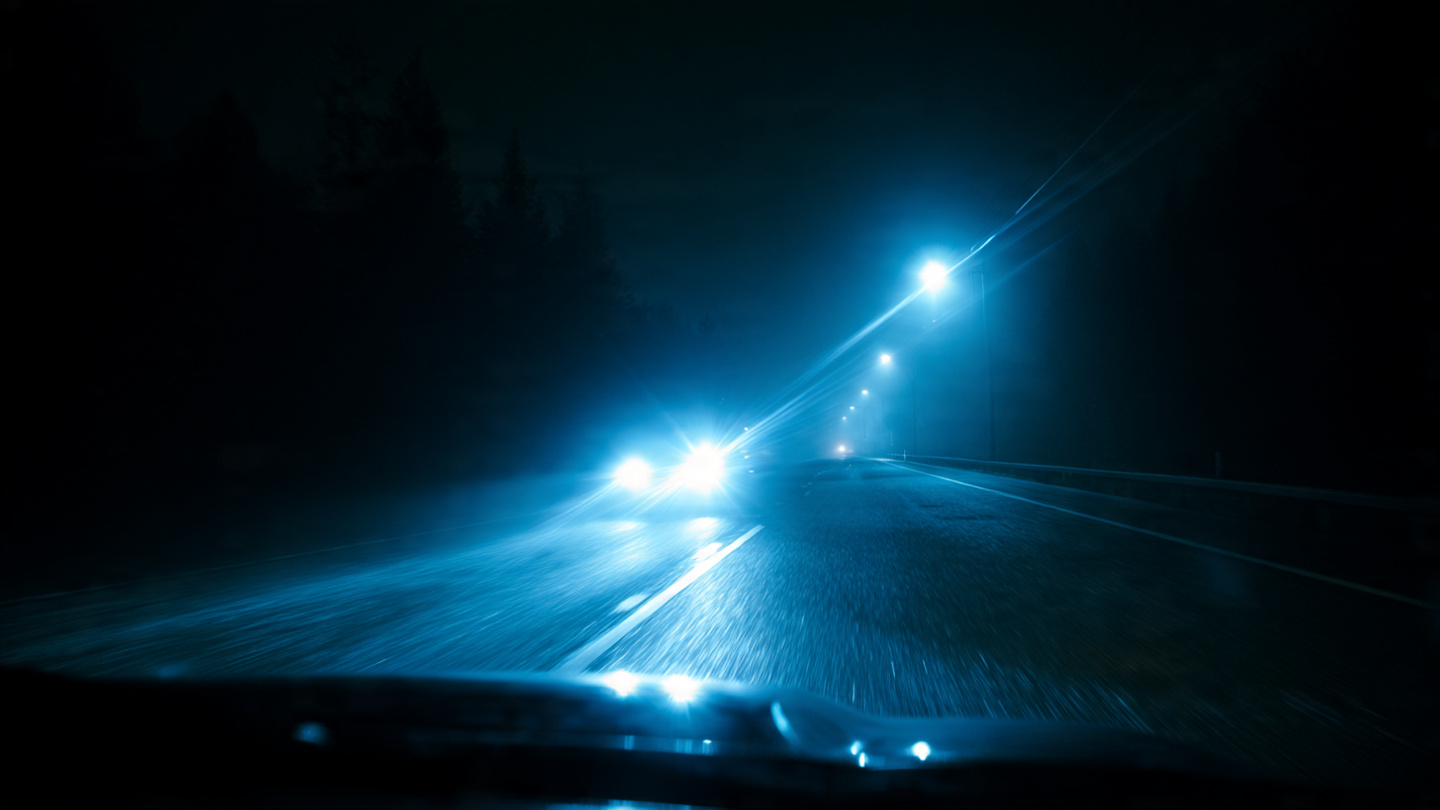
I cross-referenced two datasets that nobody bothered to put side by side. AAA surveyed 1,092 drivers in February 2026 and found that 60% consider headlight glare a safety problem while driving at night.[1] Then IIHS principal research engineer Matthew Brumbelow analyzed crash records across 11 states and found that headlight glare contributed to 1-2 out of every 1,000 nighttime crashes.[2] That gap between perception and reality is not small. It is three orders of magnitude.
NHTSA receives more consumer complaints about headlights than about any other single topic.[3] More than airbags. More than brakes, more than the accelerator pedals that spawned the largest recall campaign in automotive history. This is the most-complained-about safety issue in America, and the crash data says it is barely registering as a cause of collisions.
The AAA numbers break along lines that should interest regulators far more than they apparently do. Pickup truck drivers report glare at 41%, the lowest of any vehicle category. Sedan, SUV, and compact car drivers: 66%.[1] Female drivers report it at 70% versus 57% for male drivers, and prescription glasses wearers at 70% versus 56% for those without.[1] But here is where the AAA survey collides with the IIHS crash data in a way that should redirect the entire regulatory conversation: age, the factor everyone assumes drives glare sensitivity, was not statistically significant in predicting who reports glare as a problem. Driver height showed no significance either, which demolishes the popular theory that SUV headlights blind sedan drivers because of geometry alone.
IIHS did find an age effect in actual crashes. Drivers over 70 were overrepresented in the small number of glare-coded collisions.[2] Drivers aged 55-60 showed no increased risk at all. The people who crash because of glare are not the people who complain about glare. Two different populations, two different problems, treated as one by regulators who count complaint volume instead of running the cross-tabulation.
The Real Nighttime Problem
Headlights got dramatically better over the past decade, and the data is unambiguous. In 2016, IIHS rated over 80 headlight systems and exactly one earned a "good" rating. One out of eighty-plus. By 2025, 51% earned "good."[4] Systems producing excessive glare dropped from 21% in 2017 to 3% in 2025.[4] Vehicles with top-rated headlights have 19% fewer nighttime single-vehicle crashes and 23% fewer nighttime pedestrian crashes than those with the worst-rated systems.[4]
So brighter, better-aimed headlights are saving lives. Confirmed. The discomfort they cause incoming drivers is real, physiologically documented, and overwhelmingly not producing crashes.
Meanwhile, only 18% of drivers use their high beams when conditions would safely permit it.[4] Eighty-two percent of American drivers are voluntarily reducing their own visibility on dark roads because they either forgot, never learned, or are too worried about blinding someone else. IIHS's David Harkey put it directly: "Although it can certainly be uncomfortable, headlight glare contributes to far fewer crashes than insufficient visibility."[2]
The Regulatory Mismatch
FMVSS 108, the federal standard governing headlight brightness, has not updated its candela limits since 1997.[3] Twenty-nine years. The standard was written for halogen bulbs in an era when the brightest thing on the road was a Xenon HID in a BMW. LED headlights produce roughly four times the luminous intensity with a fundamentally different spectral profile, heavier on blue wavelengths that scatter more aggressively in the human eye.[5] A single degree of upward misalignment increases glare intensity by a factor of eight.[5] Only 10 states require headlight alignment checks during vehicle inspection.[5]
Adaptive driving beams, which automatically adjust high-beam patterns to avoid oncoming drivers, have been standard equipment across Europe for over a decade. As of the end of 2024, zero vehicles on American roads were equipped with the feature because NHTSA's regulatory approval process took until 2022 to permit them, and automakers have not yet brought compliant systems to market.[5] Representative Marie Gluesenkamp Perez introduced legislation in July 2025 requesting a study on headlight brightness impacts.[6] Not new standards. A study. We are still in the "let's think about thinking about it" phase while the complaint inbox overflows and the crash data says the complaints are pointed at the wrong target.
What This Doesn't Prove
Glare coding in police crash reports is notoriously inconsistent. Not all states track it, not all officers investigate it, and the 11-state IIHS dataset may undercount glare's true contribution, particularly in rear-end crashes where the glared driver strikes the car ahead of them and never mentions what they couldn't see. The 0.1% figure is a floor, not a ceiling, and the real contribution could be meaningfully higher without changing the core finding that insufficient visibility kills orders of magnitude more people than excessive brightness.
The AAA survey also has a fundamental design limitation: it asked whether glare is "a problem" without defining the word. A driver who finds glare annoying and a driver who nearly crashed because of it both check the same box, inflating the perception figure in ways the data cannot disaggregate. The 60% number is not "60% of drivers are endangered by glare." It is "60% of drivers find glare unpleasant enough to report it in a survey." Those are not the same statement.
The Strongest Case Against This Analysis
Glare might cause crashes through mechanisms that never show up in police reports. A driver squinting against oncoming LEDs might miss a pedestrian, hit a pothole that causes a rollover, or drift across a lane marking, and the crash report would code the proximate cause, not the glare that initiated the chain. If even 5% of nighttime crashes involve unreported glare as a contributing factor, the real toll would dwarf the 0.1% figure and would place glare firmly in the category of serious infrastructure-level problems alongside road geometry and lighting quality. The IIHS methodology cannot rule this out because it can only measure what police choose to record, and police crash investigation protocols for glare are, to put it generously, underdeveloped.
What To Do
Use your high beams. Seriously. You are statistically safer with maximum visibility than with dimmed lights on an unlit road, and the data shows 82% of you are not doing this. Modern vehicles with automatic high beams make it nearly impossible to forget. If your car has the feature and you turned it off, turn it back on.
Check your headlight alignment. If you have replaced bulbs, installed aftermarket LEDs, or changed your suspension, your headlights may be aimed above the cutoff line by a degree or more, and that single degree is an eightfold multiplier on glare for every oncoming driver. Most tire shops will check alignment for free. Ten minutes solves a problem that produces more NHTSA complaints than any mechanical defect in the American vehicle fleet.
Stop worrying about the other guy's headlights and start worrying about what yours are not illuminating. The thing that kills people at night is not brightness. It is darkness.
Sources & References
- AAA, Headlight Glare Survey, February 2026. 1,092 respondents, probability-based panel, ±4% margin of error. newsroom.aaa.com
- IIHS, Brumbelow, M., Headlight Glare and Crash Risk, October 15, 2025. Analysis of crash records from 11 U.S. states where police can code glare as a contributing factor. iihs.org
- NHTSA, FMVSS 108: Lamps, Reflective Devices, and Associated Equipment. Brightness limits (candela) unchanged since 1997. nhtsa.gov
- IIHS, Headlight Rating Program, ratings data 2016–2025. Good-rated headlights associated with 19% fewer nighttime single-vehicle crashes and 23% fewer nighttime pedestrian crashes. iihs.org
- The Regulatory Review, “NHTSA’s Headlight Standards Cannot Keep Up with LED Technology,” February 2026. LED spectral profile and misalignment analysis. theregreview.org
- Rep. Marie Gluesenkamp Perez (D-WA), proposed legislation for headlight brightness study, July 2025.