GM Filed 19 Recalls This Year. Ford Filed 60. Guess Who Has More Bodies.
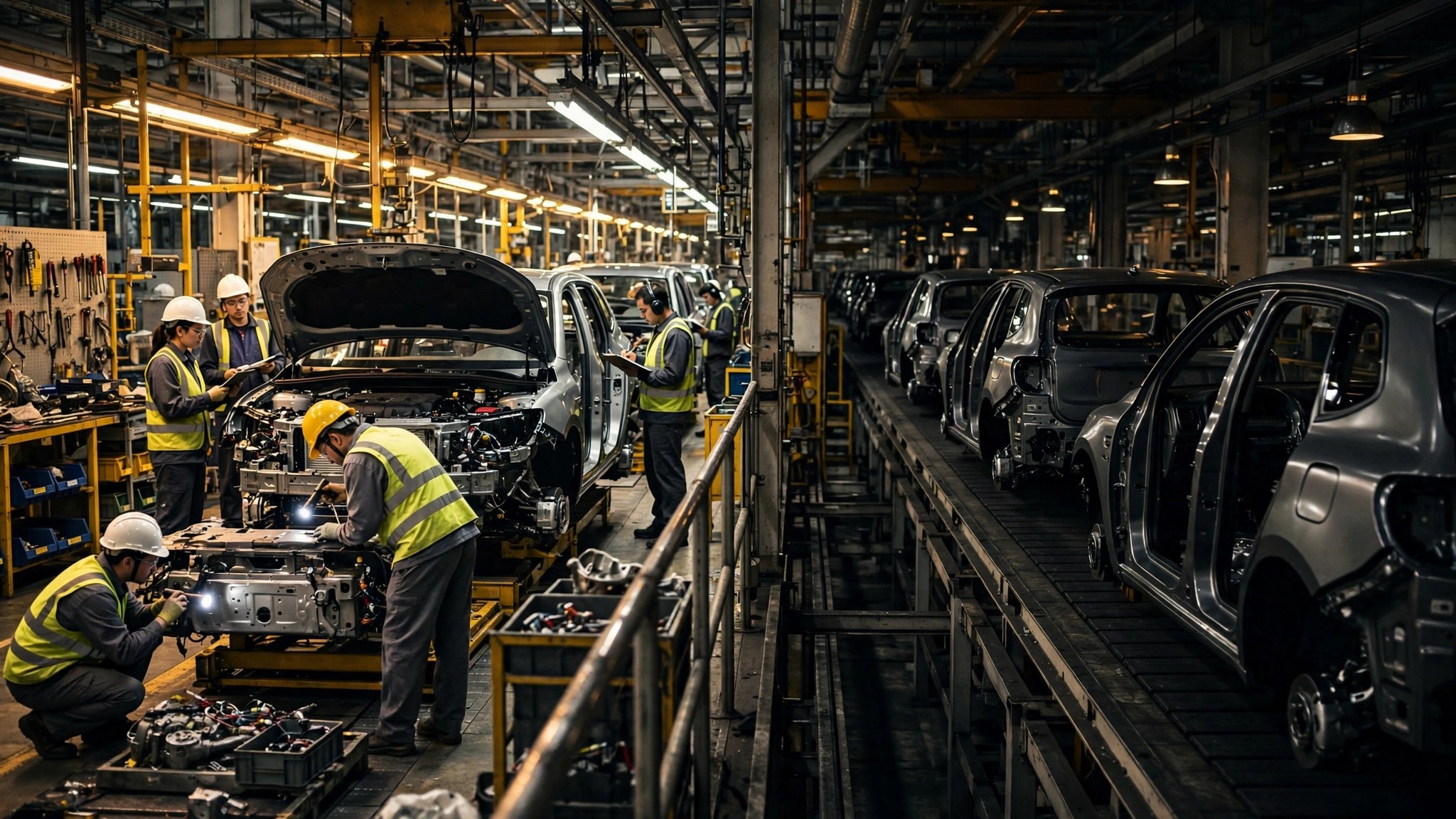
Ford's VP of Quality, Josh Levine, went on the record last week admitting that vehicles designed between 2013 and 2020 are the source of the company's recall crisis.[1] Ford now leads the industry with 60 recalls in 2026, triple second-place Chrysler and more than triple GM's 19. The optics are brutal. Ford looks like the most dangerous automaker in America.
It isn't.
Run the same calculation Levine inadvertently invited on Ford's 2013-2020 design era across all three Detroit manufacturers, and the ranking flips. GM vehicles from that window appear in FARS fatal crashes linked to 8,206 deaths. Ford's figure is 6,539. Stellantis lands at 5,962, but with the highest concentration: 25.8% of all Stellantis FARS deaths come from that eight-year window, compared to 19% for Ford and 16.2% for GM.[2]
GM's top contributor is the Silverado, with 1,466 deaths from 2013-2020 model years. Add the Malibu at 981, the Equinox at 635, the Impala at 634, and the Camaro at 536. Ford's lineup over the same window: F-150 at 1,543, Fusion at 964, Escape at 849, Focus at 819, Mustang at 536. Model-to-model, GM's pickup kills at a higher per-VMT rate (1.25 vs. 1.04), and GM's midsize sedan is dramatically worse (Malibu at 2.03 per 100M VMT vs. Fusion at 1.23).[2]
Recalls measure detection, not danger. A manufacturer that hunts aggressively for defects will file more. A manufacturer that doesn't will file fewer. Both numbers land on the same NHTSA chart, and the casual reader only sees the bigger one. Ford's 60 recalls represent, in Levine's own framing, a company finding problems it already made.[1] GM's 19 could mean fewer problems. Or it could mean fewer found.
FARS doesn't care about either explanation. It counts bodies. And by that measure, the quietest company at the recall desk had the loudest decade in the morgue.
What to do: If you own a 2013-2020 GM vehicle, check your VIN at nhtsa.gov/recalls. A low recall count for your manufacturer doesn't mean your vehicle has been checked. It may mean nobody looked.
Limitations: FARS captures fatal crashes only, not the full injury picture. This comparison doesn't control for fleet size differences between GM and Ford, which shifted as GM shed brands (Pontiac, Saturn) and Ford discontinued sedans. A manufacturer with more vehicles on the road will appear in more crashes. Per-VMT rates, shown model-by-model above, partially correct for this, but fleet-weighted manufacturer-level rates would require registration data FARS doesn't include.
Strongest counterargument: GM's recall count may genuinely reflect fewer defects rather than less detection. GM invested heavily in safety engineering after the 2014 ignition switch scandal, and its post-2020 vehicles may represent genuine improvement. Ford's high recall count also includes proactive software-only campaigns (6.3 million of 8.4 million vehicles recalled in 2026 were software fixes), inflating the headline number without reflecting proportional hardware danger.[1]
Sources & References
- USA Today, “Ford touts quality, but recalls nearly 1 million vehicles in a week,” July 27, 2026. usatoday.com
- NHTSA, Fatality Analysis Reporting System (FARS), 2014–2023. Cross-tabulation of deaths by manufacturer, model, and model year (2013–2020 window). nhtsa.gov
- NHTSA Recalls Dashboard, 2026 YTD. Ford: 60 recalls; Chrysler: 24; GM: 19. nhtsa.gov/recalls